Browsed by
Author: Anne Cassidy

Book Nook

Book Nook


On the same weekend that I finally dipped my toes into the Kindle, I also bought two new bookcases. Tall, skinny ones that slip nicely into an oddly shaped alcove that we’ve been trying to make the best of — design-wise — since we bought the house.

So while I’m willing to try the electronic book, I’m making room for more of the real articles. Today I’ll read a library book on Metro. I’m racing to finish it so that I can dig into the latest Ann Patchett novel that Suzanne is lending me (and which someone else has lent her).

And so goes the community of book readers — trading, discussing, and yes, even hording. I imagine that soon my Kindle will be as full to bursting as our book shelves.

Meanwhile, we’ve created a little book nook in our bedroom: a rocking chair, a pouf (soft ottoman), a reading light and lots and lots of the the real things, just waiting to be plucked from the shelves onto our laps.

Not exactly this but something like it…

The Dark Side

The Dark Side


Today I went over to the dark side — the electronic e-reader, the Kindle. A generous Christmas gift from my brother Phillip, it has been sitting unopened on my bookshelf (interesting place for it to wind up), taunting me with possibility and with dread.

What of all the posts I’ve written about “real books”? What of my English major stand in favor of ink on paper and the codex? Are these scruples gone?

Of course not. The e-reader will always be a supplement, one more way to read a book. It will be interesting to see if I can navigate it, of course. Already I’ve had to enlist help from Tom (how to scroll) and Celia (how to return to my home page). They have rallied bravely to the cause of this technophobe. And now I have several free books in my queue (including Aristotle’s Ethics and the entire Bible!) and a couple sample chapters to peruse.

I’ve read four times more books since I got my Kindle, a friend told me a couple days ago. That’s what made me do it. Four times more books! I’m in.

Above: a more old fashioned way of retrieving books.

Stegner and Place

Stegner and Place


Today is the birthday of Wallace Stegner, writer, teacher and celebrator of place. The American West was his place and he described it well, its aridity and openness, the loneliness of its grain elevators and grasslands, the way it has shaped our character.

The New World transient is a person in motion, Stegner says. “Acquainted with many places, he is rooted in none.” Because he moved frequently himself, Stegner knows “the dissatisfaction and hunger that result from placelessness.” Which leads him to this conclusion:

“A place is not a place until people have been born in it, have grown up in it, lived in it, known it, died in it — have both experienced and shaped it, as individuals, families, neighborhoods and communities, over more than one generation.”

I have thought about these words often since reading them this fall, have considered their truth as I try to feel at home in the suburbs. Thinking about them has led me to the library, to books about the people who lived here before us, to local historians who’ve discovered lost roads. I’m trying my best to feel at home here. But the “dissatisfaction and hunger” remain.

Walking Meditation

Walking Meditation


Yesterday, for a few minutes, I practiced walking meditation. I took off my shoes and closed my eyes and moved slowly through space while breathing deeply and letting thoughts come and go.

I’ve been four times now to these Thursday lunchtime meditation sessions, and yesterday’s was revealing. I noticed that I had to place myself as I walked. Was I at the beach, in the mountains, on a woodland path? I finally settled on a cathedral, Chartres, maybe, or Saint John the Divine. Somewhere vast and cavernous and still.

It was only after I placed myself that I could stop thinking and empty my mind. Then I could feel the carpet pattern beneath my feet, could recognize the worries and let them go.

Curved and Straight

Curved and Straight


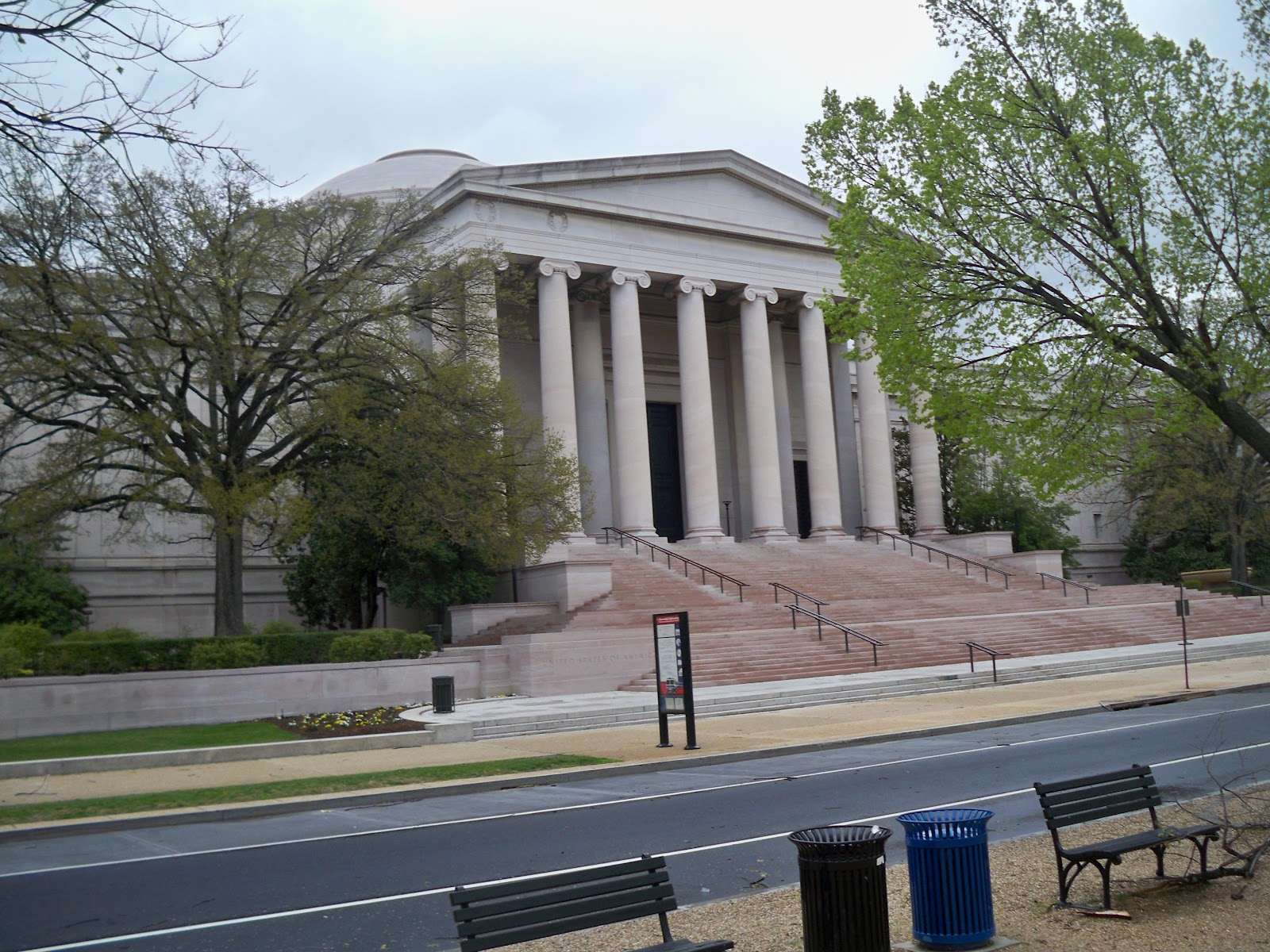
A walk yesterday along the mall was a study in shapes. The National Museum of the American Indian loomed before me, its curved stone walls a link to the mesas and pueblos of our native past.

Beside it was a straight sidewalk, the stricture into which the native past was placed. We, the inhabitants of the 21st century, we live with them both.

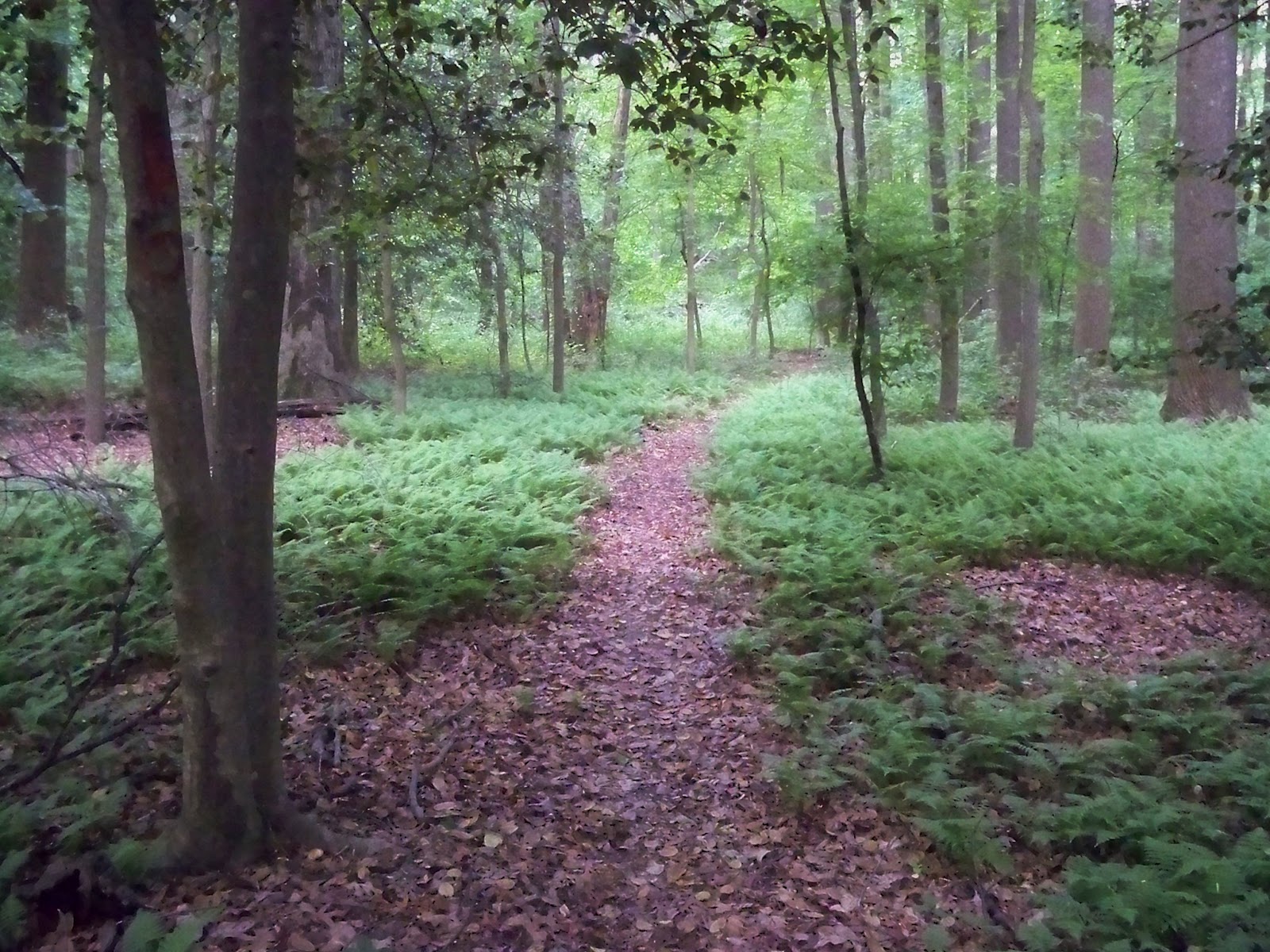
Closest to the surface is the straight line, the crossroads, the grid. But underneath its order are the curved paths of our past. The deer trails and the wagon train trails, the old roads that wound among hills and ridges.

I walked yesterday along the straight path, but I kept my eyes trained on the curves.


Photo: visitingdc.com

Run, Don’t Walk

Run, Don’t Walk


Before I was a walker I was a runner, and there are times when I still think of myself as one. My knees won’t let me jog far, but when I’m cold or bored or running late, I still break into a trot.

I did this today on the way to the office. It’s not very dignified, but it provides a moment of release, similar to the feel of a horse as it moves from a trot to a canter. The motion then becomes silken and sleek, horizontal rather than vertical and, yes, more fun.

So while I told myself today that I should walk not run, I did just the opposite. I moved through space as quickly as I could. Sometimes it’s the only way.

Happy Valentine’s Day

Happy Valentine’s Day


On Saturday, I sat in a small church and listened to 1 Corinthians 13. This bible verse was read not at a wedding but at a funeral. Perhaps because of this context — or because it had been a while since I heard these words — they surprised me with their depth and power. In honor of Valentine’s Day, I reprint them here:

If I speak in the tongues of men and of angels, but have not love, I am a noisy gong or a clanging cymbal. And if I have prophetic powers, and understand all mysteries and all knowledge, and if I have all faith, so as to remove mountains, but have not love, I am nothing. If I give away all I have, and if I deliver up my body to be burned, but have not love, I gain nothing.

Love is patient and kind; love does not envy or boast; it is not arrogant or rude. It does not insist on its own way; it is not irritable or resentful; it does not rejoice at wrongdoing, but rejoices with the truth. Love bears all things, believes all things, hopes all things, endures all things.

Love never ends. As for prophecies, they will pass away; as for tongues, they will cease; as for knowledge, it will pass away. For we know in part and we prophesy in part, but when the perfect comes, the partial will pass away. When I was a child, I spoke like a child, I thought like a child, I reasoned like a child. When I became a man, I gave up childish ways. For now we see in a mirror dimly, but then face to face. Now I know in part; then I shall know fully, even as I have been fully known.

So now faith, hope, and love abide, these three; but the greatest of these is love.

Wind-Walking

Wind-Walking


It may come as no surprise that I take parenting advice with a grain of salt. But I do think about one bit of wisdom I once heard — that to raise children these days you have to walk against the wind. I’ve been doing a lot of wind-walking lately, both literally and metaphorically. Which is perhaps why it was strangely satisfying to pound the pavement this cold morning.

Yesterday the bitter cold took me by surprise. I was out early, had only one tissue in my pocket, and I sniffled and snuffled and tiptoed over icy patches all along my route. My hands were so cold I had to ball them up inside my thin gloves. I never hit my stride.

Today I was better prepared. More layers. Ears covered. Thicker gloves. Still only one tissue but hey, life isn’t perfect. It felt good to walk against the wind today. A shivering dose of reality. Always better when faced.

Old Part of Town

Old Part of Town


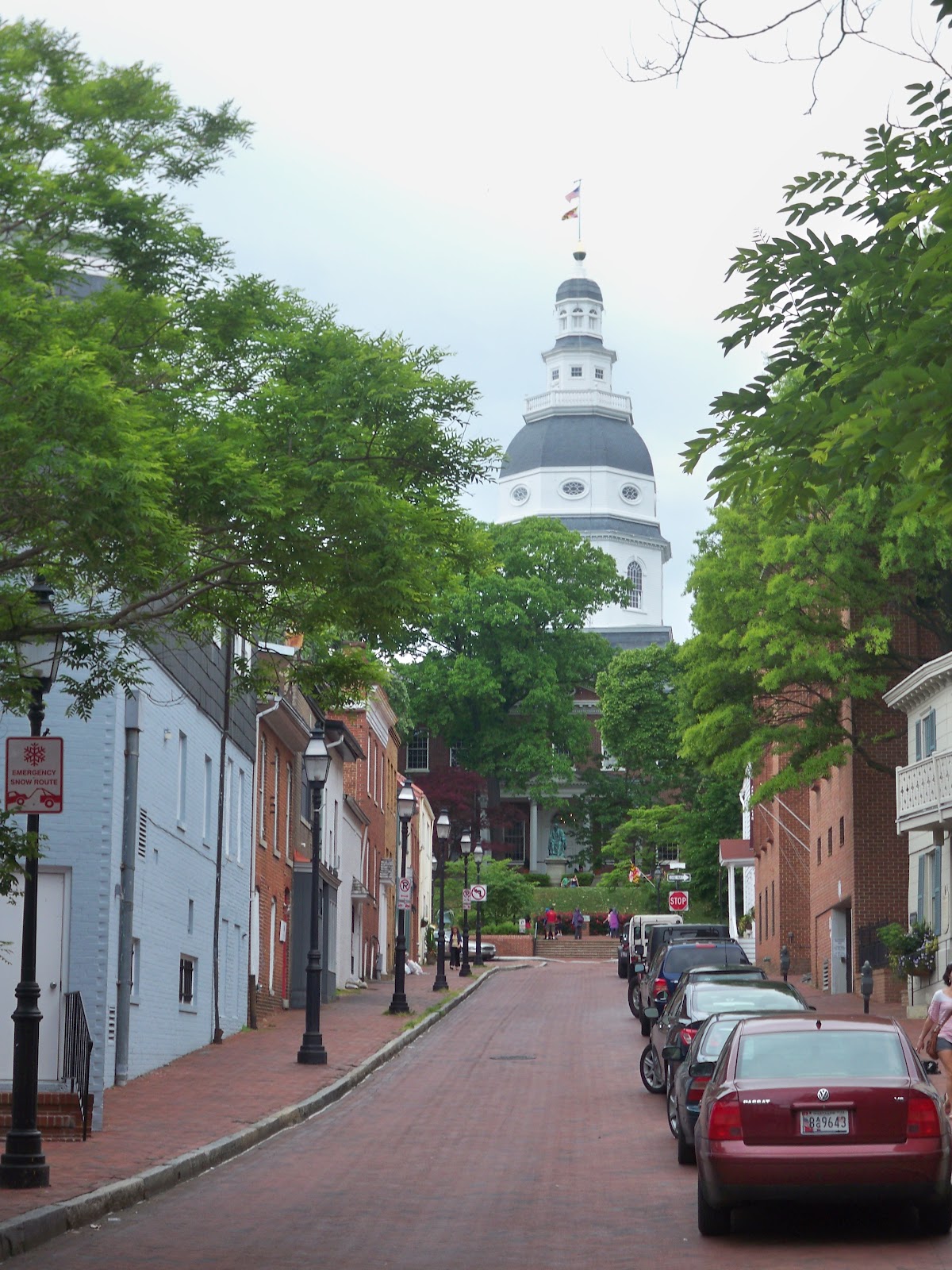
Yesterday I drove to the old part of town, to a D.C. I seldom visit, where the houses are stately and imposing and the yards settled and calm. I was struck, as I often am, by how various neighborhoods and landscapes create different moods.

How wide open and exposed is the world of the outer suburbs, how on the edge of things. I think about the medieval town, walled and protected, houses clinging together for survival. And I see in our wide yards a sort of bravado.

Openness has its appeal, but so does the fenced yard, the closed gate, the hedged garden. There is something in here precious enough to protect — to make you long to be inside.

A College Place

A College Place


Last night I went to a gathering of old college friends. We asked the inevitable questions (where do you live? what do you do? and — the clincher — when did you graduate?) and then we told stories. I heard about some great pranks and learned that two paintings in the reception area of my freshman dorm were recently found to be worth millions of dollars.

At some point our conversation turned to why we chose Hanover in the first place. And for most of us it was the physical beauty of the place. Hanover College sits on a bluff overlooking a double bend of the Ohio River. A winding forest road leads to the classical campus with old brick buildings in the Georgian style. To unwind, students stroll to the Point to look at the river.

I transferred from Hanover after my sophomore year, decided I wanted a campus near a big city. But when I think of college it’s Hanover I remember most. The low, mournful call of the barges passing, the broad Ohio curving; it’s a view that, every time I return, seems too perfect to be true.

Photo Trip Advisor