Browsed by
Author: Anne Cassidy

Hollowed Out

Hollowed Out


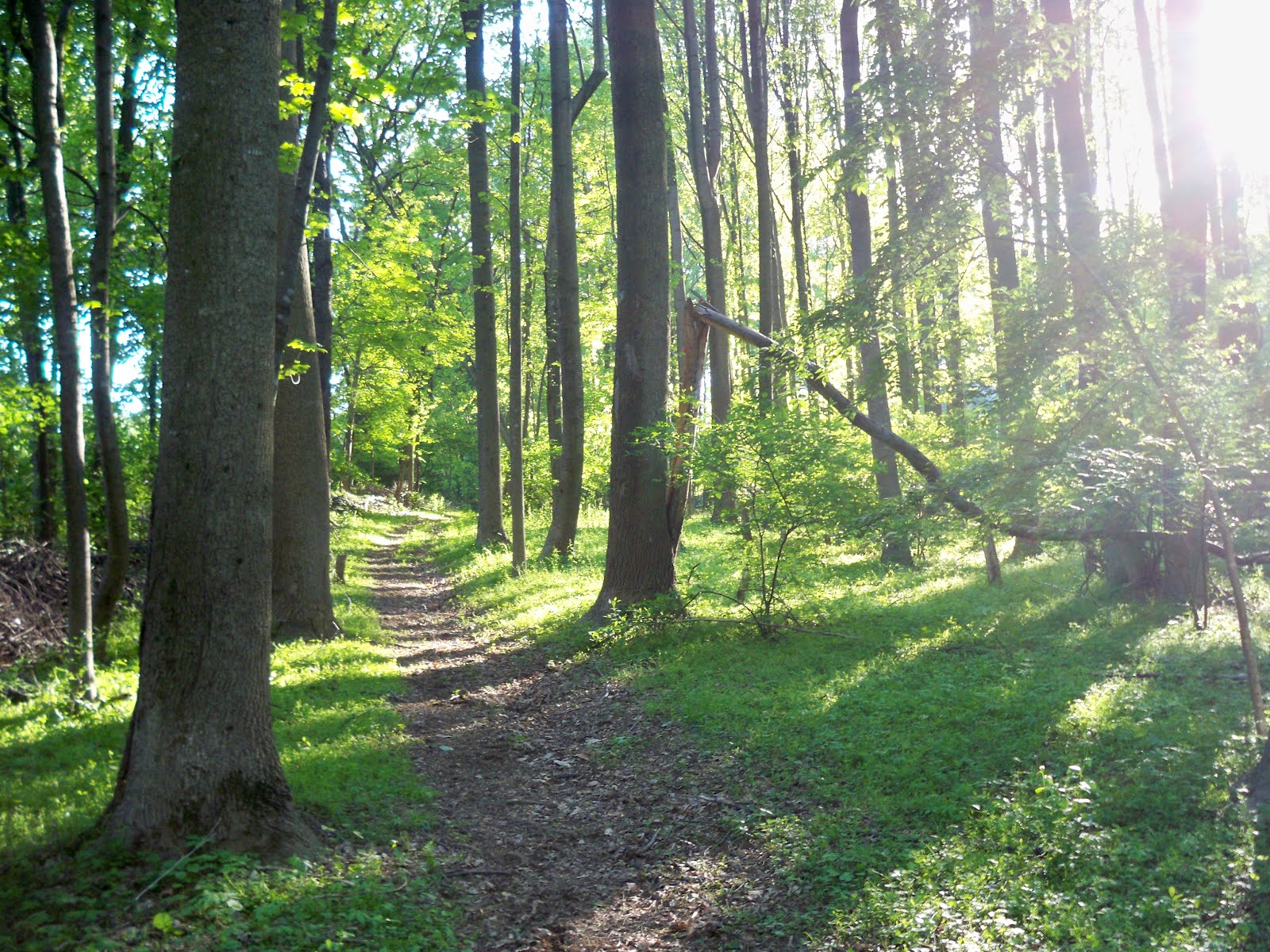
It was about 20 degrees this morning when I went for my walk.For an hour I took paths I hadn’t taken in years, some never at all. There were hills and bridges, slight dips and a bounty of backyards to overlook and enjoy.

At the end I tried a shortcut that I thought would bring me out on the main road. It lead, instead, to a tall fence I couldn’t scale. So I retraced my steps at a run to return to the parking lot where I’d left the car. I was tired by the end.

Along the way the ground crackled beneath my feet as the frozen earth resisted my steps. There was a feeling of renewal in the cold, of being hollowed out and made whole again by it.

Moving the Couch

Moving the Couch


Last weekend, in a fit of home-improvement fervor, we went couch shopping. There had been a near fatal injury to the old futon in the basement, and if it goes, I reasoned, then we can move the office couch down to the basement and buy a new couch for the office.

So we found a couch last Sunday. It was a rich chocolate brown, comfy for sitting or lying down — and within our price range. We didn’t buy it right away, though. We wanted to measure the basement stairway angles. “It will be tight,” Tom said.

Today, we decided to see just how tight it would be. And the answer is: impossibly tight. But it was interesting to see our old sleeper sofa upended, and it gave us a marvelous excuse to vacuum and dust.

Meanwhile, the futon in the basement may have life in it yet. And the sofa in the office is once again ensconced in its tatty old slipcover. We’re back to shabby chic.

Perihelion

Perihelion

The perihelion is the day that earth is closest to the sun. This year it occurred on January 5.

That we are closest to the sun in the winter throws my nonscientific mind into a tailspin. If we are closest to the sun, then why is it cold? Because earth’s distance from the sun is not what causes the seasons. It’s the tilt of the earth on its axis that does that, and in winter the northern hemisphere tilts away from the sun.

Ahh, I get it. Sort of. Anyway, it’s the metaphorical aspect of this that strikes me most. That all through the cold, dark months we’re closest to the star that gives us life — I like to think about this. It gives me comfort.

Christmas Revels

Christmas Revels


One special holiday memory — which I’m writing about only now because I finally pulled the photos from my camera to my computer — was when the Christmas Eve carolers came to our house. We heard them first, when they were across the street, and lured them over here.

Our neighbor Nancy led the others with her lovely soprano, but every one of the singers held his or her own. They crooned “O Come, All Ye Faithful,” “White Christmas” and other selections, with plenty of whooping and hollering and toasting in between. (Conveniently, they carried their own wine glasses.)

Some of us stepped outside and joined them. All we lacked were the funny hats. But we knew the words, and we had the spirit. And we remember an earlier time on our street, when there were bonfires in the meadow and progressive New Year’s dinners. A time of greater camaraderie and cheer. The carolers made it seem as if those days were back.

After the revelers traipsed off to the next house my Dad turned to me and said, “That’s all I need. That made Christmas for me.” I had to agree with him.

Aldo Leopold

Aldo Leopold

I was already writing another post this morning when I learned from “The Writer’s Almanac” that today is the birthday of Aldo Leopold. I had never heard of Leopold until I took the class last fall. Now I can’t imagine not knowing about him. Here’s an excerpt from a review I wrote of his book A Sand County Almanac:

At first glance Aldo Leopold’s book A Sand County Almanac (1949) seemed to be like other evocative writing about place — books by Annie Dillard or Henry David Thoreau, for example, books that shed light not only on cities or rivers but also on the author or the human condition, books in which the landscape is a vehicle to the self. I was to learn otherwise.

I scanned the bio of Leopold on the back of the book before I started reading it, and I learned that he grew up in Iowa, graduated from Yale Forestry School and worked with the U.S. Forestry Service in New Mexico and Arizona before becoming a professor of game management (a field he is credited with creating) at the University of Wisconsin. Leopold bought some poor, down-on-its-heels farmland near Baraboo in south-central Wisconsin, rehabbed an old chicken coop on the property and lived there with his family on weekends and vacations. It was there that he wrote the essays that became his masterpiece, A Sand County Almanac, a book that encapsulates the philosophy of place that makes him one of our earliest prophets of ecology and wilderness preservation. This book, like the twisted little apples of Winesburg, Ohio, is the hard-won fruit of the deep thinking Leopold brought to the land on which he chose to live.

Sand County was not as conversational or as revelatory as I first thought it would be. It was not a book about the transformation Leopold and his family underwent as they lived in the “shack” and fixed up the farm. It was so much more.

“There are those who can live without wild things, and some who cannot. These essays are the delights and dilemmas of one who cannot,” writes Leopold in his introduction. But from such big pronouncements the work quickly becomes more specific: the winter awakening of a skunk, the trail of a meadow mouse, the fate of the passenger pigeon, the life of a downed tree, the difference between a shovel (which makes us givers) and the axe (which makes us takers).

Eventually, Leopold does share a few personal details: “To conclude, I have congenital hunting fever and three sons. … I hope to leave them good health, an education and possibly even a competence. But what are they going to do with these things if there be no more deer in the hills, and no more quail in the coverts? … And when the dawn-wind stirs through the ancient cottonwoods, and the gray light steals down from the hills over the old river sliding softly past its wide brown sandbars – what if there be no more goose music?”

So there is a place for the personal in Leopold’s ruminations after all, a subtle place and an effective one. But the most important lesson I learned from reading this book is to let go. Let the place teach me.

First Flakes

First Flakes


They were barely more than specks in the sky when Copper and I stepped out for our walk yesterday. Bits of fluff from an errant dryer vent, I thought at first, or airborne ash from a fire. I didn’t know that snow was coming. I should have. All morning the earth had that gray stillness it does before the weather changes, a pause, a turning from one element to another.

As we walked, snowflakes dotted Copper’s shaggy back. This would make a good picture, I said to myself several times — and every time I did he did his little doggie shake and they would all be gone.

When we came inside, I still thought the snow shower was a fleeting one. But it flurried the rest of the day and left us with a thin coating, our first of the season. In winter, the world looks better in white.

A Muted Palette

A Muted Palette


I’m making my way through Bill Bryson’s oddly titled At Home: A Short History of Private Life (oddly because it often reads more like a history of building materials and inventions than of private life) and learning about the Crystal Palace at the Great Exhibition of 1851, gas lighting, Palladian architecture, falls down stairs and the quality and hues of 18th-century paints.

What the book makes abundantly clear is just how recent the comfortable home of today actually is. How not too long ago people slept on mattresses full of vermin, huddled around a single candle and bathed once a year.

A passage I read last night mentions that in the second half of the 19th century the world still lacked two very basic colors — “a good white and a good black.” So “all those gleaming white churches we associate with New England towns are in fact a comparatively recent phenomenon” and the glossy black front doors, railings and gates of London are new, too. In fact, Bryson writes, “If we were to be thrust back in time to Dickens’s London, one of the most startling differences to greet us would be the absence of black-painted surfaces. In the time of Dickens, almost all ironwork was green, light blue or dull gray.”

What was missing, then, was contrast, at least in a decorative sense. What a soft, muted palette that world must have had. What would it have been like to live in that world, to see those colors, rather than the ones we have now?

Unseasonable

Unseasonable


Yesterday I passed three bikers on a four-lane road. Walkers clogged our neighborhood streets. There was a lightness in the air, a feeling of lift and brightness. This is the fun side of global warming, a walk in short sleeves, the smell of mud in the air, bushwhacking through the woods and leaping over the creek.

Will we pay for this soon? Probably. But it’s nice while it lasts.


It’s not warm enough for this. But close….

Parfait

Parfait


No epiphany today, despite the date. In its place, some sights and sounds. On my walk this morning the eastern sky was streaked pink and orange, a parfait of dawn. As the sun rose and the sky lightened, contrails made lacy white stripes through the blue.

Birds were active today, jays and robins and crows all chirping and hopping and flitting about. I decided that bird song in the morning is a sure-fire way to improve the day.

At the end of my walk, I heard a strange bark-like noise and turned my head just in time to see a plump red fox trot through the meadow. He moved like our dog Copper does, with pluck and verve and a bit of a waddle. When he reached the woods he turned and posed, then ambled on. I felt his wildness in my bones.

Uptown View: An Elegy

Uptown View: An Elegy


Yesterday I learned that a friend I’d corresponded with for years, the editor who hired me at McCall’s Magazine, passed away in May. I hadn’t seen her in years, but I was always fond of her. She was the second person gone on my Christmas card list this year (the other my old boyfriend Gerry, who I eulogized seven months ago in this blog) and I was so sad to learn of her death. Sad for her family above all, but sad also for the passing of an era that she represents.

Lisel was first an agent and then an editor. She was smart and funny and wore her hair in a simple page boy style. She was the one who called me after I dropped off my resume and clips a few days after finishing up a graduate program in journalism. “Well, you’re sort of old to be an intern,” she said, with an endearing New Yorkish bluntness I was just beginning to understand. “But we’d like to have you for the summer.”

The summer turned into five years, and I went from editorial assistant to articles editor. Lisel became executive editor. She was always the calm heart of the magazine, which (like all the “Seven Sister” publications at that time) was edited by a man. I can still recall her big-looped script and her slightly distracted air. She was an intellectual, as many women’s magazine editors were then, and though we had our share of “Lady Di” covers, inside McCall‘s you could still find splendid fiction, elegant essays and controversial reports.

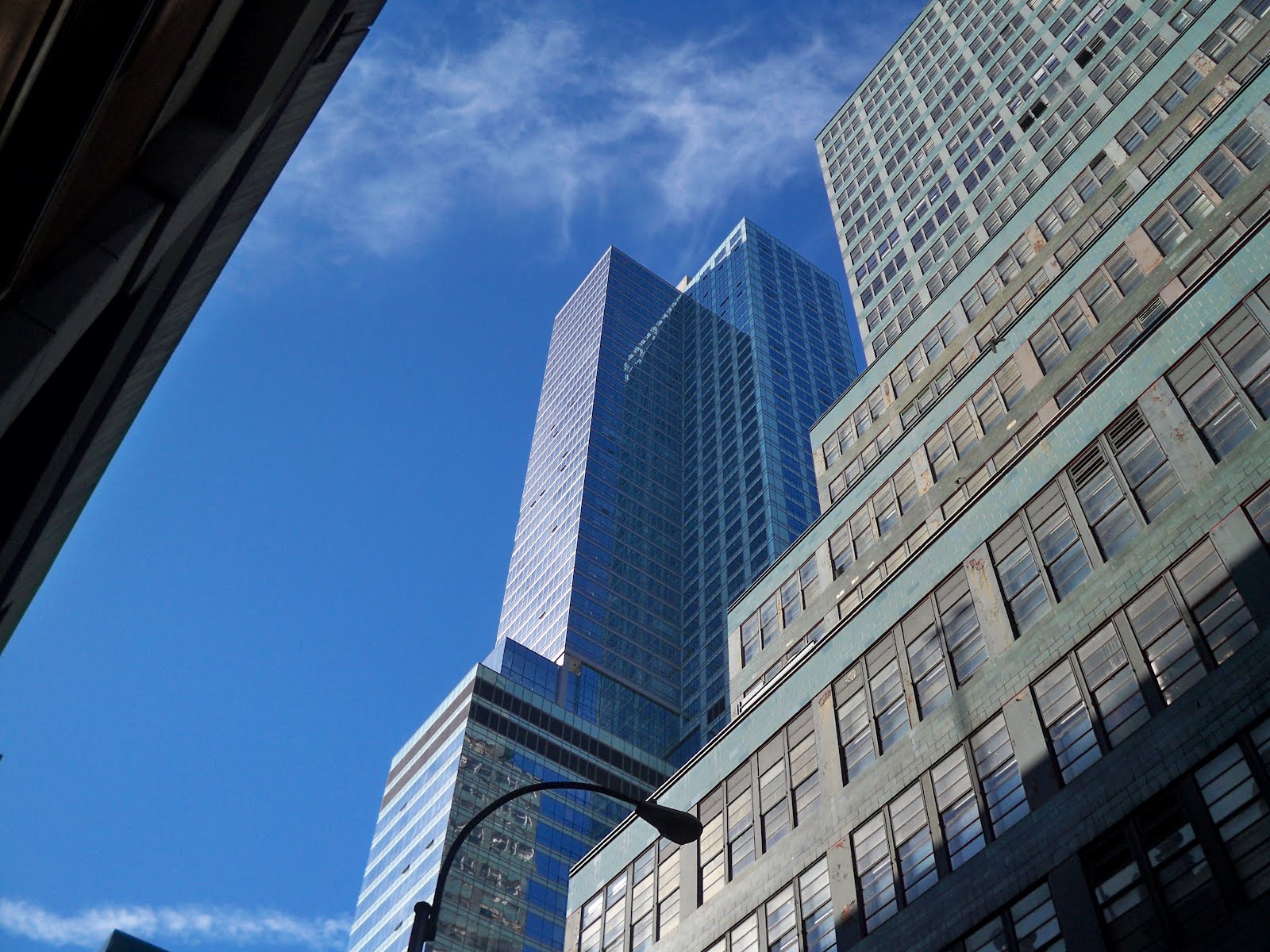
The magazine offices were housed at 230 Park Avenue, the ornate building which straddles that great thoroughfare. The elevators had painted clouds on their ceiling; they made me feel like I was in heaven. And in so many ways, I was. I’ve thought a lot about that place and those people since hearing the news of Lisel, about the long hall where she and other top editors had their offices. They all had an uptown view of Park Avenue; the whole world was at their feet.