Browsed by
Author: Anne Cassidy

Vista

Vista


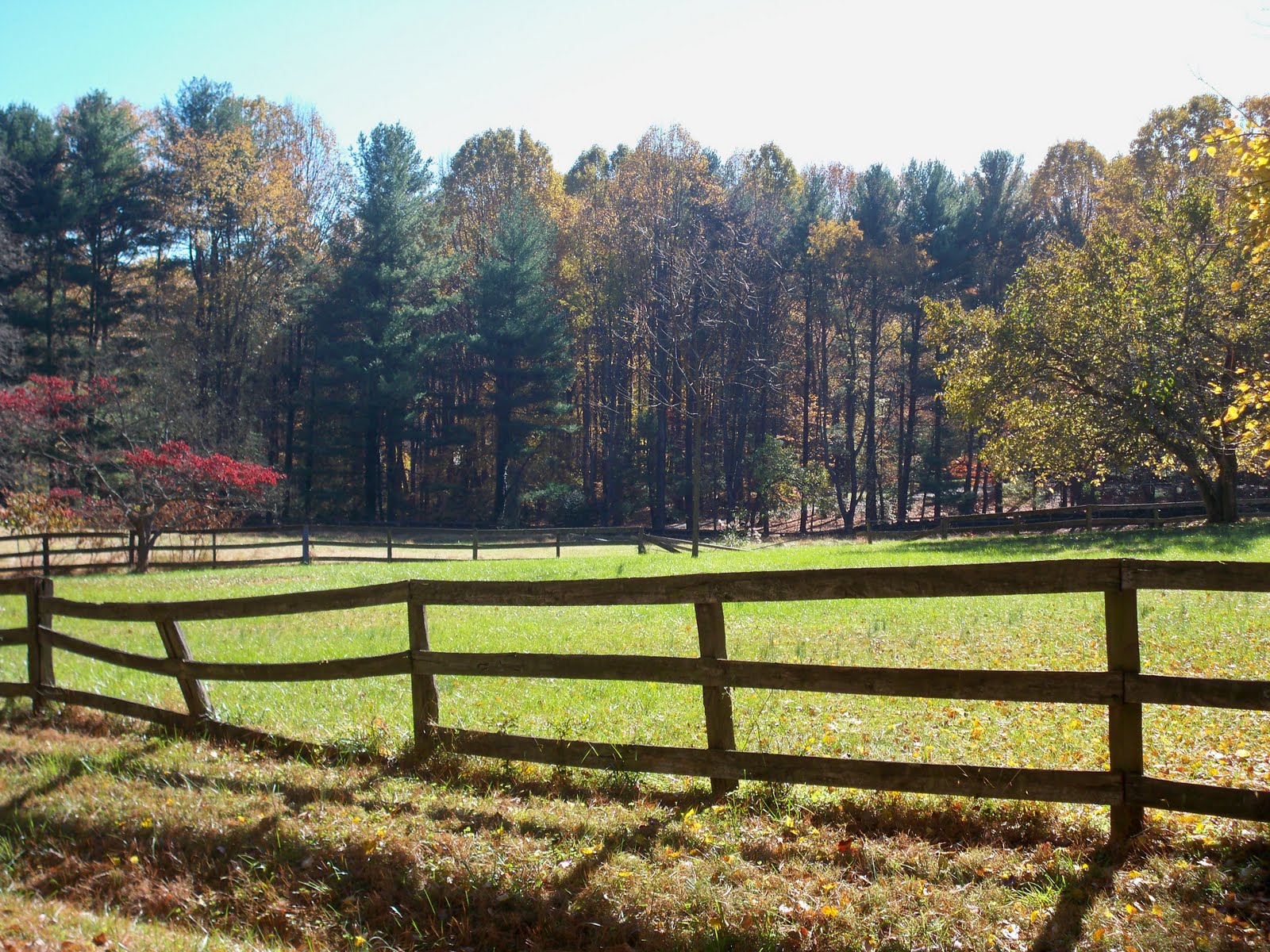
What does the eye appreciate, the eye that evolved to spot antelope across a distant horizon, the eye that often looks no farther now than the tiny screen of a smart phone?

It likes the greensward, the open expanse of turf, like the swelling savannahs of our evolutionary past. And there, where earth meets sky, if not an animal of prey then an emblem of our ambition: a city to conquer and admire.

I once spent time in this place, the Sheep Meadow of Central Park. In fact, I once lost a set of keys somewhere on this vast lawn. I walked by the meadow daily and mediated on this vista. It is a uniquely American view, embracing our love of cities and of countryside, promising both peace and prosperity. It is a sigh of relief, a gasp of delight.

Dreams of Space

Dreams of Space


When I lived in New York, I once sublet a studio apartment in this building. The arrangements were sketchy, as sublets so often were, and in less than six months time the original renter told me she would have to return.

It was not a hard decision. I had been existing in a space the size of a large walk-in closet. It was so small that when I gave a wedding shower for a friend I realized once all seven had arrived that there was literally no place to put their presents. Every other surface was being used.

It was during my time in this place (and earlier, when I lived in a studio in Chicago) that I began dreaming that there was an annex to my apartment, another room or cubbyhole that I had somehow overlooked. How splendid, my dreaming self would think, all this space, and I hadn’t realized it before. Now I can spread out. Now I can breathe. And then, I would wake up.

Dreams of space. When the body is deprived, the mind compensates.

Sun Slant

Sun Slant


I was out early this morning and when I drove back into our neighborhood the sun was slanting through the trees and filling our street with light. I wonder why I find this so fetching. Is it because the sunshine is heaven-sent? Because it is grandiose, like a Bierstadt painting?

I have an amateurish meterological explanation for this phenomenon. The air is filled with moisture from last night’s downpour and the sunlight bounces off the water molecules in the air. Or something like that.

But what to make, then, of how it strikes my soul, of the philosophical explanation? Seeing our landscape all lit with light comforts me. It fills me with awe at the beauty of nature, and it reminds me that it is still summer — insect-humming, humidity-stoked, green-leafed summer. And I am glad of it.

The Fleet

The Fleet


Because it is summer and because we have almost five drivers (our youngest will soon have her license), there are a fleet of cars outside our house.

Ah, driving! It’s what I do when I’m not walking. It’s what I used to do far more often than I do it now, when the children were younger, when my days were dictated by carpools. But it’s what I still do far too much. It is the flip-side of walking in the suburbs — driving in the suburbs.

What kind of mind is engendered by driving? It is not the calm mind that I described yesterday, a mind on a walk, a mind attuned to its environment, a mind living in the moment.

The driving mind must live in the future, must think several steps ahead. Perhaps that’s why (and I’m making a leap here), the suburbs have a reputation as lacking in ambiance. Because they are creatures of the automobile, they must live forever in the future. They have no time to be present.


photo: Planetforward


Perfect Air

Perfect Air


Walking home from Metro last night, the air temperature so perfect it felt like there wasn’t any air there at all. I tried to pass through each stage of the walk as fully conscious as I could be: the trees that lace over the path before the tunnel; the joyful racket of cicadas; the houses busy with after-dinner errands, one man pulling out of a garage, another idling in one.

I crossed the street quickly. Other folks were taking the night air, too, a family of five, two young sons (twins?) and an even smaller girl in a bright pink dress. The mother stops to help the youngest tie her shoe. The father turns to see what’s keeping them. Meanwhile, the boys make it to the next corner. Wait, their parents say. Stop there.

And there are others out for the evening air, joggers and dog walkers. Everyone strides quickly; it is easy to do this evening. There is neither warmth nor humidity to stop you.

And so I make my way to the car. I know I’ve missed dinner, and it’s too early for bed. I’m glad to be moving through space, toward home.

Stream Valley

Stream Valley


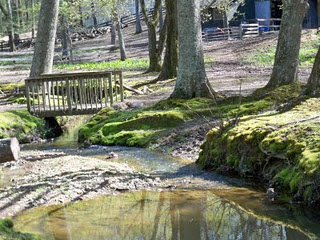
A few days ago I walked a small section of the Cross County Trail, from Miller Heights to a rock bridge across Difficult Run. I was pretty close to Vale, I think, and I paused to read a sign about stream valleys and their value to indigenous people: rich soil, nuts and berries to forage, animals there for the same purpose and ripe for the hunting. Obviously water there, too. These green secluded places were early hunting and fishing grounds. They were home.

Now these same places are helping save the area as it once was; it is through the stream valleys that the Cross County Trail (which runs from one end of the county to the other) is threaded.

We walk the paths our ancestors walked. But we walk for different reasons. We walk our dogs; we walk for health. Our livings are made elsewhere. We work for money. We work for prestige. We come to the trail to work out.

But the shaded packed dirt of the Cross County Trail may yet give us back our lives. Or at least it may give me back mine — by helping me learn to love the place I’ve landed.

Mossy Hill

Mossy Hill

You would think that out here in the congested Northern Virginia suburbs it would be next to impossible to lose a hill. But that is exactly what happened. At least for a while.

My children found the rise, named it the mossy hill, and took me there for the first time nine or ten years ago. I was impressed. It was high enough to give a good view of the stream valley below. It made me feel like I was somewhere else entirely, in the foothills of the Blue Ridge or Ozarks, somewhere with more sudden elevations, those squiggly lined places on the topographical maps. But instead I was only half a mile from our house, roaming through a suburban woods.

And then the kids got older, left for track or band or music lessons; the mossy hill was forgotten. I tried to find it many times but the path there had disappeared, vanished under the ferns and sticky vines. But last winter, Tom and used a topo map to find the place again. We looked for those squiggly lines. We approached the matter scientifically. And now I can find the place by heart.

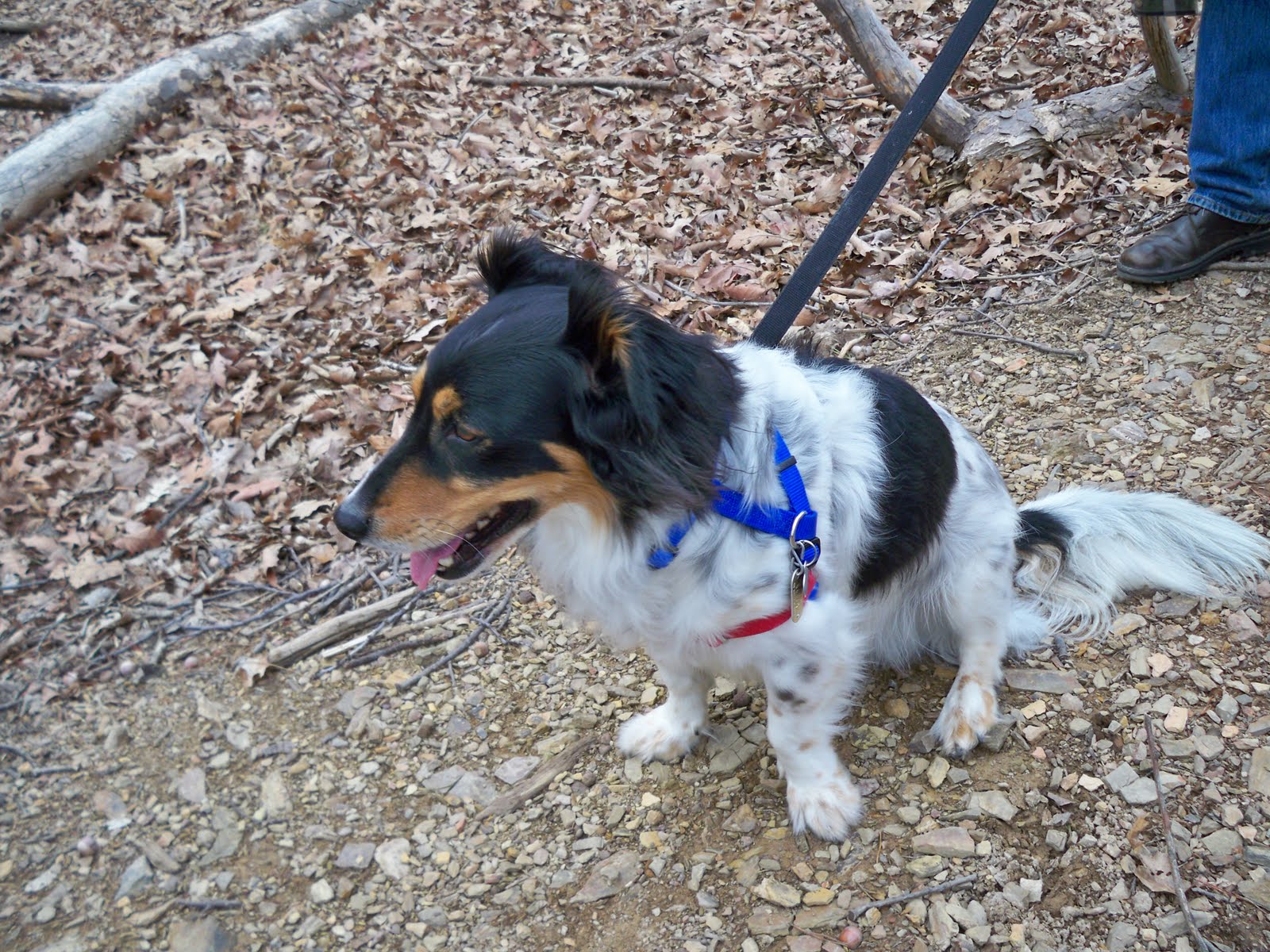
Yesterday Copper and I walked there. We sat on top of the rise and looked into the woods below. The sun struck the ferned forest floor in patches of golden light. Cicadas provided the soundtrack. It was a humid, still, late summer afternoon. The mossy hill was mine again.

Books Before Breakfast

Books Before Breakfast


Sometimes when the house is very quiet I can sneak in a few hours of reading early in the morning. I’m sharper after a night’s sleep, not dropping off on every page, and what I run my eyes over stays with me longer.

What stays and what doesn’t is the subject of the book I just finished, Moonwalking with Einstein, by Joshua Foer. It’s a book about memory and memorizing, how a journalist covering the U.S. Memory Championship spent a year developing his memory — and became the U.S. Memory Champion himself.

Basically, anyone can improve his or her memory, Foer says. Or anyone with reasonable intelligence willing to spend hours a day practicing. The mnemonic techniques Foer uses were well known hundreds of years ago, before printed books made memorizing less important.

In my favorite chapter, “The End of Remembering,” Foer provides an intellectual history of memory’s steady assault by scroll, codex, silent reading, indexes, the printing press — and more recently by computers, cell phones, Google and Post-It notes. Why bother to hold information in our heads when there are so many other places to put it?

“Our memories make us who we are,” Foer writes. “They are the seat of our values and source of our character. … Memory training is not just for the sake of performing party tricks; it’s about nurturing something profoundly and essentially human.”

I couldn’t agree more. But just to be sure, I will now write “Joshua Foer, Moonwalking with Einstein” in the back of my journal. It’s where I inscribe the names of all the books I read. If I didn’t, I’d forget I had read them.

First Things

First Things


A welcome blast of cool air has revived our mornings, and I wake up ready to run. It’s interesting how habit dictates one’s timing and route. I always used to walk in the morning, but that was before I started writing in the morning. Now my mornings are like the lead paragraph in a complicated article. There is so much I want to put in them that they sometimes collapse from their own weight.

And my walks, I might postpone them till noon or later. But of course, you only get so many newborn hours in a day. I miss the silken start of a day that begins on foot. But not today. Today I’m out the door and on my way.

Nature’s Way

Nature’s Way


Sometimes I think the Perseid Meteor Showers are nature’s way of getting us house-dwellers outside at least one night a year. The annual event is not a particularly good way to see shooting stars, at least not in our light-polluted corner of the world.

But this morning I woke early, threw on a white hooded sweatshirt and padded outside. First I walked to one end of the block but house lights and flood lights took away what little darkness there was. Then I ventured the other direction, to the meadow.

There’s an old baseball diamond there and I sat down on home plate, then reclined on the grass, hands laced under my head, eyes scanning the heavens. I looked and looked and looked. A couple of times I thought I saw a flash of light, but I decided it was just a twinkling star or a lightning bug.

It didn’t really matter, though. It was enough to gaze at the stars, to bask momentarily in the immensity of space.