Yesterday was Earth Day; tomorrow is Easter. Today we are nicely tucked between earth and heaven. Which is where we are most comfortable, anyway.
“[It is a] a shabby genteel sentiment,” wrote the 19th-century British historian William Winwood Reade, “which makes men prefer to believe that they are degenerated angels rather than elevated apes.”
I disagree. It is not a “shabby sentiment” that makes us feel uncomfortable in our human skin, that makes us believe there is something for us after this life is done. We may be wrong, of course. But hope is a choice. An informed choice.
Last night’s Holy Thursday service brought back an old friend — incense. I grew up with the stuff, but it’s pretty scarce these days, at least in my church. Last night they pulled out all the stops, though, and by the end of the evening, incense was wafting all over the sanctuary. It matched the solemnity of the mass, the Pange Lingua, the stately procession at the end.
Some people coughed and sneezed when the incense came our way. It was too much for them. But I took deep breaths. The incense was more than just an odor, more than particles in the air. It reminded me of ritual and childhood piety. I didn’t mind it at all.
It was my first time so I wanted to make a good impression. I parked the car at the high school and hiked to Metro. At the office I made more trips to the water cooler, mailbox and colleagues’ offices. At lunchtime came the big kahuna — a fast walk to the mall and back. At the end of the day I was well over the 10,000 recommended steps. But come on, I’m a walker in the suburbs. What else could I do? Which is why I must wear the gizmo again. Wear it and forget about it.
I push aside questions of motivation and ambition — what kind of person shows off for a tiny gadget attached to her waist, something that no one else can see? I give myself a break. It was my first time. The pedometer made me do it.
Photo of Sportline ThinQ pedometers from Slippery Brick
My piano is an old love, a dusty, overlooked and abandoned love. But reading Leon Fleisher’s book (see April 14 post) made me seek out the piano again, the rent-to-purchase spinet that my parents bought for me to learn on and then gave me when I had a house of my own.
I had watched Fleisher play “Sheep May Safely Graze” on YouTube last week. http://www.youtube.com/watch?v=VzLYxiLNJj8 It was sublime — and even more moving because you could see his little finger curl up after striking the high notes. You could see the effort it took him to play this piece.
I did something impulsive. I ordered the sheet music. And when it arrived yesterday I took it right to the piano. I’ve always loved this Bach cantata, even had a string quartet play it at our wedding. It is sweet and simple, with a melody that wanders off a bit, like a lost lamb. The piece starts off easily enough, but by the second page there are intricate fingerings. You must bring out an inner melody amidst scores of other notes — not easy for someone who’s been doing a lot more typing than playing the last few decades.
Still, I vow (and I vow it here, in a semi-public place!) to learn “Sheep May Safely Graze.” To prepare each part separately. To take it slowly enough that the notes enter my hands and my head. To increase speed only when I’ve mastered the voicing. To bring that lamb home. To play again.
At the writing contest awards ceremony Friday night, and again this morning as I finished reading Out Stealing Horses, a lovely novel by the Norwegian author Per Petterson, I think about fiction and nonfiction, how close they can lie, how they are the same bones with different skin.
In this novel an old man recalls a summer that altered his life, that took his 15-year-old self and changed it forever. So fully does he live in his own thoughts, this man, that at one point he wonders if “the difference between talking and not talking is slowly wiped out, that the unending, inner conversation we carry on with ourselves merges with the one we have with the few people we still see, and when you live alone for too long the line which divides the one from the other becomes vague, and you do not notice when you cross that line…”
There is one conversation in our heads, one story. Maybe it doesn’t matter whether it emerges as fiction or memoir, essay or poem. All that matters is letting it out.
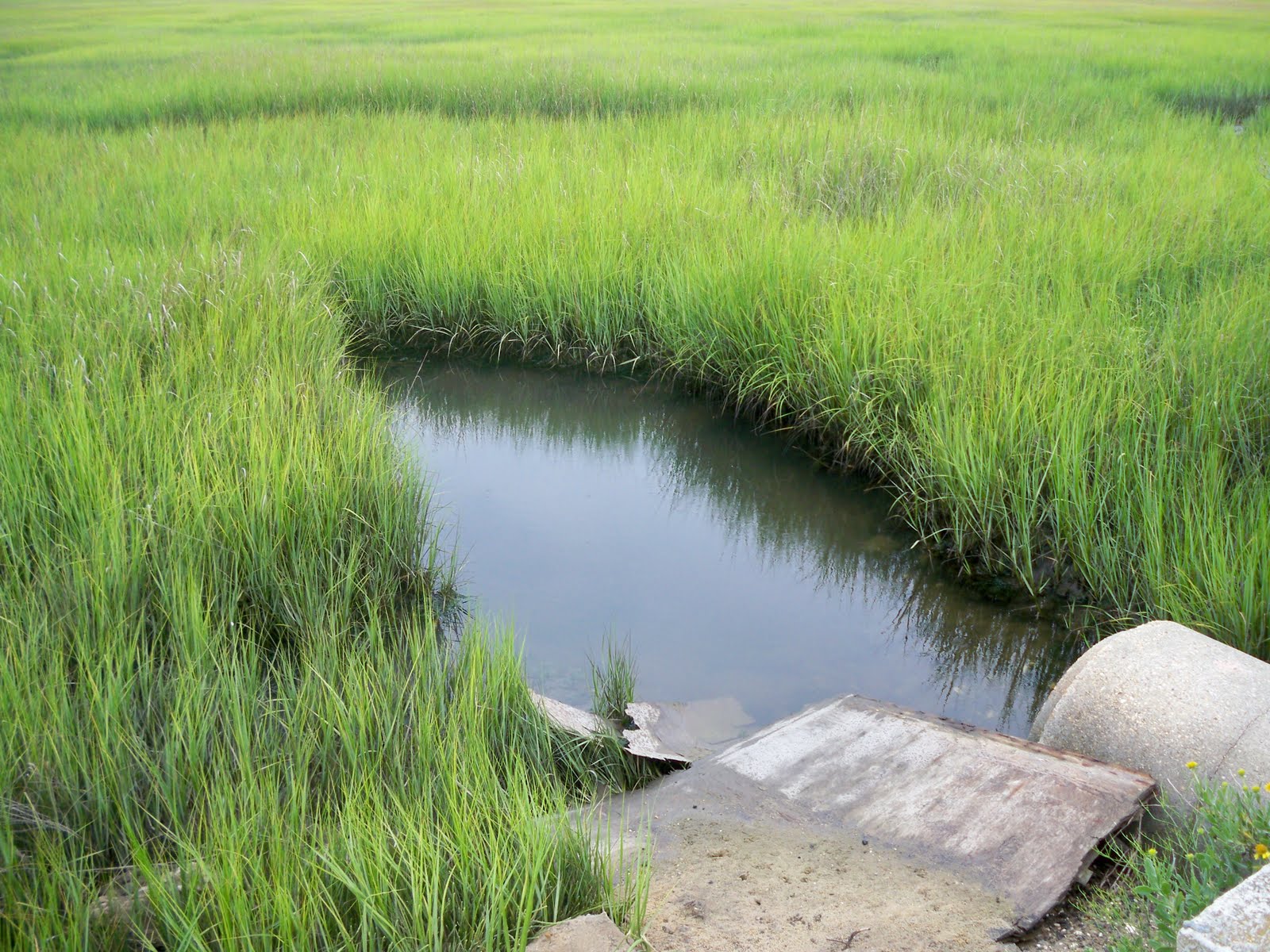
The ground is saturated. Rain water trickles through the soil and into drainage ditches that divide the meadow. Yesterday I spotted a young boy squatting down beside one of those ditches. His bike laid carelessly on its side, as if he couldn’t wait to plunge into the water, to see what he might find there.
I remembered the park a street behind us when I was this boy’s age. There was a creek that wound around the park, and the playground smelled of fresh mud. I imagine the creek flooded in the spring of the year. But I wouldn’t have noticed that at the time.
All I knew then was the smell of the run in the dank days of spring, standing on the bank, immersed as this boy was immersed, catching crawdads or, later, bottling creek water to look at under my microscope. Every day had the same catch in its breath as these days do.
Last night I went to an awards ceremony for a writing contest I’d helped to judge. I wanted to see the people who’d written the essays, to match face with voice. The winners were younger than I imagined they would be. One of them I’d thought was female (our entries were identified only with numbers) was actually male. Two of the three honorable mentions were married to each other.
As the evening progressed, back stories emerged. Enough of them that I knew we had picked the right winners. Enough of them that I knew we, the judges, were the real winners after all.
There are springs that flow smoothly from gray deadwood, sodden March soil to greening Aprils and ebullient Mays.
And then there are springs like this one. Several days of dreary clouds and then a jewel (yesterday) or, if you’re lucky, two jewels (today is promising). Rather than spoiling us with a steady pulse, spring teases us, stalls, then overwhelms. It is the mid-game reprieve, the comeback, the career that seemed to be over but somehow springs to life.
It is the dogwood, just flowering. The red buds — where have they been these weeks, how could I have missed their shimmer? The pink tulips I forgot I planted — they are blooming.
When the sun appears, the new grass quivers with green. The oaks are just past budding; each leaf opens heavenward, like a small prayer. And the air, pellucid, perfect.
In My Nine Lives, the pianist Leon Fleisher describes the despair he faced when the fourth and fifth fingers of his right hand curled up and stopped working. He was in his prime, playing with the world’s great orchestras, when the mysterious ailment derailed his career. Fleisher had been playing since he was four — for as long as he could remember— and by age 9 was studying with the great Artur Schnabel.Music was Fleisher’s life.
Fleisher admits that he thought about suicide. But he loved life and he loved music, so he turned to teaching and conducting. He mastered repertoire for the left hand and gave recitals. He never stopped looking for a cure for his right hand, either, and more than 30 years later, he found one: botox injections for what was finally diagnosed as focal dystonia, a neurological condition that makes muscles contract.
The life he lived was not the one he planned; it was a richer one. “Time and again, I would look at my life and marvel that so many wonderful things had happened that never would have happened if my hand had not been struck down. I couldn’t imagine my life without conducting. I couldn’t imagine life without teaching so intensely. I couldn’t imagine my life without [my wife] Kathy.”
This is the door-closing-window-opening philosophy writ large. As I write these words I listen to Fleisher play the Schubert Piano Sonata in B-flat Major, Opus 960. It’s a piece that Fleisher (with co-author Anne Midgette) describes as “sublime,” “aching,” “like a memory from far away.” The music Fleisher makes now is transcendent.The desert years carved out a place in him, and the music that gurgles up from that place is both delicate and unflinching. His playing has a depth that comes from struggle.
A day after the 57th anniversary of the least eventful day since 1900 (see Monday’s entry) came a day that was anything but boring. Yesterday was the 50th anniversary of human spaceflight — Yuri Gagarin’s 109-minute flight into the heavens and back again. It was the 66th anniversary of President Franklin D. Roosevelt’s passing.His sudden death from a cerebral hemorrhage at the age of 63 shocked Americans; he was the only president many of them, including my parents, had ever known. And it was the 150th anniversary of the first shots fired at Fort Sumter — the opening salvo of the Civil War.
By the time I post this entry, however,this will be yesterday’s news. And I will be wondering why we have become so fond of anniversary stories. Certainly we don’t lack news of our own. I think it may be a way to control the complexity of our lives. And we do honor history by bringing its highlights to our attention. But when the present is littered with the past, it’s hard not to feel encumbered.