I just finished reading Antonia Fraser’s memoir of her life with Harold Pinter, Must You Go? I marvel at the honesty and the tenderness of Antonia’s portrayal of her husband — and also at how they seemed to know everyone in the literary and political establishments. It reminds me of something I know but seldom think about: how small the world is at the top.
But my favorite line has nothing to do with literary lions or radical politics. It is instead this almost off-the-cuff observation Antonia made April 4, 1979: “My idea of happiness is to be alone in a room in a house full of people.”
I’ve never heard it put quite that way, but I understand and agree. We must be alone in order to create; we must be with loved ones in order to live.
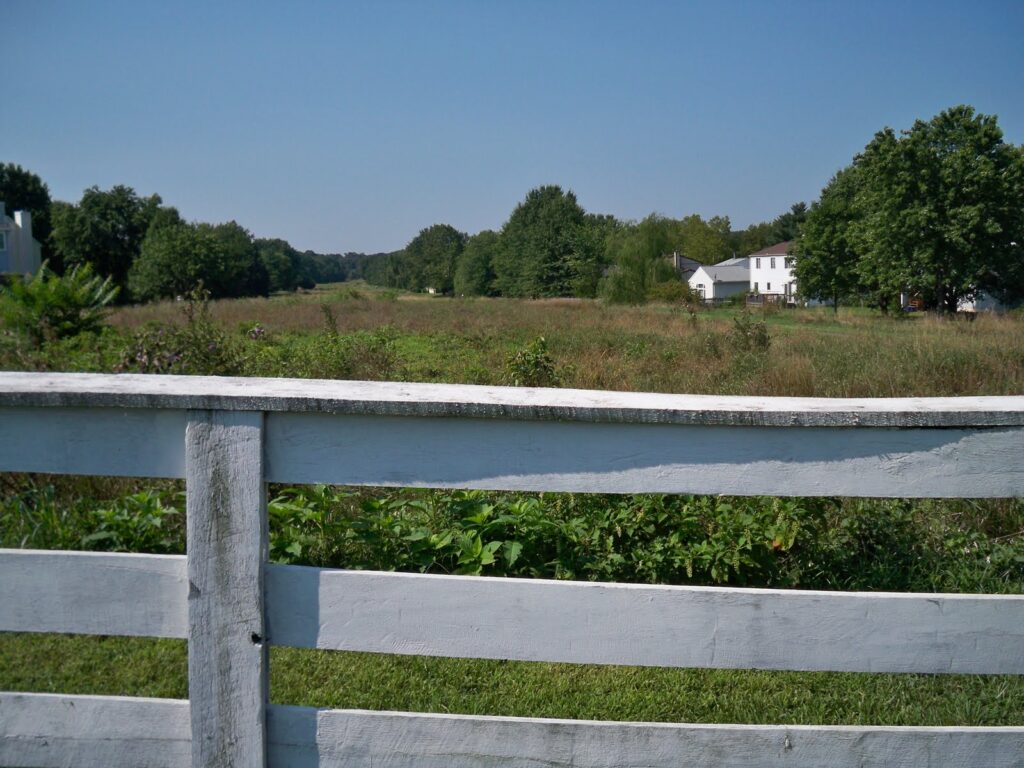
One of my walking routes requires that I hop a fence. I’m not trespassing (though I’ve been known to in search of a good path). But I am saving myself a few steps by clambering across the fence rather than looping around it. I climb as quickly as possible, since I can only guess how a middle-aged woman doing this must look. What I need, I thought today, is a stile, a wooden device used to cross a wall or a fence and found predominately in the British Isles.
The absence of stiles — in fact, the absurdity of even imagining them here — is proof of how the suburban world is not designed for walking. Yes, there are paved paths and trails, and I appreciate them. But the trails peter out randomly. Or they run into fences.
In short, this world is built for the automobile. Roads are wide and car-scaled, and many neighborhoods (ours included) have no sidewalks. It is not the English countryside, with narrow lanes, paths from village to village, and stiles across the hedgerows. It is fenced and paved, every walker for herself.
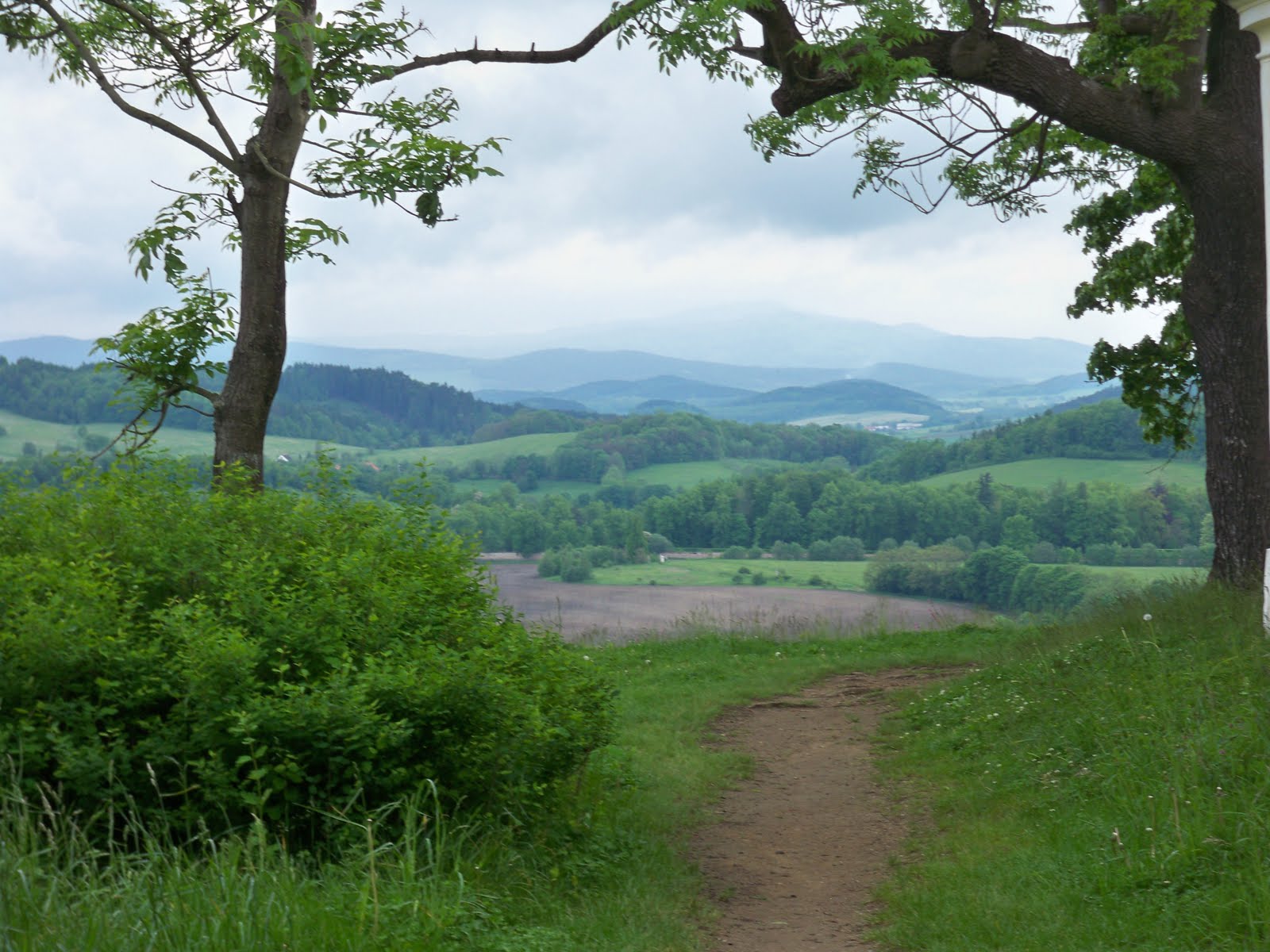
Still, you can’t keep a walker from dreaming. I may be strolling down a suburban street, but in my imagination I’m ambling from Upper to Lower Slaughter in a fine English mist.
Our youngest is visiting our oldest in college, so we are alone: Tom and I and the dog. Downstairs we busy ourselves paying bills, filing insurance claims (the children may be gone but the paperwork of parenting goes on).
Upstairs, though, upstairs — three empty bedrooms stretch like a long sigh down the hallway. The shower is still, the hairdryer, too. I catch myself talking softly. Amputation is too strong a word, but this is more than missing. I’m glad I have a couple years to ponder the imagery here. It will take at least that long.
This morning a line from the newspaper caught my eye. Reporting on the crisis in Libya and the improbable victory of “a ragtag team of thousands” that repelled government forces, the Washington Post quotes Suleiman Abdel, a surgeon and now a rebel, as saying this about Libyan leader Gaddafi: “He has the force, but we have the heart.”
I let that one sink in for a moment. I copied it down in my journal. Of all the story lines in all the novels, memoirs, movies, this is the most compelling. It is the story of the underdog, the one who succeeds against all odds. And sometimes it is a sad story, a tale of one who tries but fails. But it is always inspiring.
He was born by lantern light in 1901 and lived to see television, computers, airplanes and rockets to the moon. He endured two world wars, the Depression and, in the end, a certain celebrity. Frank W. Buckles died Sunday on his West Virginia farm. Of the almost five million Americans who served in World War I, he was the last to go. When he died Sunday at age 110, only two survivors of the Great War were left, one in Australia and one in England.
Buckles lied his way into the Army at age 16, and after the war was over, he took typing and short hand and became a purser for a steamship line, traveling the world. World War II was harder on Buckles than World War I — he was a civilian working for a Manila shipping company when the Japanese took him prisoner. He spent three years and two months in captivity.
By 1953 Buckles and his wife had settled down on Gap View farm. The former doughboy drove a tractor past his 100th birthday, had a Facebook page and championed a refurbished World War I monument. He took seriously his responsibility as guardian of the past, but he liked to have fun, too. The secret to longevity, he once said, is, “When you think you’re dying — don’t.”
Reading about Buckles reminds me that the past is all around us. It is in the stories told by our parents and grandparents; it is in quiet roadside monuments and the pages of books. Most of all it is alive within each of us. We may walk through a flat, featureless world, but our minds are full of mountains and valleys, the intricate passageways of all we have been and known. “The past is never dead,” William Faulkner wrote. “It’s not even past.”
They were with me all the way to Metro this morning, the moon and Venus. The moon a thin paring, a baby’s fingernail; Venus an emphatic dot above and to the right. Star Date magazine calls them “the most beautiful of all astronomical duos,” and I agree. Clean and simple in the dawn sky, they are twin beacons.
The way they looked this morning reminded me of a wink and a smile. The moon’s lopsided grin rakish and debonair; Venus with its pure eye twinkling. Don’t take the day too seriously, they told me. I’m trying to listen.
Once a year (at least!) I know I will stay up late on Sunday night, starting off the work week in a sleep deficit. Once a year I will listen to giddy stars telling us who designed their Size 0 gowns. But it will be worth it every year, too, because no matter how gaudy or self-involved or long they are, the Oscars are for me the original “must-see TV.”
They remind me of the days when there were three networks and the annual airing of “The Wizard of Oz” or Mary Martin’s “Peter Pan” dominated the television calendar. Yes, we were limited, so limited that we read books and made forts in the woods because there was little to keep us inside. But perhaps for that reason the movies seemed even more magical, and tuning in to the annual celebration in their honor became a habit.
In the weeks leading up to the awards ceremony I try to see as many “Best Picture” nominees as I can, a task made more difficult by last year’s decision to increase the number tapped from five to ten. Even though I came nowhere close to seeing them all, I still feel cinema-besotted from my efforts.
Last night’s Oscars ceremony was slightly shorter than usual and not as well hosted. But our favorites won, the “In Memoriam” reminded us who we have lost, and the dresses, well, the dresses are always divine.
Today I travel around the Beltway to a little building in Bethesda called the Writer’s Center. I have led essay and non-fiction writing workshops there for almost 10 years, and every time I do I know I’ll be inspired. I will meet lawyers and accountants, caterers and dry cleaners — people from all walks of life with one thing in common — they all have stories to tell.
Sometimes we laugh together; sometimes we cry. But always we learn something about ourselves as writers and as human beings.
Writing is best done alone and in silence, so when writers gather to share their work there is an extra measure of relief and pleasure at being together. It is good to know there are kindred spirits walking this long road.
One of my daughters likes the rain; she sends me messages with happy faces on drizzly days. I grew up in what I now realize was a cloudier-than-average part of the country, so I love the sun. But I have come to terms with rain and have come to appreciate its power to inspire. Rainy days give me permission to stay inside, to think and write.
And if the drops should stop for a few minutes, a misty stroll is just the thing to set my mind to spinning. On rainy days I can pretend I’m in the British Isles, just back from a tramp on the moors, shaking my oilskin jacket, stomping my Wellies and pouring myself a cup of strong black tea. And speaking of tea, it’s time for another cup.
I was carrying bags of give-away clothes to the end of the driveway, tip-toeing across the ice, when I heard a sound scarce around here lately, the faint “who-who” of a great horned owl. Moments later I heard another, similar call. This one was slightly lower in pitch and seemed to come from farther away.
I stopped what I was doing and listened to the duet. One owl was raspy, staccato, insistent; the other smooth, tawny, intricate. It was dawn and the sky was pink. I was enthralled with the wild sounds, felt my day grow larger and more filled with possibility because of them.
And though I would later read up on these owls and learn that they are some of the only creatures that eat skunks, that they prey on ospreys and falcons and are not only not endangered, but endanger others — this doesn’t change the way I felt hearing the owls’ song. It was if the houses and cars and driveways fell away. What was left was the world of wild things.