Browsed by
Author: Anne Cassidy

Nature’s First Green

Nature’s First Green

“Nature’s first green is gold, its hardest hue to hold,” wrote Robert Frost. He meant that it is precious and fleeting. But it is literally true, too. Often the first green of spring is closer to yellow in color.

I thought of this today as I stepped out back and noticed that while we were watching the snow banks dwindle, the old miracle of spring was starting to unfold amidst the whiteness. It is the witch hazel tree, the earliest harbinger of winter’s end. It often surprises me in February like this, blooming long before I expect it to.

Why don’t I look for it? Because it is the first, I guess, and because at a certain point in winter spring does not seem possible. Warm breezes and green trees seem like a dream, like a life we once lived but can live no more. The witch hazel tree reminds me otherwise.

Play On

Play On


I had just finished reading “This is Your Brain on Music,” in which I learned that “the story of your brain on music is the story of an exquisite orchestration of brain regions, involving both the oldest and newest parts of the human brain,” according to the author Daniel Levitin, a musician and neuroscientist. I had read that the best composers intentionally violate our expectations and that this pleases the part of the brain involved in motivation and reward. We thrive on the melody that goes up when it should go down, on the sudden pause.

And then I got in the car and turned on the radio. It was Bach’s “Brandenburg Concerto Number Four,” the third movement, presto. I reached down and turned up the volume. I’ve listened to this piece hundreds of times. I can visualize the album cover of the complete Brandenburg Concerti (in vinyl, of course) that Dad bought when I was in high school. There’s one note that has always shaken me to the core. The violin and recorders are skittering all over the higher registers and there is an almost runaway-train cacophony of sound – when the cellos boom in with their final version of the melody. They hold the first note of that run slightly longer than they need to, as if to say, this is how you do it, folks. This is it. It’s not what we expect at this point in the piece, and that’s why it’s thrilling.

Bach has a few more tricks up his sleeve, though. Three times near the end of this movement the sound comes to a complete halt. You don’t expect these caesuras. But there they are, and they add a humor and lilt to the conclusion. When the sound stops, I can feel the pulse inside the silence.

I enjoyed reading the book; it helped me understand why I love melody and rhythm and timbre. But better than the book is the music itself.

The Train Stops Here

The Train Stops Here

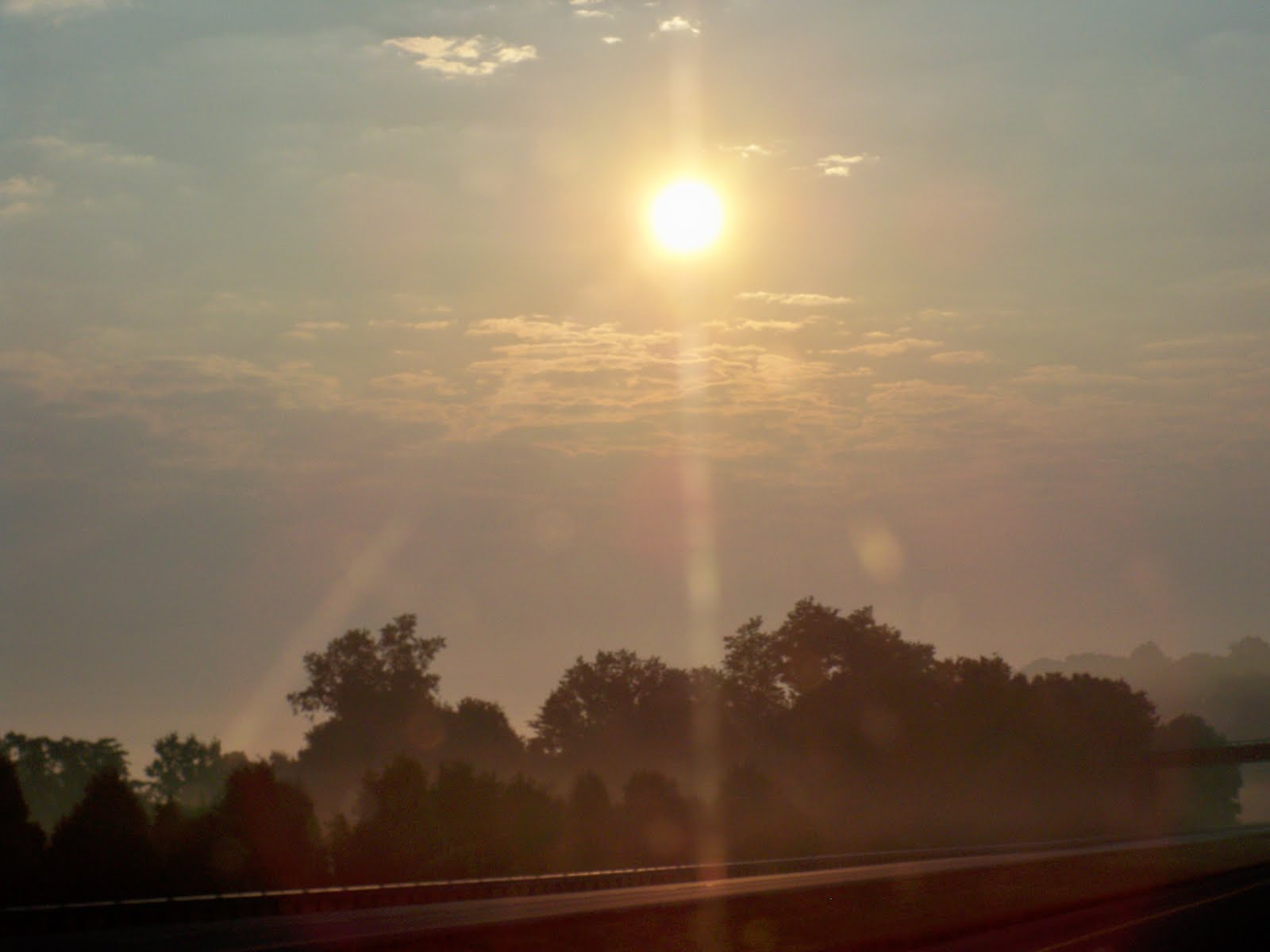
More snow is forecast for tonight and tomorrow. But that’s not what I want to talk about. It’s the morning light, the morning that comes earlier every day, pink tinged and proud. It’s the rosy fingered dawn that Homer wrote about in “The Odyssey,” still rosy, still here. And it’s a guy I noticed this morning while waiting for the train, just an ordinary guy in a black pea coat, who thrust his right index finger up into the air and then very definitively pointed it down again as the old Orange Line cars lumbered into Vienna station. He looked as if he were delivering a downbeat to the New York Philharmonic or refereeing the Super Bowl, but what he was really doing was pointing to his place on the platform, saying to the great god Metro, “I want the door to open here. Right here where I’m standing.” And, by golly, it did; a door opened magically in front of him. This is the wish of weary commuters everywhere, that the doors will open right in front of us, that we’ll step into empty trains and find seats. The pantomimer was just more open about this desire than the rest of us. We can all use a little levity in the morning.

Behind the Pines

Behind the Pines


Astute followers of these posts will notice that for a blog that calls itself “A Walker in the Suburbs” there’s been precious little walking going on. Let’s blame that on the snow and on sciatica (perhaps shoveling-induced although its exact origin is a mystery) — both of which have kept me inside. But I did venture out yesterday and I noticed that one house I’ve always wondered about, a house obscured by thick evergreens, is now partially exposed due to a downed tree. This place was always a mystery. Because I couldn’t see the house at all, I imagined it to be quite different from the other models in our neighborhood. Elegant and refined, with the whiff of an English country estate about it. But now its secret is out. It’s just another house, I’m sorry to say. But if I know evergreens, the trees that remain will quickly spread and offer a blessed screen. And then, once again, we will have mystery.

Opening a Window

Opening a Window


I read today in the paper that Georgelle Hirliman died. She was known as “the writer in the window” because about 25 years ago when she had writer’s block she came up with the idea of sitting in a Santa Fe shop window with her typewriter and a sign that read “Help me cure my writer’s block — give me a topic.” People passing by would tape up their questions and on the other side of the glass, she would tape her answers. One question was “Where do ducks go when ponds freeze over? Her answer: “warm, chlorinated pools in Miami and Beverly Hills.” You may guess where this is going. She never wrote the novel, but she appeared in windows all over the U.S. and Canada, and eventually collected all her aphorisms into a book called “Dear Writer in the Window: The Wit and Wisdom of a Sidewalk Sage.” For her, the bypass became the new road. For her, when God closed a door he literally opened a window. Salvation often has a sense of humor.

The Tissue

The Tissue


Like many people these days I’ve been mesmerized by the Winter Olympics–although I seem to have a knack for missing the most exciting moments. I was there for the first runs of the women’s skeleton, for example, but missed Shaun White’s Double McTwist and Evan Lysacek’s long program Gold. But what stands out in my mind is a moment from last night’s ice dancing program. I don’t even remember which pair it was, but I watched the man blow his nose and then hand the tissue to someone — a coach, a relative? — before he skated off with his partner into Olympic glory.

It made me think about all of us who only stand and wait, who cheer on the sidelines, which is, let’s face it, most of us. And it also made me think about how, despite their gravity-defying feats, these Olympians are just ordinary people after all. I’ll remember the tissue long after I’ve forgotten the triple toe loops. It was a moment of humanity. Those always stick with me.

In Design

In Design

The scene: a class on Adobe In Design. The characters: Seven people who know what they’re doing and one who does not. The latter, an editor, works in words not in images, cannot find all the tiny buttons and tabs with which one works in this program, cannot even remember to use the mouse instead of the keypad. But she — heck, I’ll just come clean and say I — press on, determined to get as much out of the class as possible.

I don’t plan to become a designer; I just want to demystify the process. I repeat that to myself all day, a silent mantra, but there comes a time in mid-afternoon when I’m hopelessly confused. I don’t know how to manipulate the image, I don’t even know what layer I’m on. The class is moving fast and by the time I ask a question I’m six steps behind the others.

The secret to staying young, I’ve heard, is to keep learning. But learning is risky. It requires a willingness to appear foolish in front of others. I felt foolish today. Based on that, I should have lopped a week off my age. At least.

Black Ice

Black Ice

I’m not an ice skater, so when I hear the words “black ice” I don’t think of a calm skate on a frozen pond. Instead I imagine the skid mark, the tire tracks off the road. What is it about black ice that strikes terror in my heart? It’s the stealth, isn’t it? Fearing something that you can’t see. It’s the ordinariness of the ice, the way it poses as a puddle but turns out to be something more, something sinister. Black snow isn’t good either, of course, but at least you know what you’re getting — the fumes of a thousand internal combustion engines, the grit of countless plow-gouged roads. Black snow coats the roadside mounds and stands in sharp contrast to lawns of untouched white. But black ice is invisible; it’s felt before it’s seen. I drive cautiously when black ice is about; the curves of Fox Mill that are normally such a joy to lean into, I slog through slowly these days. And let’s not even mention how I shuffle along suspiciously shiny sidewalks. Black ice makes me walk like an old woman.

In and Out

In and Out


Today I woke early and blew my hair dry. Soon I will put on work clothes, drive to Metro, ride the Orange Line to Metro Center, switch to the Red Line, walk from Judiciary Square to the Law Center — and return to routine. For 17 years I worked out of our house. Whole weeks would go by when I would only wear slippers. Last week’s snow holiday was a brief return to that world. It was nice; I won’t deny it. But there is something about getting up and getting out of the house that is good for creativity. So even though I long to spend today with my books and my laptop, a walk through the woods and a cup of tea after I come back inside, I will instead shoulder my bag and head out into the world.

Feed the Birds

Feed the Birds


We haven’t fed the birds since we brought our dog, Copper, home from the Loudoun County Humane Society three years ago. Copper is part border collie, part basset hound. While he’s never harassed our beloved parakeet Hermes (who’s always in his cage, swinging from a hook in the kitchen), he does love to chase small critters in the backyard. But the snow and ice have been so brutal for wild birds that we’ve thrown some seed on the table and the deck railing. We’ve mostly had junkos, little gray things with a flash of white under their tails, so brave in the face of cold and ice, hopping the snowbanks on their little stick legs. As I watch them from the kitchen window, I think of how winter opens our eyes to what is usually hidden. It is, in that sense, the true season of renewal.