Browsed by
Category: travel

A Walk in Ireland

A Walk in Ireland


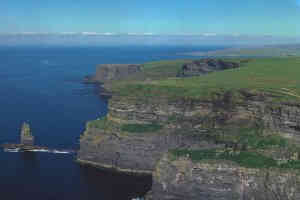
The walks we took in Ireland: along Grafton Street in Dublin, through the arch in Galway City, to the ends of the earth at the Cliffs of Moher.

The walk I remember most: An ordinary one in Donegal, fuchsia hanging along the hedgerows. The fuchsia surprised me. I thought of it as a hothouse plant, something to be coddled. But in Ireland it thrived on neglect — along with rain, mist and the soft Irish air.

This walk I remember with the fuchsia was down a small lane. The sun seemed never to set, and our summer would never end. This was a long time ago.

Google Travel

Google Travel


Last night we had a full house, and before dinner we talked about the Occoquan Reservoir and the roads and bridges and houses around it. Claire’s boyfriend, Stevie, grew up a stone’s throw from the water. He fishes it all summer and knows ever cove and inlet. My brother Drew, who is moving back to Northern Virginia after almost two years in St. Louis, wouldn’t mind living in a house near the reservoir.

So commenced one of those delightful (modern) conversations that is part talk and part Google maps. We found the house, looked at the terrain around it, figured out how wide the creek would be that flows beside it. Then we looked at Facebook photos of fish Claire and Stevie have caught and released back into the lake, largemouth bass and catfish.

There are things we couldn’t have done a few years ago; so, in a way, we plumbed the place more. But, I also wonder, did I see just enough to make me less likely to see it — for real — for myself?

Photo: Virginia Department of Game and Inland Fisheries

A Place Apart

A Place Apart


I’ve been re-reading the memoirs of Niall Williams and Christine Breen, who in 1985 moved from Manhattan to Kiltumper, County Clare, Ireland to write, paint and live a simple life. Their first two summers were some of the rainiest on record and tested their resolve. But in 1987 the sun shone and the turf dried and the hay was made before the rains came again.

It was then that they wrote, “Days and nights in Kiltumper are perfect countryside settings for the quiet contemplation of a career, a love, a life. In this green isolation, whole chunks of life can suddenly seem unimportant. A walk across fields in the evening light can change philosophies forever.”

Like many writers they found that a change of scene created a change of heart. “Kiltumper had come to seem a sort of relief post, quite literally a place apart, a place to come to in which to draw breath and look outwards over the fields, to find the direction of your life.”

Reading this, losing myself in their fantasy, I wonder: Can I ever do the same thing by staying put in the suburbs? Can I walk my way into an epiphany? I must admit, when I’m reading about the west of Ireland, I think not.

Terra Incognita

Terra Incognita


An element of modern life that we tend to discount is the amount of travel we undertake. I often think of this after one of my quick trips to Kentucky, a quick trip that takes eight hours each way.

But even the distance conquered by each suburban commuter, moving daily from one realm to another, can be 50 miles or more round trip.

Once, when Mom and I were traveling together in Ireland, we asked a shop woman for directions to a manor house that we knew was less than 10 miles away. She pointed us down a stretch of highway. “It’s lovely that way, I’ve heard,” she said.

It took us a minute to realize that the woman had never been there. What was for us a short jaunt, just one tiny leg of a many-legged adventure, was for her terra incognita.

And so it goes with traveling. We learn not just from the distances we traverse but from the people we meet along the way. People who show us another way to live, the way of staying put.
Staying put is our terra incognita.

A Walkway in the Sky

A Walkway in the Sky


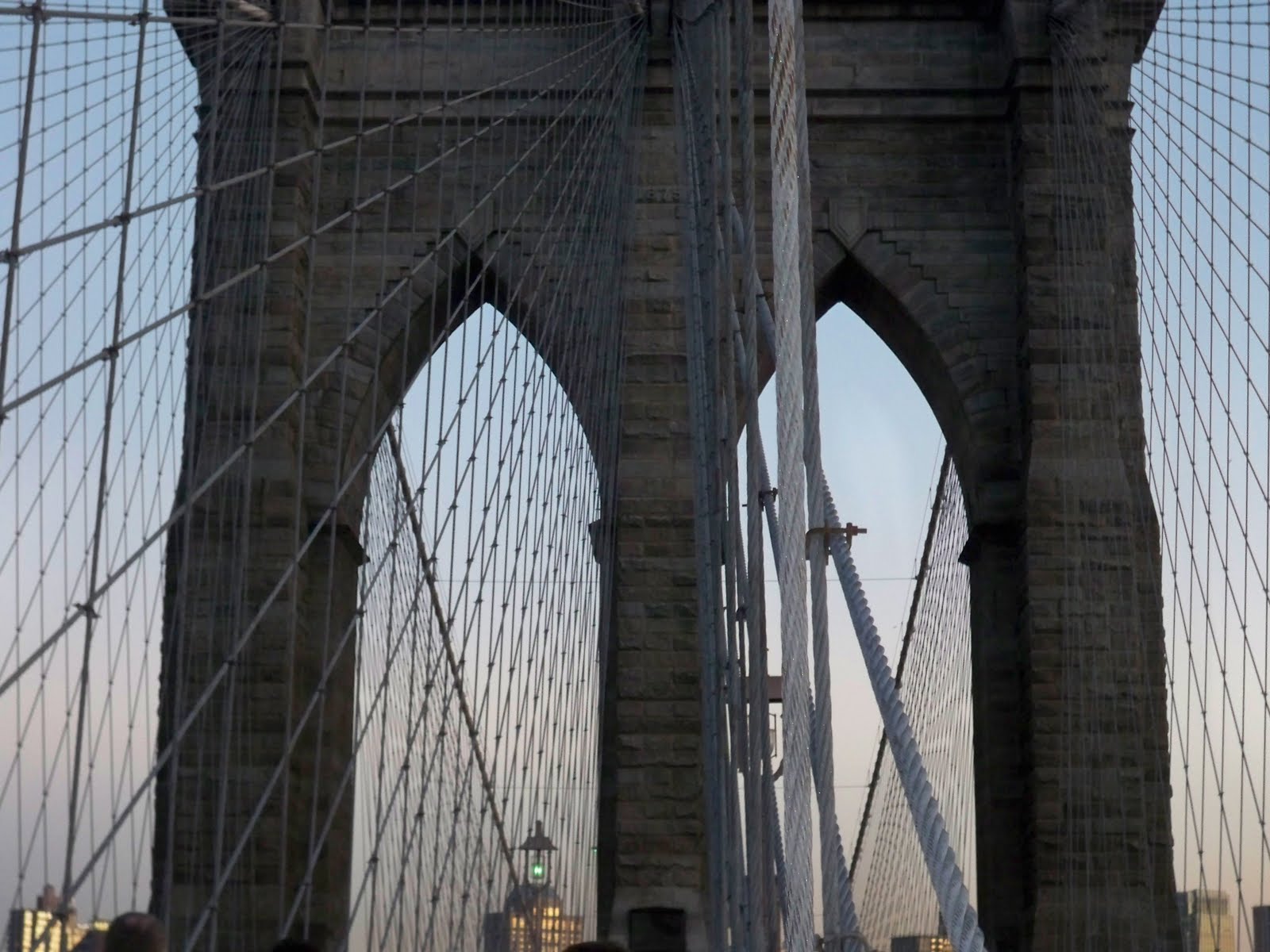
One of the world’s greatest walks is the pedestrian path of the Brooklyn Bridge. Stroll across it at sunset on a balmy late fall afternoon and see the city at its finest.

If you’re walking toward Brooklyn, on your right is South Street Seaport, lower Manhattan and, once you’re out far enough, the Statue of Liberty. On your left is midtown, with the Empire State Building and the Chrysler Building. Ahead of you is this view, the towers and cables of the bridge itself, built six times stronger than it needed to be, built for the ages, and now 127 years old. A bridge that has inspired poets and madmen and ordinary citizens who need to believe in beauty.

The Quiet Life

The Quiet Life

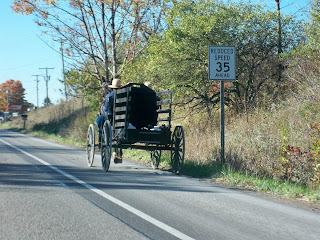
On Saturday we toured Holmes County, Ohio, home to the world’s largest Amish population. We passed buggy after buggy, and after a while I noticed there were different models. Some were like sedans; others resembled little trucks. All were pulled by beautifully sleek black horses.

In the village of New Hope, Amish men with long white beards rode their bikes up to the hardware store. A few miles outside the village, past the small school, a woman named Lavina met us in her home and showed us the quilts she and her sister, Mary, had made. The quilts were piled on a double bed and she flipped each one over to reveal the varying patterns and colors of the one beneath.

A few miles away we bought stainless steel cookware at the Yoder Bargain store. A young girl with head scarf and long dress browsed the sewing notions. An Amish family looked over the baby clothes. We found an entire small room devoted to rubber stamps. The store was dark and quiet, and when we left to get in our car I glimpsed a fall tableaux: red-leaved trees, corn crib, white-hatted Amish grandmother tending the mums, a buggy in the distance. No electric wires or telephone lines in sight.

This is a quiet world, one without radio music, car horns or text message beeps. I couldn’t live in it, I certainly couldn’t blog in it, but I could enter as a visitor and savor the stillness.

Money and Happiness

Money and Happiness


Yesterday’s New York Times ran an article about a couple who stepped out of the rat race and now live a simple, happier life in a 400-square-foot apartment with 100 possessions (each, I think!). The article mentions the research of Thomas DeLeire at the University of Wisconsin. He recently discovered that of nine categories of consumption, the only one positively related to happiness was leisure spending on vacations, fishing poles and the like. I don’t know about fishing poles, but you wouldn’t have to sit too long on our living room couch to know where we stand in this debate. We take great vacations — and our rumpled, well-loved house tells the tale.

Bicsuitville

Bicsuitville


We’re in Greensboro, North Carolina, this weekend, and are about to explore it. One thing I’ve noticed so far is the preponderance of friend chicken and biscuit chains. I’ll admit: My salad-weary mouth is watering. My southern roots are calling. There are times when only fried chicken will do.

Fathers and the Faraway

Fathers and the Faraway


Fathers, I’ve read in child development books, bring the outside world to the young child. They are the “oh” of surprise, the gasp of delight. I think today of my own father, who traveled every week for work when I was young. Friday night we’d wait for the crunch of his tires on our gravel driveway. He brought with him a whiff of the faraway, of Columbus or Chicago or even, sometimes, New York.

When I first met Tom, he was just back from a student backpacking trip through Europe and he told me stories about living in England with his family for a year. He was (and is!) cosmopolitan!

Families thrive on a combination of the cozy and the wide-open. When kids (including grown kids) know they’re loved, they’re free to venture out into the world. The two most important men in my life have always done that for me.

Sundays in Austria

Sundays in Austria


Mass at the old church on the hill. A large lunch with a brass band. Strolling in the plaza in native dress. Visiting with friends. A typical Sunday for the residents of Hallstatt.

We partook of as many of these customs as we could, minus the dirndls and lederhosen! But I went to church, we heard the band at lunch, and we took a lovely walk through sun and rain and wind to the banks of a roaring stream.

To passersby we said “Gruss Gott,” literally “Greet God,” which is how most Austrians greet each other — rather than “Guten Tag” or “Good Day.” I find this endearingly old-fashioned, and hearing this all Sunday seemed to make the day even more of a celebration. Stores are closed on Sundays in Austria, so you’re forced to take a day off from your normal chores. Life moves more slowly in Europe.