Endangered Evenings

Endangered Evenings

For the last couple weeks, I’ve been stepping out after dinner to stroll a few blocks as the light fades.

This is a bonus amble, usually after a more serious effort earlier in the day. It’s a wind-down walk, time to take in the night air and watch bats careen through the sky.

One night, a big orange moon hung on the horizon. Another, a post-deluge sunset purpled the sky and diffused the light so there were glimmers from all sorts of unusual corners. 
These late-August rambles are more precious because they’re endangered.  The sun sets earlier, long twilights are on the way out. In yesterday’s newspaper, a short article noted that for the first time in months, the sun would set before 8 p.m. Sunday night.
I walked anyway. And it was lovely. 
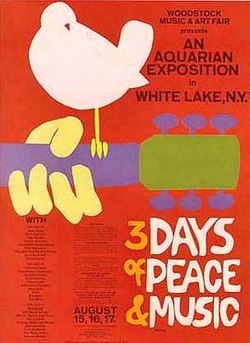
An Aquarian Exposition

An Aquarian Exposition

It was three days of peace and music, revolutionary for some, a peak experience. It was to my generation what the beginning or end of World War II was to my parents. A seminal moment. That by which others are measured.

In the last few days I’ve read about Woodstock, watched a documentary, listened to the voices of those who were there, learned much about it that I didn’t know.

I’m struck by several points, which many people may already have learned and processed, but which feel fresh to me this morning.

It was almost completely noncommercial. Due to a last-minute change of venue, organizers realized they only had time to complete the stage or the fencing — and they chose the stage. They declared Woodstock a free concert early on. There was almost no merchandise for sale at the concert, which means the value it retains comes primarily from the music (and the documentary film released the next year) and the experience itself.

It was by young adults, for young adults, and it happened in an era when young adults had far more autonomy and freedom than they do now. It seemed like fully half of the concert-goers I heard on this morning’s C-SPAN call-in show were 16 or 17 at the time. “Your parents let you go by yourself?” the announcer asked, aghast. Of course!

Most of all, I’m struck by the seemingly impossible fact that it happened 50 years ago. And that is what ultimately unites the baby boomer generation with all that have come before. Time passes, bodies age — but spirits stay (at least we hope) forever young.

(Poster image courtesy Wikipedia)

The Thinker

The Thinker

For the walker, what you do with your feet is simple. You put one in front of the other and move forward.

Much trickier is what you do with your arms. If you’re fast-walking, you pump them until they look like the connecting rod of a steam locomotive or the blurred, dust-kicking feet of a cartoon roadrunner.

If you’re a bit slower, you swing them at your side, freewheeling, in time to the music in your ears or the rhythm of your heartbeat.

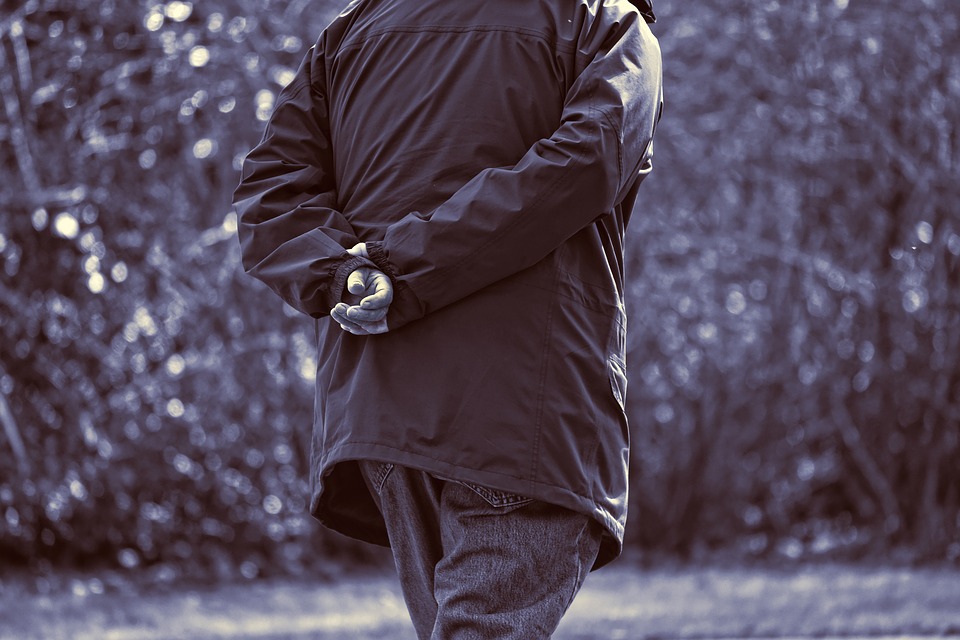
And then there is the meandering, meditative walk, which is best accomplished with arms behind and hands clasped behind the back. It’s open, stilled and expansive — and it, more than the famous seated Rodin, is the true posture of the thinker.

There’s only one problem: When I walk with my hands clasped behind my back, I feel much wiser than I actually am.

(Photo: Pixabay)

All Talk

All Talk

I’m not methodical enough to measure this, but I wonder if my walking pace varies when I listen to radio voices rather than music. 

On Sundays, I can hear re-aired, commercial-free versions of “Meet the Press” and other programs, so I often time my walk to coincide with these shows, which run every hour from noon till 5 p.m. And some mornings I listen to news rather than music. It gets the heart pumping and stands in for the newspaper if it’s not my morning to have it.

But beyond the pace there is the tone…

Walking with talk in my head creates a conversation, one-sided for the most part (unless I blurt out a retort to a particularly egregious statement).

But walking with music in my head allows for the inner dialogue that is such a healing part of the stroll.

Second-Hand Rain

Second-Hand Rain

An early walk this morning into a moist and muggy landscape, breathing steam — or what felt like it.

There were puddles beside the road and the leaves were gleaming from last night’s dousing. We’ve been humid for days, but rain-fed humidity is different somehow, less oppressive, cleaner.

It wasn’t until the end of the stroll that I saw the second-hand rain. A brisk breeze was stirring the high branches of the oaks and sending down a spray of drops that caught the sun and shone there. It was last night’s precipitation recycled beautifully in the morning light. I walked through it as if through an illuminated mist.

It was a beautiful way to start the day. But now I’m dashing inside from moment to moment trying to dodge the second-hand rain … which is landing lightly on my computer keyboard as I try to write this post.

Walking in Pace

Walking in Pace

The tiger does it, in his cage. Weary parents do it, up and down a hall, hoping that the baby in their arms will soon nod off to sleep.

Pacing is to walking as the treadmill is to the sidewalk. It is walking on adrenaline, super-charged with nervous energy that must be let out, even if there’s nowhere to put it.

While I’m lucky enough to have a strip of asphalt on which to pound out my anxieties, there have been times when nothing made me feel better than walking the circuit through my house: living room, hall, office, kitchen … living room, hall, office, kitchen.

I’ve never thought this a failing, only a useful habit. But reading A Gentleman in Moscow, by Amor Towles, has given me second thoughts:

…[I]t had been the Count’s experience that men prone to pace are always on the verge of acting impulsively. For while the men who pace are being whipped along by logic, it is a multifaceted sort of logic, which brings them no closer to a clear understanding, or even a state of conviction. Rather it leaves them at such a loss that they end up exposed to the influence of the merest whim, to the seduction of the rash or reckless act—almost as if they had never considered the matter at all.

I’ll never look at pacing the same way again.

(It’s not pacing if you do it in a portico.)

Feeling Tropical

Feeling Tropical

… And why not, with these in the front yard.?

The elephant ears (colocasia) started as tubers in June, but they’re as tall as I am now and show no signs of stopping. I snapped a picture of them over the weekend.

Elephant ears salute the sun, wave in the breeze and shade weeds (I’m hoping enough to kill a few).

Rain and dew pool on their soft leaves. They give the front yard a primeval look, which matches the ferns.

While I’d rather have an English cottage garden, it’s hard to argue with success.

Weekend’s End

Weekend’s End

Usually I celebrate the beginning of the weekend. Tonight I celebrate the end.

Well, maybe not celebrate, but savor.  Because I don’t want it to end. I want it to continue.

It was well-balanced: There was time with family and friends, time to read and write, walk and stretch, mow and weed, cook and clean.

What more do I want?

More of the above.  That’s all.

Citizen Abo

Citizen Abo

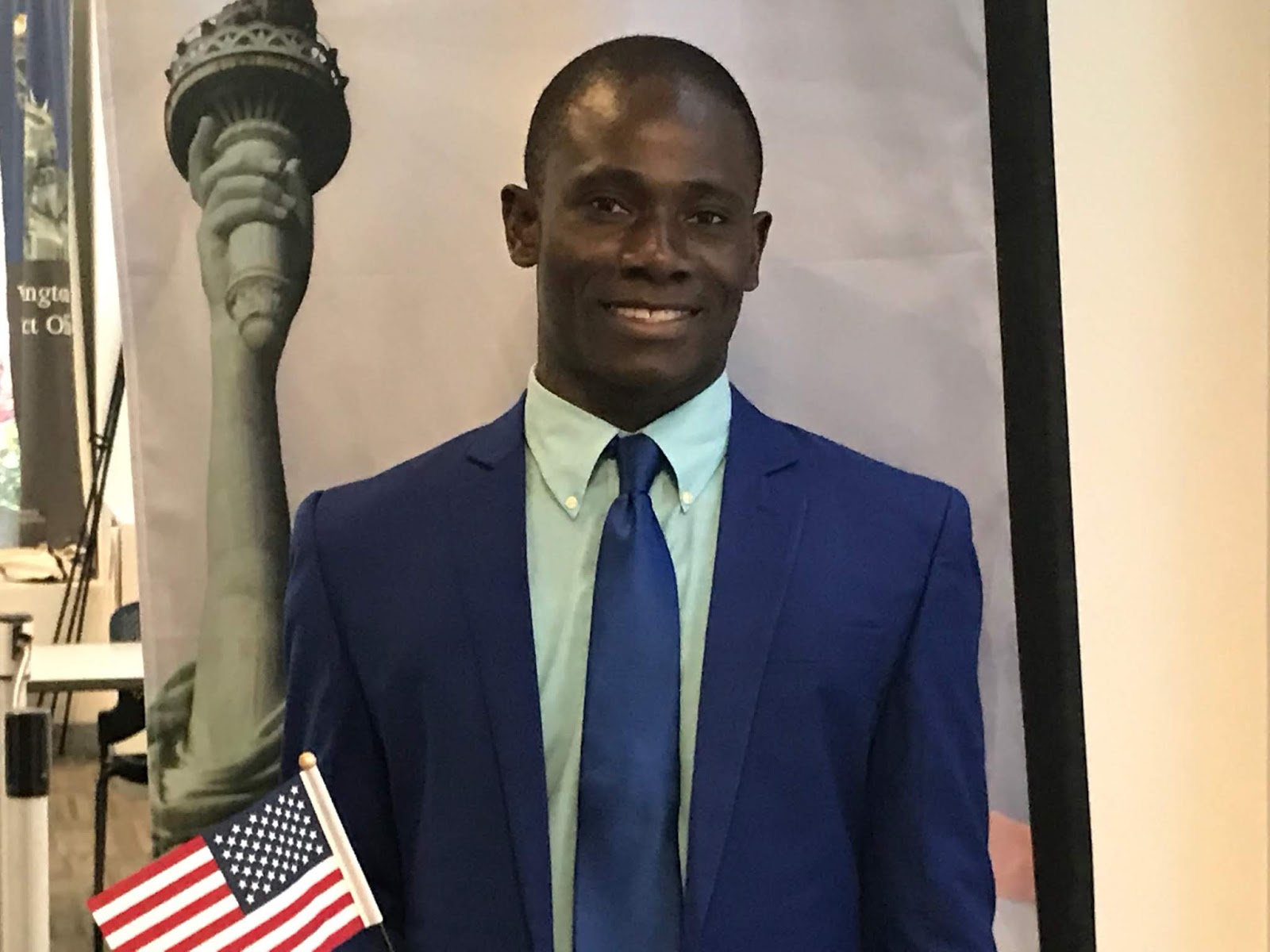
When the time came, Appolinaire stood with 47 other immigrants, raised his right hand and recited the oath of allegiance. He was wearing a new blue suit that he bought in Benin. He looked like a million dollars.

After he recited the oath, he waited his turn to shake hands with a customs officer and be handed his certificate of naturalization.

Also receiving their certificates yesterday were immigrants from Macedonia, Honduras, India, Nepal, Cameroon, Sierra Leone, Colombia, Turkey, El Salvador, Ethiopia, Denmark, Canada, Sweden, Mexico, Brazil, Bangladesh, Afghanistan, South Korea, Guatemala, the United Kingdom, Russia, Hungary, Nicaragua, Ghana, Bolivia, Pakistan and one other country that I didn’t catch.

They are our newest citizens, the most recent immigrants in a land that is made of them.

E Pluribus Unum

E Pluribus Unum

I imagine there will be more than one post about this momentous occasion. This is my first:

Today, my son-in-law, Appolinaire Abo, becomes an American citizen. We are gathering soon at a federal office building to witness Appolinaire and other immigrants take the oath of allegiance. For more than 200 years, new citizens have been vowing to support the Constitution; renounce fealty to foreign rulers; bear arms, perform noncombatant service or work of national importance when required by law; and to defend our laws against all enemies, foreign or domestic.

It’s more than what birth-citizens do when we recite the pledge, but this is a good day to ponder the words that have become hackneyed from repetition.

“I pledge allegiance to the flag of the United States of America, and to the republic for which it stands, one nation, under God, indivisible, with liberty and justice for all.”

Those words take on a new meaning today. The simplicity of the language and the depth of its meaning. One nation. Under God. Indivisible. With liberty and justice for all.

We are struggling mightily now with some of these ideas. May the fervor of Appolinaire and other new citizens fill us with hope for this blessed nation and renew our faith in the motto “e pluribus unum” — out of many, one.