Faded Rose

Faded Rose

We’re at that point in the season when the bright hue of autumn leaves has not yet arrived and the muted palette of late summer prevails. Sedum and asters, the faded rose of late-blooming crepe myrtle.

All that’s left of clematis paniculata are the spent blossoms of the tiny white flowers.

And then there are the shaggy meadow flowers, the golden rod and Joe Pye Weed.

It’s easy to wander long amidst the subtle shades of this subtle season.

Shoe Story

Shoe Story

While I’ve never worn stiletto heels, I’ve always tried to look presentable at the office, footwear-wise. This has entailed keeping shoes at the office, since there’s no way I can walk long distances in pumps or even flats.

When I worked at McCall’s magazine years ago, my nickname was “Imelda” for the file drawer full of shoes I kept on hand. That was for Imelda Marcos, wife of Philippine dictator Ferdinand Marcos, whose 3,000 pairs of shoes were the stuff of legend, and which I learned today, take up the entire second floor of a shoe museum in the Philippines.

Back then, I had only about six pairs, not 3,000. And now, I have only three pairs, two black and one brown, no heel higher than an inch and a half.

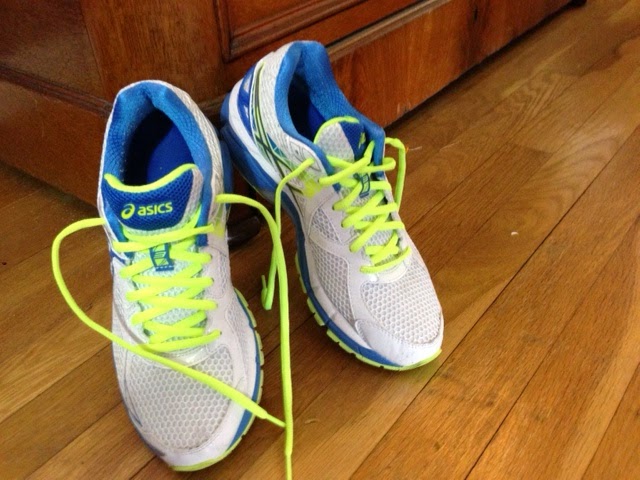
Last week the shoes gathered dust because I bopped around the office in my tennis shoes every day, due to a taped-up right foot. It was delicious. My feet felt fantastic — and no one gave me a second glance.

I’m aware that wearing tennis shoes in the office is a slippery slope, though. What’s next? Slippers? Those big black shoes that grandmas used to wear in the old days? I’ve been telling myself to shape up. We must suffer to be beautiful, yes?

Which is all to say that I’m back to pumps and flats this week. It’s the only way to go.

Evening Musicale

Evening Musicale

The players were beginners, but they were not. Beginners at music, but not at life. And so the music they made, while tentative, was full of life and experience. It was brave and it was beautiful.

There was the violinist who tackled a duet with Latin flair. A clarinetist who brought Mozart to life. The cellist who played “The Swan.” Two pianists, one who played simple notes, the other more complex ones. “I just don’t want to have to start over,” the latter admitted before she began. She didn’t have to.

Tonight is the first fall rehearsal of the Reston Community Orchestra — the sessions I attended this summer were open to all — so this will be a beginner night for me. I’ve tuned and practiced and hope that I’m ready.

But as the players this weekend showed me, sometimes you’re as ready as you’ll ever be. The only thing left … is to play.

Fall Wish List

Fall Wish List

On this first day of fall, I wish for …

Blue skies,

Brilliant fall foliage,

And a crispness to the air,

Which is more difficult to picture, but which means …

It needs to stop raining for a while!

Knowledge and Numbers

Knowledge and Numbers

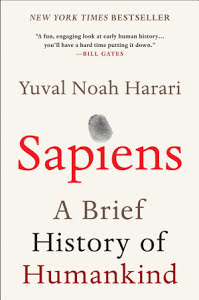
The Scientific Revolution began not in knowledge but in ignorance, writes Yuval Noah Harari in his book Sapiens, which I’m more than halfway through now. (See last Friday’s entry.)

“The great discovery that launched the Scientific Revolution was the discovery that humans do not know the answers to their most important questions,” Harari says.

In the ancient or medieval world, the pre-16th-century world, there were two kinds of ignorance. An individual might not know something, in which case he or she would ask someone who did. (A peasant asks his local priest how the world begins; the priest will know the answer, which has been laid out for humankind in the Bible.)

The other kind of ignorance, says Harari, was that an entire tradition might be ignorant of unimportant things. How spiders spin their webs, for instance. The answer was not in the Bible, and there were few if any spider scholars back then. But it was not important to know the answer to this question. God knows everything, the world has its order, and homo sapiens took comfort in that.

“The willingness to admit ignorance has made modern science more dynamic, supple and inquisitive than any previous tradition of knowledge,” Harari writes. “This has hugely expanded our capacity to understand how the world works and our ability to invent new technologies.”

In his scientific manifesto, The New Instrument, published in 1620, Francis Bacon argued that knowledge is power and that the test of knowledge is not whether it is true, but whether it empowers us. Science and technology have been connected ever since.

This is very good for science, for unlocking the secrets of the universe, but not always good for social order — and certainly not good for people who aren’t good at math.

Because ever since the Scientific Revolution, darn it, the secrets of the universe seem to reveal themselves in equations. “Newton showed that the book of nature is written in the language of mathematics,” Harari says. And this mathematifying (my word) of knowledge has moved from the hard sciences to the social sciences, even to fields like psychology.

“Confucius, Buddha, Jesus and Mohammed would have been bewildered if you told them that in order to understand the human mind and cure its illnesses you must first study statistics.”

They aren’t the only ones.

Cloudy

Cloudy

Cloudy, the sky is gray and white and cloudy
sometimes I think it’s hanging down on me.

So begins a Simon and Garfunkel tune that was one of my favorites back in the day. It was an upbeat accompaniment to teenage angst:

Cloudy, my thoughts are scattered and they’re cloudy.
They have no borders, no boundaries.
They echo and they swell
From Tolstoy to Tinkerbell,
Down from Berkeley to Carmel,
Got some pictures in my pocket and a lot of time to kill…

It wasn’t until I left home for college and work that I realized I’d grown up in one of the cloudier areas of the country — the Ohio River Valley. Then I moved to northern Virginia and realized how sunny one’s days could be.

That was, until this summer …

But … we just broke a 10-day cloudy streak that began to ease up the late Tuesday afternoon and came to full fruition yesterday.

How sweet it was to sit on the deck, to walk without the umbrella, to feel the warmth of the sun on my face. It was like a tonic.

Hey, sunshine, I haven’t seen you in a long time
Why don’t you show your face and bend my mind.

My mind has been properly bent.

Twilight’s End

Twilight’s End

A walk yesterday that began in darkness ended in twilight, the kind that appears all at once, as if the earlier lack of visibility had been a mistake, something that a shake of the head could remedy.

I marveled at this, thinking it must have been my change of direction, even though I’d turned to the west. But going back, I had the light behind me, so what little there was of it lit my way.

I snapped off the flashlight; its pale yellow cone hadn’t helped much, but had at least illuminated the newly repaved street, the bumps and edges I’m just getting used to.

It’s about that time again now. The crickets are singing, the birds just beginning their chorus. Trees and leaves gaining definition, stepping out of the shadows.  I’m itching to be back outside.

Post Florence

Post Florence

The hurricane we’d been hearing about for a week finally made its way to northern Virginia today. And from what I’ve seen of its tatters I’m thankful we were spared its brunt.

The rain fell with tropical fullness and vigor, thin, plentiful sheets of it. Rain that blew in from the south, gathered from a warm ocean and spewed back onto land. Rain that made puddles on the sidewalk and street, twin fins of water spraying up from the cars.

Has it rained every day for the last three months?  No, of course not.  It only seems like it has. Last weekend was actually drier than predicted. And our totals from Florence will be measured in inches not feet.

But a few days from now, when the Equinox happens , we’ll say goodbye to a summer that’s been the rainiest in memory. We met our yearly totals a month ago!

As I write these words the dehumidifier hums beside me. It’s on overdrive these days.

(Rain from Florence streams down a bus window.) 

A Dose of Common Sense

A Dose of Common Sense

Walk as much as you like, the doctor said. Since he was a podiatrist, I took him at his word and did long loops through the neighborhood the last three days.

Turns out that the rowing I thought would be OK for plantar fasciitis actually is not, and the walking I thought would aggravate the condition actually doesn’t. Or at least it doesn’t while taking high doses of ibuprofen with a taped-up foot shot up with cortisone.

But 76 hours later, I’m walking better and in less pain. When you’re a walker in the suburbs, the temptation is to keep walking, even when it hurts. And when you’re me, the temptation is to try and remedy things on your own. Even when weeks turn into months.

What I learned on Thursday is … give the professionals a chance. They can do it in hours.


(Fun photo I took in Dublin that has absolutely nothing to do with podiatrists or walking.)

Sapiens

Sapiens

I only started reading this book a few days ago, but I’m already marveling at the knowledge it holds and the broad sweep of history it’s providing. Sapiens is about Homo sapiens, our species, and the first chapter describes some of our earliest cousins:

There was Homo floresiensis, a dwarf species from the Indonesian island of Flores that grew to only three and a half feet tall; Homo denisova, a species just discovered eight years ago in Denisova Cave in Siberia;  Homo erectus, from East Asia, the most durable species ever, which survived for close to two million years. “It is doubtful whether Homo sapiens will still be around a thousand years from now,” writes the author, Yuval Noah Harari, “so two million years is really out of our league.”

Now there’s a line (the italics are mine) that caught my attention.  A thousand years is only 12 generations from now, give or take. And Harari, whose erudition is such that he doesn’t need fancy language, casually drops in the fact that he doesn’t think we’ll be around that long.

The most fascinating cousin is Homo neanderthalensis, aka Neanderthals. As you might notice, we are the only Homo species on the planet now. Which raises the question, what happened to the others?  At first, Harari explains, it was assumed Sapiens just killed everyone else off. But there was also the theory that some interbreeding went on, especially with Neanderthals.

And indeed, that seems to be the case. DNA research has shown that 1 to 4 percent of human DNA in the modern populations of the Middle East and Europe is Neanderthal DNA.

Still, we mostly killed off these and all our cousins. Tolerance is not one of Sapiens strong suits, Harari says, and Neanderthals were “too familiar to ignore, too difficult to tolerate.”

Tune in for later posts as my feeble Sapiens brain makes it way through this fascinating book.