Wood Smoke

Wood Smoke

I took a walk last night as the light was fading, the smell of wood smoke in the air. At first I thought I was imagining it. The acrid scent went along well with the slight nip in the air. Was it real? Or was I was so accustomed to the two together that I made it up.

But no, there actually was wood smoke in the air. Neighbors were burning brush in their fire pit — something frowned upon by the home owners association, though you won’t catch me telling.

The smell of wood smoke is the aroma of autumn. The only scent more autumnal is the smell of tobacco wafting from the drying barns on Angliana Avenue in Lexington. Barns that have been gone for decades, I believe, along with the tobacco that used to fill them.

Still, wood smoke is an evocative aroma, and one I was happy to get a whiff of last night. It was calming, redolent of campfires and coziness not danger and destruction.

Clouds

Clouds

Looked up from the page I was working on Friday to see these clouds. They looked vaguely Sistine-Chapel-like, with the wispy upper-right-corner one the pointing finger of God and the fluffy white left corner one Adam reclining in his new human splendor.

An exaggeration, of course, and hard to reclaim that Friday feeling on this Monday morning.

But if nothing else it’s a reminder of the summer sky, its blue-beyond-blueness, its white clouds shining.

Invasive

Invasive

One of my tasks today is to be a poison ivy spotter. Not a poison ivy eradicator; I’m too allergic to the stuff. But I do have an eye for it. I can spot it glistening in the myrtle or spreading beneath a sea of stilt grass.

Poison ivy vines are another matter. They hide everywhere, including underground, and it’s hard to imagine complete eradication. Still, I’m all for trying.

So I’ve spent a lot of time this morning bending and crouching, looking for three leaves rather than the five, seeing the poison plant as a shark underwater, the spiky leaves the fish’s fearsome teeth.

The Venue

The Venue

Today the wood chips were unloaded. Tomorrow they will be spread and smoothed. There will also be touch-up painting, massive cleaning, planting, you name it.

I just moved my shell collection, a row of whelks atop the deck railing. People may want to set their drinks on the deck railing — although, now that I look at it, the deck railing is warped. Another item for the to-do list, the endless wedding to-do list.

Back in the winter a backyard wedding seemed a lovely idea. The yard was in pretty good shape, I told myself.  (Of course, it was hidden under two feet of snow.) We would just have to take down a few dead trees, be liberal with the mulch and a bit more attentive to the garden and — voila! — instant venue.

Now the wedding is two weeks away and the instant venue is looking pretty shabby. This despite countless hours of yard work, poison ivy eradication, weed-pulling and garden spraying.

One thing I know from meeting countless work and home deadlines, though, is that it will be ready. Somehow, some way, it will cease to be a backyard and become … a venue.

Layered

Layered

An early walk this morning before the true heat sets in. I think about how well I know this place, my regular route, my neighborhood.

I remember when four sycamores were planted in the yard of the yellow house. It seemed such an extravagance at the time, trees already past the spindly stage.

The homeowner has since moved out, but I can see him there at the edge of the yard, surveying the work, his lanky frame not unlike the tall sycamores.

It is what one hopes for in a neighborhood, that it be layered with memories and associations, so much more than a suburban streetscape. A living, breathing record of life.

Reading for Life

Reading for Life

An article in this morning’s newspaper reports on a study that shows that people who read books survive almost two years longer than people who don’t.

Intriguing, to say the least. Do readers stay sharper, calmer, more engaged in life? Or do they simply conserve energy by all that sitting and reading?

The study was conducted by Yale University researchers and published in a journal called Social Science & Medicine. The 3,635 subjects, all older than 50, were surveyed for their reading habits and divided into three categories: those who never read, those who read up to three-and-a-half hours a week and those who read three and a half hours or more.

The conclusion: After accounting for education, income and health, book reading still confers a “significant survival advantage.”

I didn’t need an excuse, but it’s good to have one, just the same.

Triple Digit

Triple Digit

After three triple-digit temperature days in a row (that’s real temperature, not heat index, which was more like 110), we’re having a cold snap today (“only” 95).

I know I should hate it, should be hunkering down indoors with a cool drink and the AC ratcheted to 72, but it’s summer, after all, and I think about how cold our winters have been lately and how really, truly, sweatily alive I feel when pulling weeds in a buggy backyard with the sun beating down on my back.

Weird, to be true, but something I dream about when the cold winds blow. Which they will … soon enough.

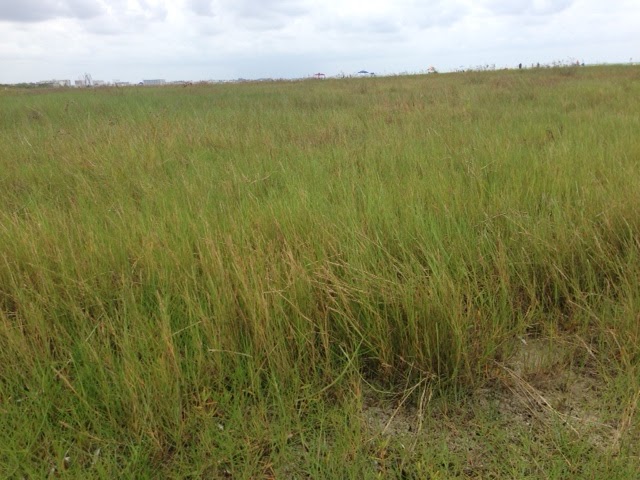
(What’s blowing these grasses isn’t a cold wind but a hot breeze.)

Falling Stars

Falling Stars

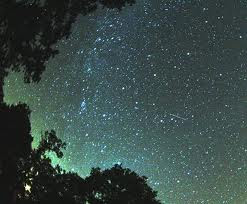
The Perseid meteor shower had good press this year. Some reports said the celestial event would produce up to 200 shooting stars an hour. This raised all kinds of hopes and set off visions of Van Gogh’s “Starry Night.”

But this number didn’t take into account the ambient light of the megalopolis, the heavy tree cover and the lateness (earliness?) of the hour.

Still, I managed to see a few streaks of light flash across the late summer sky.The first couple seemed a trick of the eye — a blink, a quick gleaming stitch in the firmament. But the last couple were bonafide star blasts. They illuminated not just the night sky, but all the possibilities it offers.

Not “Starry Night” — but not bad.

(Photo: Wikipedia)

Beach Grass

Beach Grass

Still thinking about the beach — the fine white sand, the walks along the shore, the sunsets and early mornings, the downy plovers like so many bits of fluff.

And thinking about the entry to the beach, too, the green bulwark one passes through on the way to the strand.

For Atlantic beaches it’s a stroll past dunes and dune grass. But in Florida’s semi-tropical clime there are beach grasses and scrubby palms and maybe a spray or two of bright pink bougainvillea.

The path through the grass is not just a prelude and change of scene. It is, I like to think, a place for mental readjustment, too. It’s where I shed the landlocked me and prepare for the freedom to follow.

Olympic Teamwork

Olympic Teamwork

Yesterday at work we had an Olympic trivia event. I guessed at every question — a testament to how little of the coverage I’ve watched so far. But last night I made an exception. I stayed up way past my bedtime to watch the women’s gymnastic team claim the gold.

It was worth the lost sleep. To see what body, mind and heart can do when working together was inspiring and humbling. 
Amplifying my Olympic frame of mind is the book I’m reading. Daniel James Brown’s The Boys in the Boat tells the story of the University of Washington men’s rowing team as they prepared for and competed at the 1936 Olympics in Berlin. One passage stood out to me this morning: 

“The boys in the Clipper had been winnowed down by punishing competition, and in the winnowing a kind of common character had issued fourth: they were all skilled, they were all tough, they were all fiercely determined, but they were also all good-hearted. Every one of them had come from humble origins or been humbled by the ravages of the hard times in which they had grown up. … The challenges they had faced together had taught them humility — the need to subsume their individual egos for the sake of the boat as a whole — and humility was the common gateway through which they were able now to come together and begin to do what they had not been able to do before.”