Improbable Harmony

Improbable Harmony

A morning walk without music. Earphones left behind. Open to bird song and cricket chirp and the dull roar of faraway cars.

It reminded me of an orchestra tuning, the chorus of jays, cardinals and sparrows. From the woods came the cackle of a pileated woodpecker, its cry like an inland seagull and the rat-a-tat of its beak against tree trunk providing the percussion.

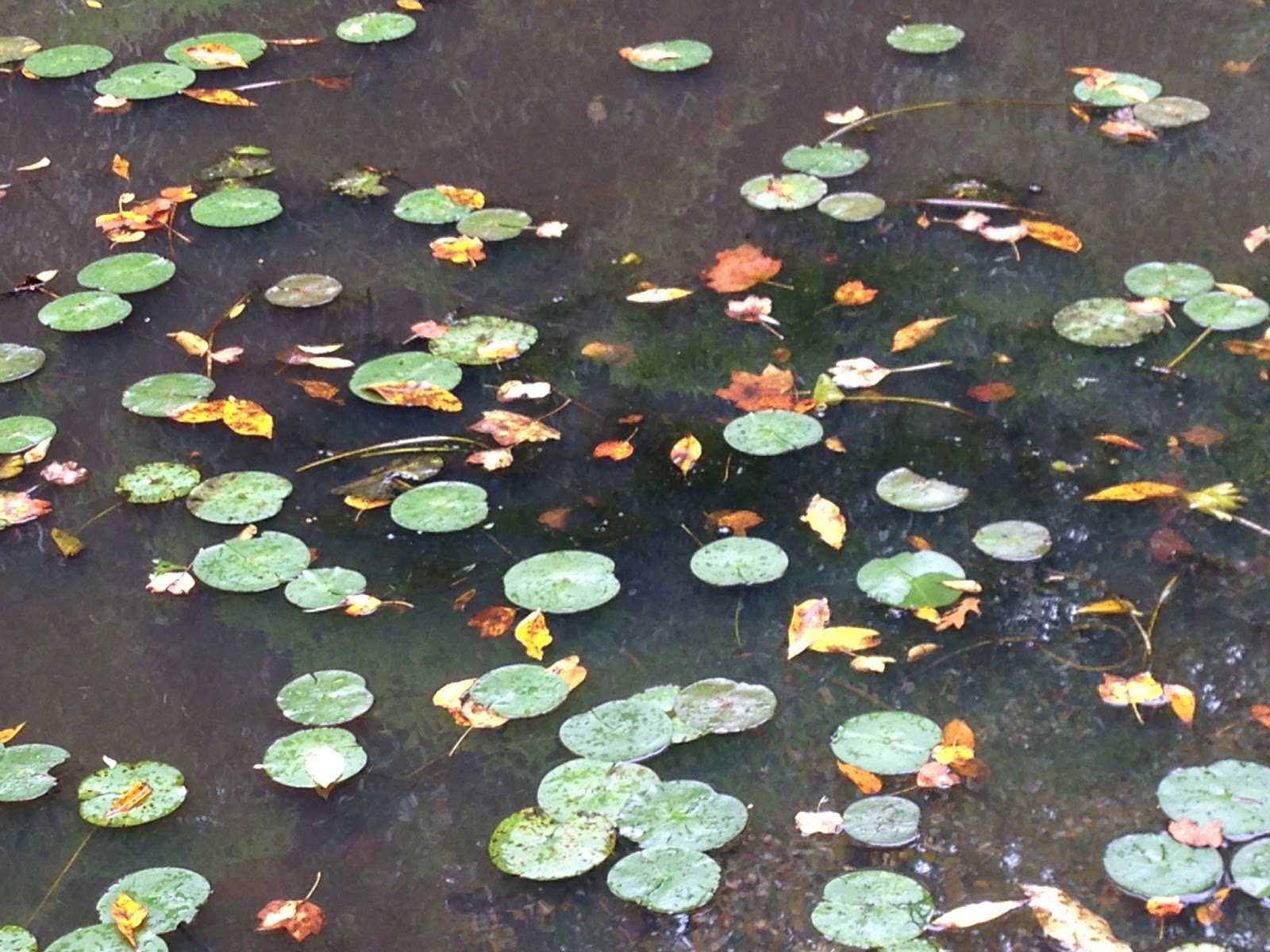
There was no plan to the sounds, no organization, but they were harmonious just the same, like meadow colors that never clash, like lily pads that dot a placid pond.  The improbable harmony of nature.
End of the Rainbow

End of the Rainbow

Another day, another shower, another stunning display of refracted light. Day before yesterday I stepped off the train to a scene of giddiness and awe. Hardened D.C. commuters stopped their march toward turnstile and home. They juggled umbrellas and briefcases. They looked up.

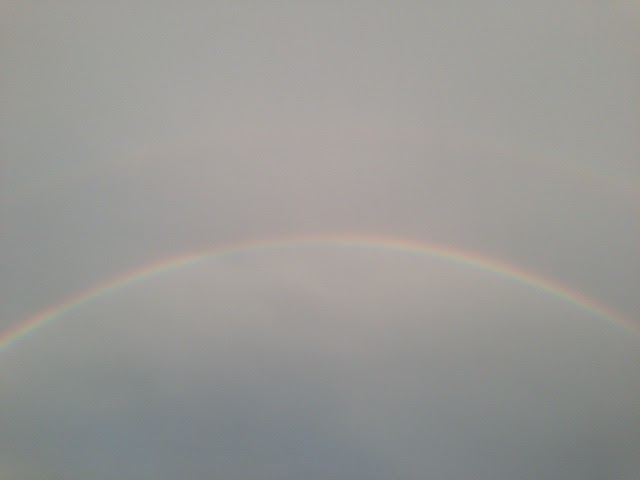
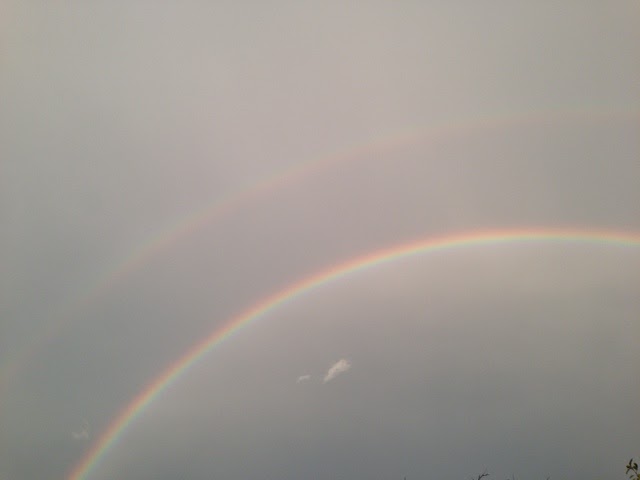
The double rainbow arched all the way over Route 66, and it lingered for 10 minutes or more. This is what the smart phone has wrought: a generation of nature photographers. People who don’t have to slap their foreheads and say, “I wish I had my camera.” We always have our cameras.

So when nature gives us a picture show we’re there to snap it. And snap it. And snap it. And snap it.

All this beauty and bother put people in a jolly mood. We broke the code. We talked with each other. Even Metro employees. One train conductor pointed up as we walked toward the station. We smiled and nodded. Another (the one who should have been starting up the next train, I think) said, “Look at the rainbow. I’m gonna look for my pot of gold.”

Vienna: It’s not just the last stop on the Orange Line — it’s the end of the rainbow.

New Scenery, New Eyes

New Scenery, New Eyes

How do we perceive the vistas around us? With what eyes do we take in the forests, hills and plains of the natural world? When a new and radical form of scenery presents itself must we change our tastes and proclivities to appreciate it? Wallace Stegner raises these questions in Beyond the 100th Meridian: John Wesley Powell and the Second Opening of the West (Penguin, 1953) — and from what I can tell, he answers the last one with “yes.”

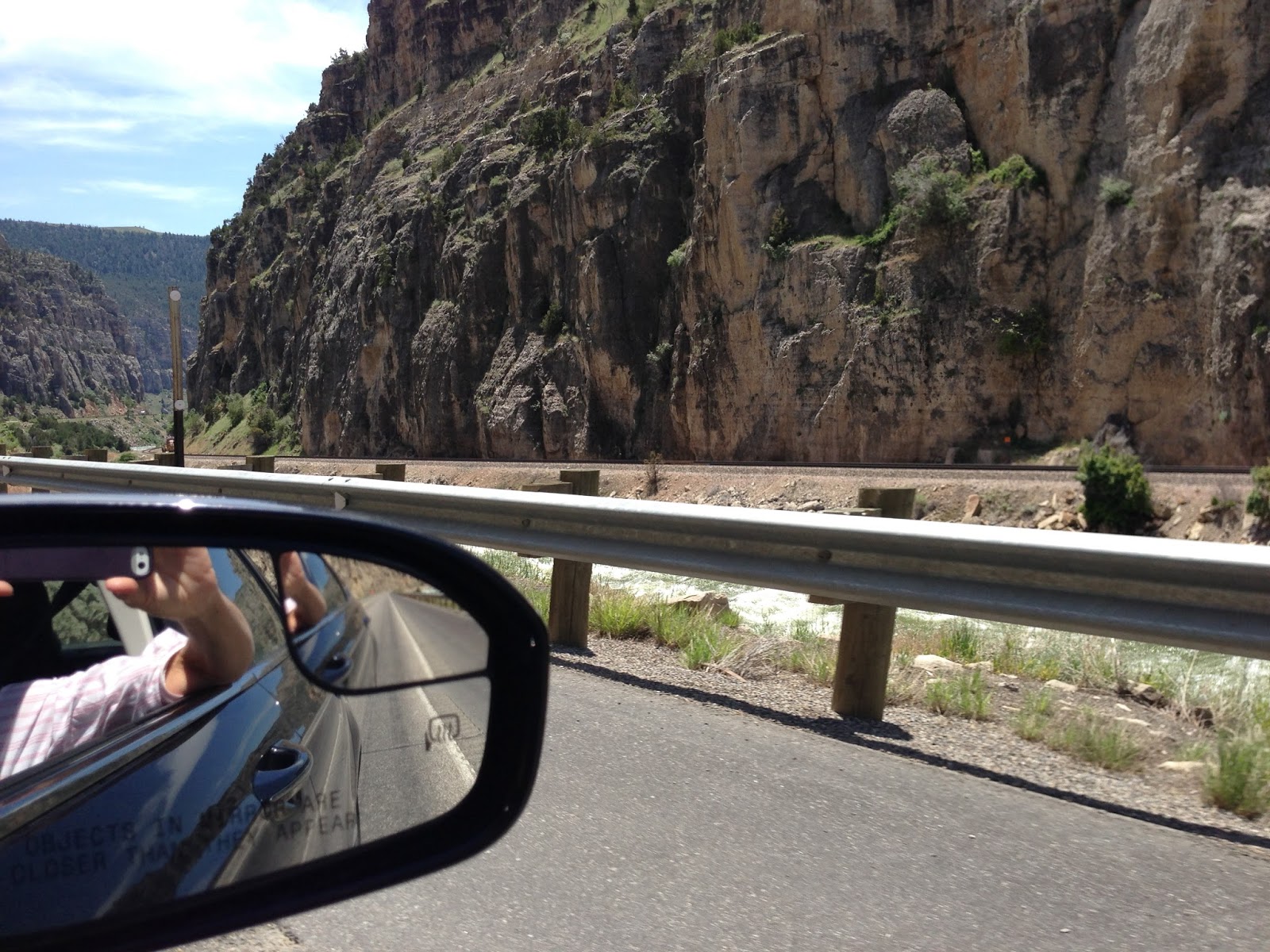
Stegner chronicles not only the physical exploration of the canyons, buttes and gorges of the “Plateau Province” (mid to southern Utah and northern Arizona), but also the artistic one.

The process that is triumphantly concluded in [Thomas] Moran’s “Yellowstone” was one that had begun forty years before in the water colors of Alfred Jacob Miller, when the painter’s eye first began to adjust to prairies that were not green meadows, mountains whose rocks were other than the Appalachian granite, scrub growth whose shades were those of gray and brown and yellow, earth which showed its oxidized bones, and air without the gray wool of humidity across its distances.

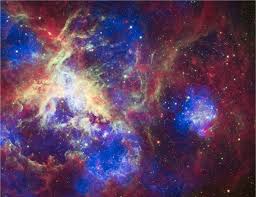
 It’s an interesting thought, that new types of places require new ways of seeing. Makes me ponder Pluto’s recent closeups and the fantastic images that the Hubble space telescope has sent back to earth. The strange beauty of the Grand Canyon must have been just as jarring and awe-inspiring to the mid-19th-century denizen as these cosmic vistas are to us.

Voting for our Feet

Voting for our Feet

Some folks will pay a premium to walk in the suburbs. Just ask Merrill Lynch. When their lease was up in Rockville, Maryland, they chose to move to the new “mini city” of Pike and Rose — a decision that may have cost them 40 percent more than staying at their office park location.

It’s a decision that’s playing out over and over again in the Washington, D.C.-metro area and across the country. People are voting with their feet — or rather, voting for their feet. They’re paying a premium to live and work where the vibe is urban and the body can move around without being encased in several thousand pounds of steel.

In some ways this isn’t new at all. For centuries — heck, for millennia — humans have gathered to eat, work and walk. We do better when we’re not tied to a desk or an untethered building in the middle of nowhere. We do better together (for the most part). And we do better in motion rather than stasis.

(Detail from the highly walkable city of Annapolis.)

Appetite for Life

Appetite for Life

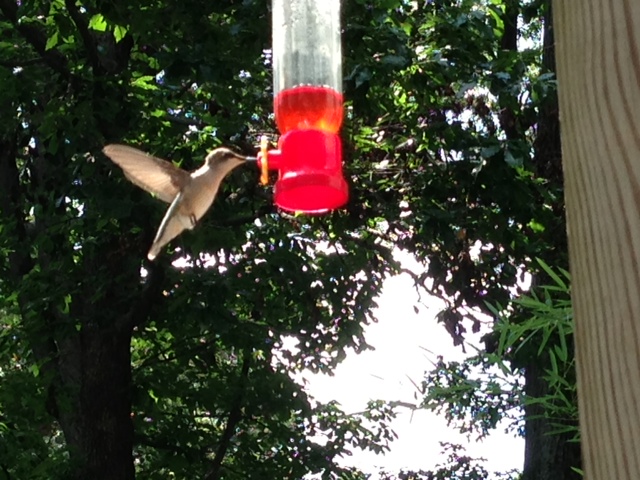
The hummingbirds are stoking up for their big flight south. And they are loving their new food, a homemade syrup that appeals to them more than the bottled, electrolyte-enhanced stuff ever has.

Yesterday as I was working on the deck I watched a pair of males dive-bombing each other to claim the feeder. Zoom, zoom, they roared, barely missing me. One pugnacious little guy chased away an innocent chickadee who had wandered into the area; another did battle with a bee.

These animals weigh less than a penny but within their muscled bodies is the same greed, fear and joy that drive us all. The need to claim territory. The endless search for sustenance and security.  An appetite for life.

Sunday To-Do List

Sunday To-Do List

Yesterday was for catching up: on walks, laundry, sleep, the sound of my children’s voices. One from Africa, where it was just dark and couscous was on the stove top. Another from Fairfax, back home after a long shift at a second job. And still another from just upstairs, which can be the longest distance of all but thankfully was not this time.

Sundays are often like this, touching base with the people I love. But after a vacation I remember to include myself in this number.

I cross some chores off the list but then find time to plop in the hammock and read the paper. I dose off, rally, focus once again on the book review, then put it aside entirely to listen to the insects and watch the leaves wag in the early evening light.

A Thicket

A Thicket

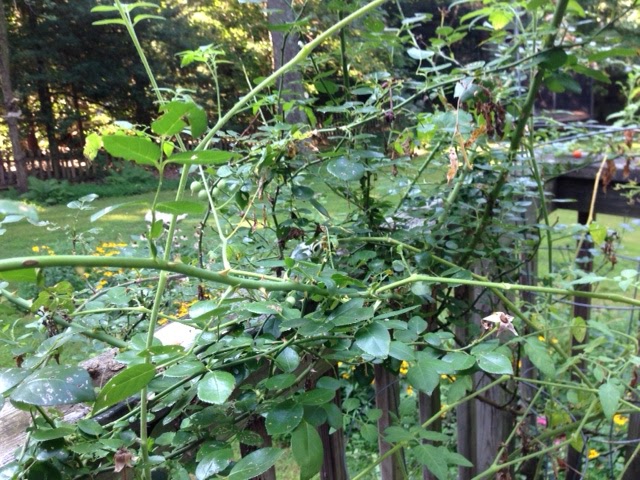
This summer, in an excess of exuberance or just poor planning I bought three cherry tomato plants and situated them in pots on the deck. This is where I’ve put them the last few years, but I failed to realize how mature — and how greedy for space — the climbing rose had become. The result is a tangled mess of vines — roses among the thorns among the tomatoes.

I like this wild, uninhibited look but I’m not sure the plants do. They seem peeved and confused, wanting more space and light than they’ve been given. Tomato yield is down and the roses look peaked in their second bloom.

So already I have plans for next year. Extending the pergola for the climbing rose. Finding a sunny corner of the yard (growing ever less shady thanks to the dying oaks) for the tomatoes, maybe throwing in a pepper plant or two. A space for each plant — and each plant in its space.

Questions Without Answers

Questions Without Answers

First work-at-home day in weeks. I sit on a cool deck, morning air in my lungs. I’m wearing a sweatshirt and thinking about when to squeeze in a walk. A cup of hot tea beside me; a bag of work at my feet.

A mental checklist interrupts the peace. Something is due today. Oh, that’s right: a handout for a panel discussion I’m moderating in two weeks, people I need to pester.

I think about how much of my job involves pestering. Far too much of it, I decide. I think about my job itself and how it’s changing — in two weeks my boss is leaving and I’ll be doing her job as well as mine.

Am I up to the challenge? What will happen to calm writing time, to sitting-on-the-deck-and-thinking time?

The weather will take care of some of this. Already the goldfinch are gone, along with the coneflowers that attracted them. I hear a strange new bird call that sounds like a squawking horn. A visitor passing through, no doubt.

As for the rest of the adjustment, only time will tell.

The Fiber of our Lives

The Fiber of our Lives

How Life Unfolds is the name of a new ad campaign waged by the paper industry. I read about it in the newspaper (printed on newsprint — key point) a couple weeks ago.

It’s no secret that I’m a big believer in paper. I write about it occasionally (albeit in electronic posts on this blog!) and use it everyday. I scribble in an unlined paper journal, read actual books, make lists on scratch pads and send mail that requires stamps.

At the office I must periodically make a case to keep the magazine I edit in print. I have a list of arguments. For one thing, people aren’t likely to look for their alumni magazine online, so why go to the trouble of putting it together if no one sees it. Second, ink-on-paper is a durable emissary. It hangs around for years spreading the university’s good will — and sometimes inspiring alumni to write checks and mail them off in the paper envelopes provided for just such a purpose.

All of which may explain why I cringe at the paper industry’s website. “How paper helps you learn.” “Letters from camp are still a treasured tradition.” “Back to school report: How paper gives you a leg up on learning.”

If the paper industry needs a press campaign it must be worse off than I think. And in fact, a Washington Post article tells me that the copy- and writing-paper market has dropped by more than a third.

Maybe paper will go the way of cotton (“the fiber of our lives”) and become an exclusive commodity. This is what I hope for. It’s better than extinction.

A.M. and P.M.

A.M. and P.M.

Morning on Metro, waiting for a train, the line of commuters stretches to infinity. All of them must leave the bus or park the car, file into the station, take a seat (if there is one) and occupy themselves for 30 or so minutes. It’s the numbing life of regularity that is unfortunately required for much of anything to get done.

Evening on Metro, a sudden shower douses us as we exit the train into a sunny afternoon. I simultaneously open my umbrella and put on my sunglasses. Then I trudge with the masses up the escalator, through the turnstile and toward my car. But then I remember to look. Surely it’s possible. And yes, it’s true. A rainbow. Just when we needed it most.