Ale & Cobblestones: An Alternative 4th

Ale & Cobblestones: An Alternative 4th

Sometimes I’m glad it’s a holiday because I want to celebrate the holiday. Other times I’m glad it’s a holiday because I need a day off.  The lack of patriotic imagery at the top of the page will explain how I feel about today.

Actually, I’ve been laughing this morning over something I heard on the radio driving to Kentucky yesterday. It’s about an ad campaign for Newcastle Brown Ale, imagining if Britain had won the war.

“Coast-to-coast cobblestones, shoe shines on every corner, all the fish head pie you can eat. And at the end of the day you’d kick back and surf through all five of our government-run television stations.”

That’s dialogue from one of the spots. Other advantages of “Great Britain 2”: Lovely accents, free health care (if you don’t mind waiting a couple of years for an appointment) and colorful curse words.

The ads are hilarious. But don’t take my word for it. Listen for yourself. And dream about driving on the left, eating mushy peas and having tea and scones every afternoon.

Happy 4th!

The Beaten Path

The Beaten Path

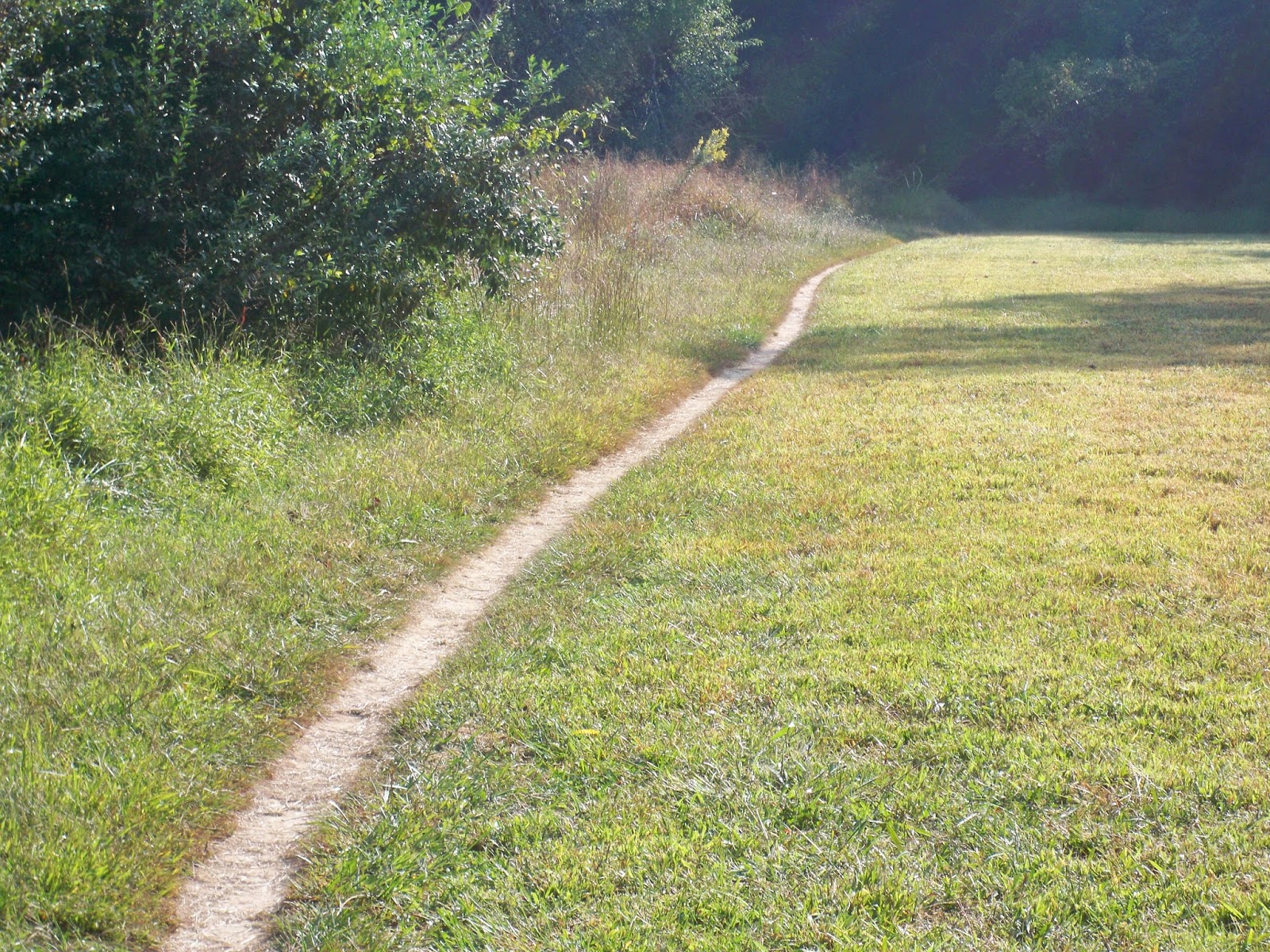
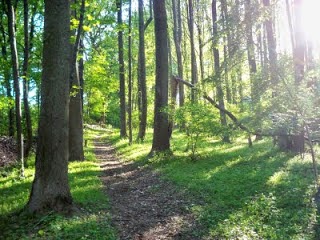
Sometimes I’m on it, sometimes I’m off it. But I always have a responsibility to it. For who will keep the path beaten if not the walker? Who else will clear it of weeds and stones? Who else will smooth it out, will wear it down to dirt?

On woods walks it’s easy to spot which paths are well trod and which have banished from neglect. Animals do their part; there are deer runs in the woods, too. But humans blaze the widest trails.

I find this thought comforting: That the forest needs me just as I need the forest. That in passing through I create the possibility of further passage. That each amble makes the next one easier. That each foot fall is creative.

This is more than just “use it or lose it.” It’s organic, symbiotic. It’s proof, once again, that we’re all in this together.

Power of the Perch

Power of the Perch

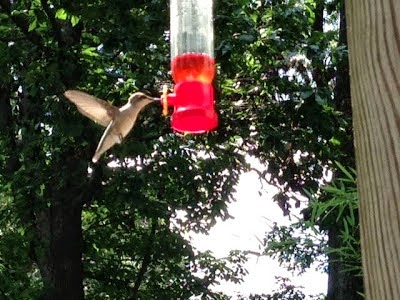
Watch birds for long and you’ll come to understand the power of the perch. It might be a feeder holder, as this goldfinch models, or the edge of the bird bath. Hummingbirds position themselves on the topmost wire of the tomato cage. Cardinals alight on azalea branches. Doves pace on the deck railing.

Many birds like to perch on the dead limbs that despite our best efforts at pruning still protrude over the backyard. There are only two large limbs, and I think they’re unsightly. But they are full of leafless branches on which birds can perch and chatter and clean their beaks. I’ve come to appreciate the utility of these dead limbs and wouldn’t want to remove them — even though they hang like swords of Damocles over the lawn.

Birds use perches to claim territory and assert power — the higher the better, of course. And in this they are not unlike humans.

But perches are also where birds sing and roost and court their mates. Perches are resting places, where birds watch the world go by. They are, in a word, home. 

The Iris Garden

The Iris Garden

I’ve been walking in these suburbs for years now — long enough to see not only what is but also what used to be. On my way home Thursday, I passed a five-acre plot once home to an old farmhouse and iris garden. The house is gone now, bulldozed last month. In its place, a sprinkling of straw, a county sign, notice of hearing. The land will be rezoned R1 to R2. Instead of the iris garden we will have Iris Hills, nine single family homes.

Gone is the mint green farm house, the crumbling old shed covered in wisteria, the eye-popping iris and day lilies that made people
pull off the road to see what all the fuss was about. Gone are the
painters who would set up their easels there in the spring and summer. And gone most of all is Margaret, the garden’s owner, who died a few years ago.

For years the place sat in limbo as the “Friends of Margaret’s Garden” tried to save the flowers by turning the space into a park. But finally all options were exhausted. Now “Margaret’s garden” joins a parade of places named for what they have displaced. On the same block of West Ox Road are Robaleed, a neighborhood named for a farm whose horses still hung their heads over the fence when we first moved here, and Blueberry Farm Lane, where we once picked — you’ve got it.

It’s a strange, sad sort of duty to bear witness to the past, but it’s also a privilege. Walkers see the world at four miles an hour. We notice a fresh coat of paint, a “For Sale” sign, a new car in the driveway. And because we notice, we belong.

Trespassing

Trespassing

Sooner or later you have to do it, to skulk down a private driveway because it leads to a path in the woods, to slip between trees in a stranger’s yard.

To walk in the suburbs and stay only on the paved path is to miss the crumbling fences, the fern-banked creeks, the land as it was before.

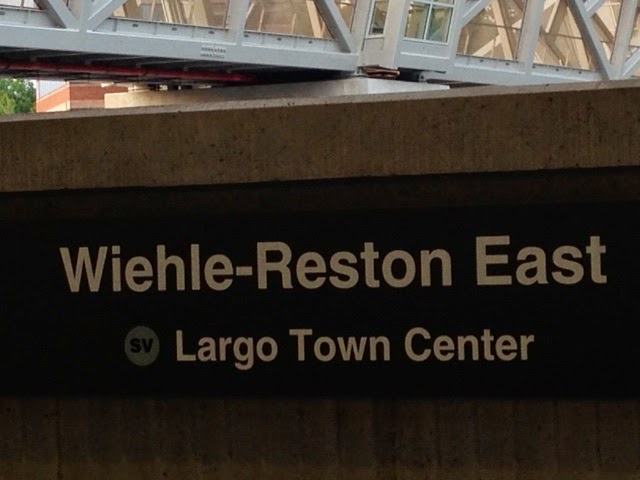
I’ve been trespassing a lot lately. Looking for my own “northwest passage,” a quick route to the bus stop in anticipation of Metro’s new Silver Line (more on that in upcoming posts). On my Thursday walk home, looking for the thread of a trail I knew would take me behind the houses across the street from my own, I spied the owner of the brick colonial whose land I was perilously close to.

I looked at him, he looked at me. He was just far enough away that I could pretend he hadn’t seen me, to continue picking my way gingerly through the fallen trees and prickly bushes in my work clothes,  a big bag stuffed with papers on my shoulder. I felt like an errant deer. And strangely enough, I ran into one of those just a few steps later. I stared at him, he stared at me.

Two stare-downs within five minutes. What else is a trespasser to do?

Taking the Long Way Home

Taking the Long Way Home

If the car is in the shop, then the driver rides the bus and walks home from the corner … which is two miles away. This is fine, this is good, this is necessary, even. One should always walk the routes (or part of the routes) one drives. It’s a good way to stay humble behind the wheel.

But yesterday’s stroll wasn’t humility-provoking. It was liberating. It was divine. Late afternoon, perfect summer weather (hot but not unbearable), sweater over my shoulders, music in my ears. I crossed the busy road early in the stroll (whew! worst part behind me) and hit a good stride as I ambled beneath the hedges that lead to Fox Mill.

Here’s what I never would have seen from the car: A shy pudgy girl with some sort of instrument in a padded case on her back; we traded smiles. Was it a cello? I think so.

Two workmen mixing cement for the fence posts they were installing. Beside them, almost hidden in the grass, was a microwave plugged into a long extension cord and a couple of empty Tupperware containers. Lunch!

The last leg of my walk was along a little dirt path that I don’t usually walk in work clothes. There was a bracing incongruity to it all, and most of all to sauntering up to the house — arriving home on my own steam — that made the rest of the day a breeze.

There’s a lot to be said for taking the long way home.

Morning Salute

Morning Salute

I write from the deck, early though it is. I want to be with the morning as it slowly unfolds. Want to be with those first birds — the bold? the restless? — as they greet the day.

It feels like rain. The air is full of moisture and a steady breeze flows in from the west. The early storm is an aberration and for that reason exciting. We are accustomed to the blistering heat that collapses of its own weight, that can only be released in a burst of sound and light and rain. But the morning storm is a riddle to me. Has it been brewing all night? Is it left over from the heat of yesterday?

Whatever the case, the dawn continues to unfold, shapes slowly emerging from the backyard, first the azalea bush and then its individual leaves. First the day lilies and then their buds. I can even see through the backyard and across the street now. Two red oaks, their tall trunks like masts, emerge from the darkness to salute the new day.

Did Someone Say Fudge?

Did Someone Say Fudge?

It’s the last day of school in Fairfax County, which means little to me now except less traffic in the morning. It was our first year in 20 to be rid of elementary, middle or high school dates and deadlines.

But today is still special. It’s the day that for years we celebrated with matinees, lunches out, shaving cream fights at the bus stop — and a peculiar ritual: watching “The Music Man” and making fudge.

The tradition started more than a decade ago, when we popped in a video of this musical to watch in the evening after an afternoon at the pool. There’s a scene where Marian and her mother make fudge. And so we started making fudge, too. It’s a delicious summer pastime anyway, fudge being the most boardwalk of candies.  But even if it wasn’t, we’re conditioned now: Hum the first few bars of “76 Trombones” or “Till There Was You” and we’ll start to salivate.

So tonight, Celia and Claire will gather at the house and we will measure out the sugar and the cocoa powder and the milk. We’ll set the pan on the stove and tend it till it bubbles and boils. We’ll test it (often) and finally take it off the flame, beat it to glossiness and pour it onto a plate. If it all works according to plan we will be on a sugar high before it’s dark.

School’s out for summer! Who needs champagne?

Two Years and Counting

Two Years and Counting

Claire and I escorted Suzanne to the train station when she left for the Peace Corps two years ago. It was Sunday, and not much traffic. Inside the train station, another story. The ancient rituals of leave-taking. Ours loomed large. As well it should. I haven’t laid eyes on my oldest daughter for two years to the day. When I tell people how long it’s been, they will often ask, “Skype?” “Once,” I tell them. Only once. It’s a lack of electricity compounded by a lack of bandwidth compounded by, well, Africa, I guess.

But I have seen Suzanne through the eyes of her father, sister and friend, all of whom have visited.  And I hear her every week or two on the phone.  And between these first-hand accounts and my mother’s ear listening for tone, inflection and the spaces between the words — I know what I need to know. She is, for the moment (God willing, “Inshallah,” as she has taken to saying), happy and healthy (minus — or plus! — an intestinal parasite or two).

Last year when I write “One Year and Counting” I thought Suzanne would be home by now. But she will stay another year in Benin, take on another Peace Corps job, another challenge. Still, my count-down to seeing her is only months, since she’ll be back this fall on home leave.

One observation I’ll repeat from last year’s post, because it only deepens with time: Suzanne is the happiest person I know.

(Photo: Katie Esselburn)

Swampy Places

Swampy Places

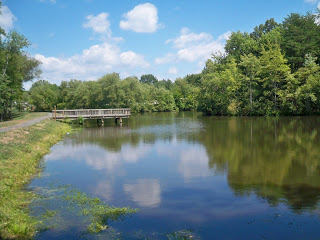
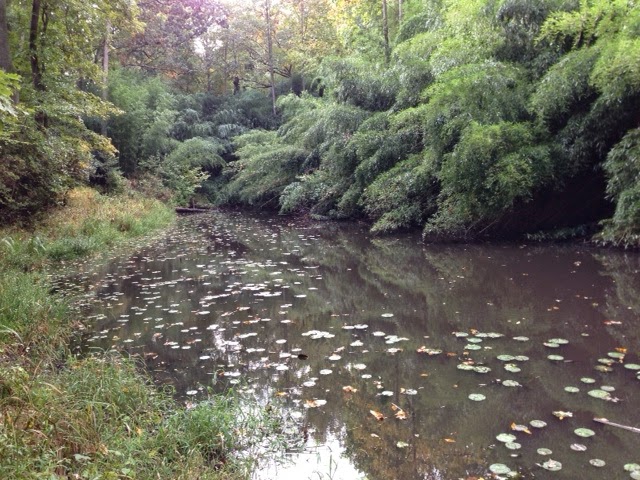
In recent rambles I’ve come across my old friend the red-winged blackbird. Sometimes I catch him in the Franklin Farm meadow (what’s left of it after the mowers strafe through). And from April till October I never fail to spy him in the cattails of the West Ox containment pond. Like him, I prefer swampy places.

He is a supple fellow, able to perch on a thin, waving branch. For this reason I think he has excellent balance, a weighted way of looking at the world. He takes life as it comes, which most birds do, I suppose.

I admire his jaunty attitude, the dab of scarlet on his wing, his trilling call. He flashes through the world with more majesty than most.


(No pictures of him, only his habitat.)