Equinox

Equinox

It was a day of balancing — darkness and light, summer and fall. And for me, a day of driving eight and a half hours from Kentucky to Virginia.

Fall comes early in the higher elevations, and the hills were brushed with yellow. Yellow from the thinning trees, from the just-turning leaves, from the goldenrod. Yellow set off by the shaggy gray limestone cliffs that line the road.

A drive is a balancing act, too, a passage from one place to another, holding each in mind as you pass between the two.

A Week Without “The Roosevelts”

A Week Without “The Roosevelts”

For those of us who were engrossed in Ken Burns’ latest film, this is the “week without Roosevelts.” Last week I could come home from the workaday world of the 21st century and enter, for two hours, the 19th and 20th. The latter half of the show was recent history for me, times that my parents and grandparents lived through, and times, therefore, that I don’t always consider history.

But it is history, and well worth learning. The film left me with curiosity — wanting to read books about TR, FDR and ER — and with hard-to-forget images: a diagram of where the bullet struck Teddy Roosevelt as he was giving a campaign speech. (He spoke for another hour before going to the hospital.) Photographs of ordinary Americans, their heads inclined toward big boxy radios, listening to FDR’s fireside chats.

On those nights, apparently, you could leave your house, walk down the street and never stop listening to the president’s voice. FDR’s words, calm and comforting, were pouring out of every window, were soothing the jangled nerves of a troubled nation.

Would we ever again be so unified? Maybe on September 12, 2001. But then again, maybe not.

Tale of A Trespassing

Tale of A Trespassing

Yesterday I had my comuppance. I clambered over a fence, tiptoed through a beautifully manicured lawn and was just preparing to scale the second fence into a horse pasture when I heard a voice. It sounded angry. I pulled out my earphones.

“What do you think you’re doing? This is private property,” said the irate homeowner.

“I’m so sorry. I was just cutting through your yard to get to Parker’s Mill Road,” I answered, by way of apology and with just a trace of a question mark at the end of my sentence, hoping he would see the utter harmlessness of my actions.

“This is not a cut-through,” he snapped.

“Don’t worry,” I said, my voice rising now. “I don’t even live here. I’m just visiting my mother.”

“Make sure it doesn’t happen again,” he said, rage bubbling up through his words.

“Got it,” I said, all attempts at politeness vanishing. The only way out at that point was to climb another fence, which I did as quickly as possible.

This was at the beginning of my walk, and after that I started trotting, hoping I could bounce the bad feelings away. It was what I deserved, I know. But the punishment did not fit the crime. It made me think about how many times it doesn’t. Not a bad thing to ponder from time to time.

Thinking of Scotland

Thinking of Scotland

For me it means solo travel (my first), discovering the charms of Inverness and Edinburgh, the endless depths of Loch Ness; the panorama of earth and sky and bare, dark hills leading up to Ben Nevis. I took the West Highland line to Mallaig, and watched the ferries scuttling off for the Isle of Skye. I felt like I was at the roof of the continent, on top of the world — and, in more ways than one, I was.

So this morning, when I learned that Scotland voted no to independence, I was excited. I know little of the politics and the frustration — mine is an admittedly romantic view of this misty, feisty nation.

But I’m glad it will keep its ties to the United Kingdom, glad it will not become another casualty in this strange new world.

Washing and Drying

Washing and Drying

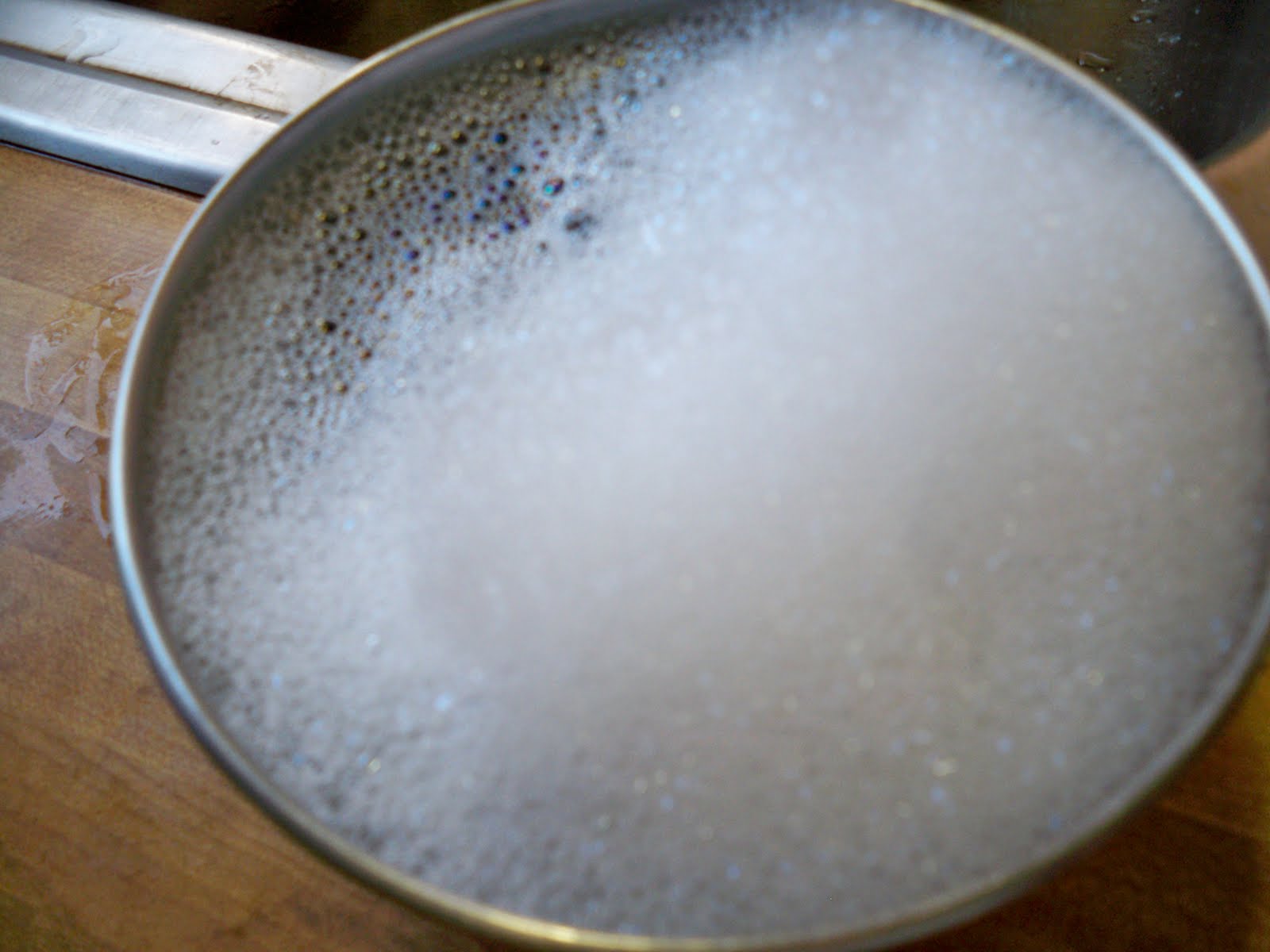
The dishwasher is fixed so now I can look back wistfully to the weeks of washing and drying. OK, not too wistfully. It was getting old. But the glasses did feel squeaky clean when I rinsed them and  the plates stacked up nicely after they were dried.

There was the pride of completion that I don’t feel when the dishwasher does all the work. And I never ran out of knives or spoons. Dishes were washed after they were used. No two-day limbo while the food left on them grew ever more caked and dried.

So yes, washing dishes by hand had its charms. But I’m glad the old machine has been pressed back into service.

The Dentist

The Dentist

On Monday I went to the dentist for what was supposed to be a routine extraction. It was a wisdom tooth, not impacted, and I was assured that I didn’t need to consult an oral surgeon.

Wrong! The routine quickly became difficult and I experienced two hours of what can only be described as medieval dentistry — with gloves.

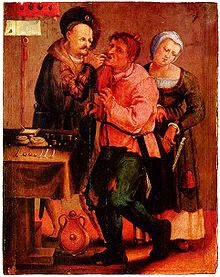
As I reclined there, hands clasped tight, mouth pried unnaturally wide open, the young (key word) dentist experimented with tool after tool. (I was waiting for him to try a come-along!) And I kept imagining those old illustrations of medieval dentists. I’ve seen this kind of art in modern dental offices; it’s supposed to be a humorous nod to how far we have come.

After Monday I would say we haven’t come far. Because now I know that underneath all the equipment, all the whirring, spinning bells and whistles of modern dentistry, there is still just the dentist and the tooth. It’s a contest of wills. In my case the dentist won. But just barely.

Johann Liss, Farmer at the Dentist, 1616-17 from Wikipedia

Home Leave

Home Leave

Yesterday word came from Suzanne. Her home leave is approved! She will be arriving at Dulles Airport at 1:30 on October 20 — and she’ll be in the U.S. for six weeks!

The Peace Corps grants paid home leave to folks who sign on for a third year. Suzanne has already started her new job, as technical assistant to Population Services International and its Beninese partner, planning and training for the peer-education program there known as Amour et Vie. PSI estimates that in 2012 alone its services helped prevent 1,340 HIV cases, more than 70, 000 unwanted pregnancies and almost 30,000 cases of diarrhea.

The peer educators now give Ebola prevention suggestions, too. But their primary work is to bring about the sort of deep-boned changes that will someday lift the country out of poverty — and these will continue long after the epidemic is in check.

It’s good, important work — but it’s thousands of miles away. I’m beyond excited to know that our girl will be home soon — at least for a while!

Leaving “Black Care” Behind

Leaving “Black Care” Behind

“Black care seldom sits behind the rider whose pace is fast
enough.”

                                                      — Theodore Roosevelt   
So the man I met last night in Ken Burns’ new film “The Roosevelts” is in many ways the man I knew:
the man of action, man of privilege, man of tragedy and loss. His
father died when he was in college; his mother and wife died a few years later on the same
day.  In an agony of grief Roosevelt headed west, to the Badlands, where the limitless
sky and active life helped him heal. 

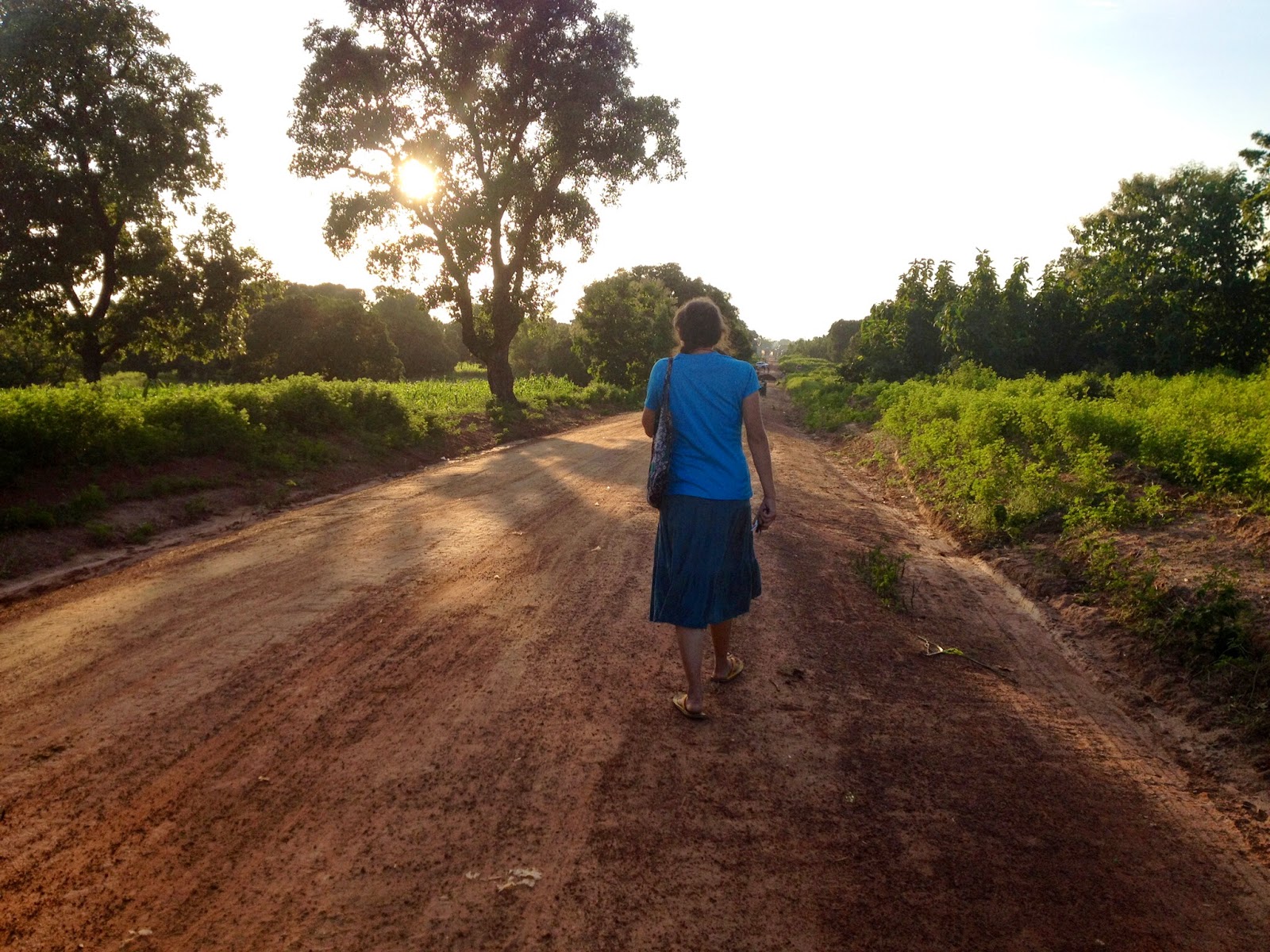
Hearing all this last night — especially the quotation — makes me think about walking. How many suburban amblers stroll just fast enough to make their worries go away. I know I do. Sometimes I can outrun my troubles, sometimes I can’t. But I usually return in better spirits than I left. “Black care” is almost always left behind.
Tangled Harvest

Tangled Harvest

It’s harvest time on the back deck. The thyme is thriving, the basil is bolting and the cherry tomatoes are tangled up with the climbing rose (which I’m training to clamber up the balusters).

There’s not enough sunlight in the backyard to put tomatoes directly into the ground, so they grow in pots. And the most successful pot-grown tomatoes, I’ve learned, are these little guys. They’re as sweet as candy and taste great in salads or pasta or right from the vine.

The only problem, every year, is that they really get the hang of it in September. There are green tomatoes aplenty on these vines. Will they ripen in time? Some of them, probably. The rest will harden, their stems will shrivel — and then — and only then — I’ll untangle them from the rose.

Difference of Opinion

Difference of Opinion

At my writer’s group last night we had a difference of opinion. Half of us thought a short story ended with a narrator’s father in the intensive care unit of a hospital, and the other half thought it ended with the narrator herself there.

The other half was right, said Cathy, who wrote the story.

But this raises some questions, the kind you can’t help but ask yourself if you believe that the endpoint of self-expression is to communicate with an audience. Because the essay or novel, play or story takes on a life of its own, doesn’t it? It is reshaped and relived every time a new reader comes to it, takes its words into her mind, makes it her own.

Even though I stood corrected, even though I realized that I had to some extent missed the point, the piece I read worked well on its own, the details of landscape and sky were no longer that of a pain-fogged dream but of an actual journey through a quiet forest. Because when the words leave our pen or keyboard they stop being ours and become the reader’s. That’s the way it’s supposed to be, I think. In a very important way, that’s the point.