Writing and Forgiveness

Writing and Forgiveness

When I picked up Ann Patchett’s book This is the Story of a Happy Marriage I wasn’t expecting an essay collection.  Whatever review convinced me to foist it on my (decidedly pro fiction) book group had long since vanished from my sieve-like brain. I like Ann Patchett’s writing — and that’s that.

But the book is an essay collection and the essay I’m reading now, which has also been published as a single, is “The Getaway Car.” It’s about writing. And forgiveness.

“I grieve for my own lack of talent and intelligence. Every. Single. Time. Were I smarter, more gifted, I could pin down a closer facsimile of the wonders I see. I believe, more than anything, that this grief of constantly having to face down our own inadequacies is what keeps people from being writers. Forgiveness, therefore, is key. I can’t write the book I want to write, but I can and will write the book I’m capable of writing. Again and again throughout the course of my life I will forgive myself.”

Writing and forgiveness. I hadn’t linked them like this before, hadn’t thought of how much slack the rope requires before it turns taut and stops you. Now I have.
“It is Solved by Walking”

“It is Solved by Walking”

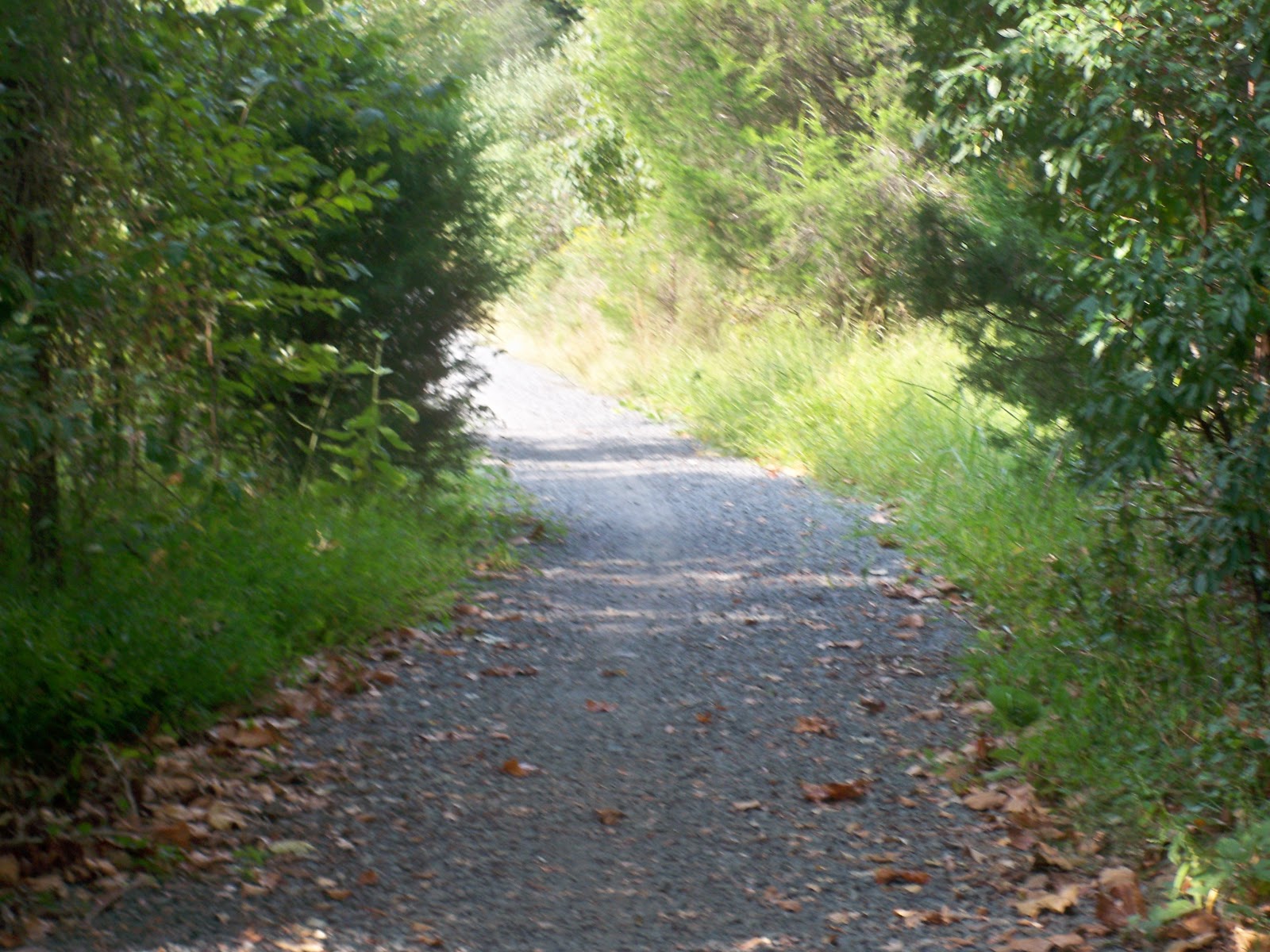
I just finished reading Alice McDermott’s novel Someone, in which twice appears a favorite quotation (motto? adage?) of mine: “It is solved by walking.”

When I wrote about this in an earlier blog post, I used the Latin “Solvitur Ambulando,” a term beloved by pilgrims and poets, and mentioned that I might have given this name to my blog had it not already been taken. Still, the spirit of “Solvitur Ambulando” fills this space. I can’t count the number of times my mood, my priorities, even my energy level, have been “solved,” have been set right, by walking.

According to some sources, the phrase originated with Diogenes, who disputed the unreality of motion by walking away. In that sense, solvitur ambulando not only means walking but any practical proof of an argument.

In The Tao of Travel, Paul Theroux attributes the adage to St. Augustine. “Walking to ease the mind is also the objective of the pilgrim,” Theroux writes. “There is a spiritual dimension, too: the walk itself is part of a process of purification. Walking is the age-old form of travel, the most fundamental, perhaps the most revealing.”

For me, it’s the most essential. Not for locomotion — but for sanity. 

Rush Hour

Rush Hour

My walk yesterday nudged right up against the morning rush hour. Not the D.C., Reston or Vienna rush hour — but the Folkstone rush hour.

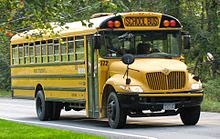
Because my subdivision’s “main drag” leads to the local elementary school we have a half hour in the morning and a half hour in the afternoon when active pedestrians risk being run over by a convoy of mini-vans.

Not so for me today; I squeaked in before the brigade. But I wasn’t too early for the bus stop coffee klatsch. Whether by choice or requirement, every child now waiting at the bus stop waits with at least one parent. Gone is the small kid society my children enjoyed during those years — with its own hierarchy and pecking order, sixth-grade patrols at the top, morning kindergartners at the bottom.

Now it’s a time for parents to chit-chat and kids to revolve around them. It’s another way that childhood is changing, another thing I miss about the way things used to be.

View from a Hammock

View from a Hammock

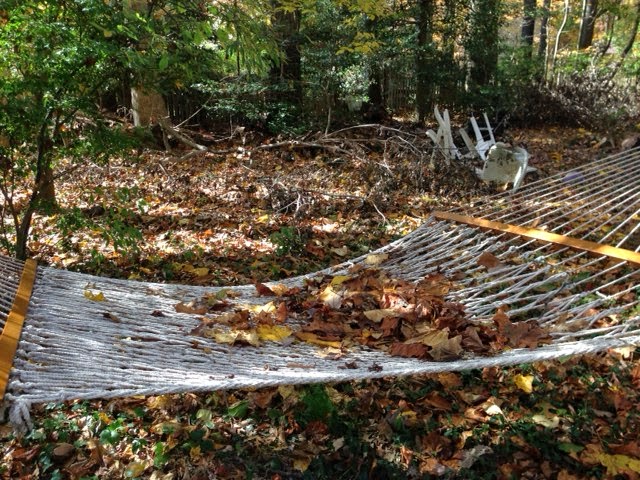
Speaking of (pictures of) hammocks, I spent some time in one yesterday. I’d been looking at it longingly all week but there was no time to partake. The weather was summer but the work load was decidedly back-to-school. By this weekend, though, with a big project completed and the house (relatively) clean, I had no choice but to relax.

It’s funny that hammocks are so often the symbol of carefree existence. Perhaps it’s their weightlessness or their airiness, the fact that they swing.

Or maybe it’s their contours and mechanics. While I’ve often heard of folks flopping into a hammock, you cannot flop into mine. The contraption is not easy to get into or out of. In that sense it holds me captive. Once I get into it, am I  really going to try and get out very quickly?

Take yesterday, for instance, I had my pillow, my journal, a book, a phone and of course, the requisite glass of iced tea. Imagine the logistics of assembling all that within arm’s reach. I didn’t stir for an hour. Then again, why would I want to?

Late Summer

Late Summer

Here we are in the dog days of … September?  I’ve always counted early September weather as the most reliably pleasant of the year (blue skies, low humidity, plenty of sunshine).

This year quite the opposite. It will be 94 today. The air conditioning, mostly off all summer, finally has a chance to flex its muscles. We had September weather in July; now we’re having July weather in September.

I’m glad for this sticky heat that makes me long for fall. Late summer in more ways than one.

Words on the Wing

Words on the Wing

Speaking of ink on paper, today we upload  the files of the magazine I’ve been working on these last few months. I’ve been thinking about the way it used to be, other magazines I’ve worked on and how those files were delivered — on boards via Fed Ex or (when we were too late for that) via a package delivery system called “Delta Dash.” I used to send articles to magazines in hard copy, too.

It’s much easier now, of course — write the article in a Word file, attach it and send it off with the click of a mouse or the touch of a finger. Upload whole magazines that way, too.

But the other way — the “old-fashioned” way — had a certain drama. There was the last-minute rush to the post office or Fed Ex, often with a child or two in tow. There might be minutes left before the place closed down. I would scribble my editor’s name and address as quickly as possible, then stuff the manuscript in an envelope and send it off. This was always the day before the deadline, of course.

Now I push some keys and it’s gone. I don’t want to go back. Don’t get me wrong. I’m just remembering.

Ink on Paper

Ink on Paper

It’s harvest time. The brochures and pamphlets designed this summer are coming back from the printer, arriving at the office in heavy cardboard boxes. When I open them up, the world smells right again.

It’s the aroma of ink on paper, and it is, to an old print person like me, almost intoxicating.

Say what you will about seamless modern communication, about the touchscreen, the tablet, the tweet. The digital world is ours whether we like it or not. I understand that now. I have come to terms with it.

But give me the heft of a September Vogue, the welcome weight of a Victorian novel, the stacks of heavy, photo-rich college and university magazines that threaten to take over the bookcase in my office. Give me something I can see and hold and smell — and then I’ll really have something to read.

(Ink on paper run amuck)

From Place to Words and Back Again

From Place to Words and Back Again

I learned from the “Writer’s Almanac” that today is the birthday of Sarah Orne Jewett, born 1849 in South Berwick, Maine. A descendent of doctors and sea captains, Jewett wrote poetry and historical fiction but is best known for her short stories.

She is a rare writer for me, one I came to know through her home rather than her work. I had yet to read Jewett’s stories when I wrote an article on historic homes of New England that took me to her house in South Berwick.

I’ve never forgotten the upstairs writing room, what it was like to look out those thick glass windows, imagining the world Jewett knew, the New England shipbuilding culture that was vanishing as quickly as she could describe it.

It’s a funny thing, meeting a writer first in her house. It’s not unlike the acquaintances you form when traveling on a train or airplane, seat-mate confidences. There’s a quick and easy intimacy that flows from the place that then lingers when you read the words.

After that trip, I read what many consider Jewett’s masterpiece, the story collection Country of the Pointed Firs. And there it was again, the place I had seen, the lowered light of that northern clime, the herbs, the dark firs. From place to words and back to place again.


(Photos: The house now and then, courtesy Historic New England)

Wearing White

Wearing White

While not a fashion traditionalist in most ways (I’m writing this in a work skirt and tennis shoes), I do have a thing about wearing white after Labor Day.

It’s a dictum that originates from my earliest years, from the same place as skirt and sweater sets and little white gloves for dancing school. From a time when there were rules and penalties (a withering glance, an averted head) for breaking them.

Those have gone away, of course — the rules and the penalties — but wearing white after Labor Day … Well, that’s a tough one to break. So white skirt and pants are tucked away for next year. White blouses and shirts, they’re allowed, of course. I’m wearing one right now. A way to keep the flickering flame of summer burning brightly a few more weeks.

(In no hurry for this kind of white.)

This Feather Floating

This Feather Floating

This hour along the valley this light at the end
of summer lengthening before it begins to go
W.S. Merwin, Seasons

I read these lines this morning and find in them some consolation for the days that are passing, that are spinning us so surely into fall.

For how better to face the next turn than to capture what is fleeting, to pin it down on the page?

this whisper in the tawny grass this feather floating
       in the air this house of half a life or so