ISO Abacus

ISO Abacus

I noticed this morning that yesterday was my 1,400th post. A nice, tidy number, with those fulsome zeroes so easy on the eye and the mental calculator. Plus for those of us religiously inclined, a multiple of seven. No wonder the number is pleasing to the eye.

Speaking of numbers (which I hardly ever do), this week I had another page-count panic. The magazine that I edit was coming up two pages long.

This time there was an easy fix. But with the previous issue the confusion was even greater. First I thought we were short, then long, then short again.

Which is why, after resolving this issue’s overage with the designers, I told them that for my next birthday they could give me a calculator. Or an abacus.

Invisible Community

Invisible Community

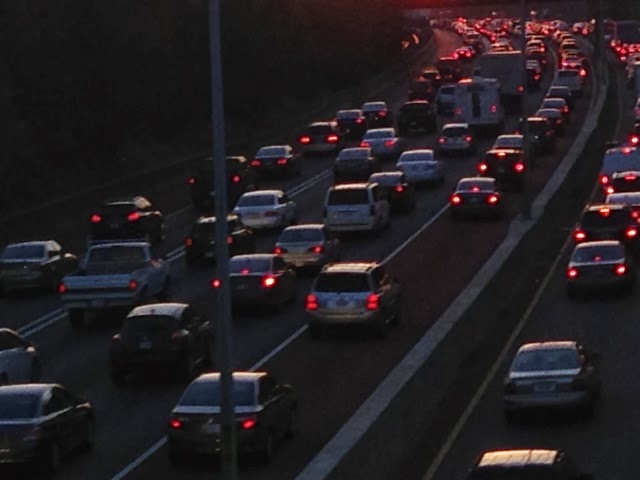
It was the hour before dusk on a day that felt more like summer than fall — prime walking time.  I drove past fast-walkers, slow-joggers, stray commuters like me, just heading home. I thought about the community of walkers, one that’s often invisible to the amblers themselves but, ironically, quite obvious to the drivers.

The car-bound cover more ground. Their range lets them see the patterns in the strolls, the commonality of purpose. In one block is a lone faithful runner. In another, an old couple strolling slowly. They may not run into each other, but they are all there.

Since almost anyone who walks in the suburbs drives in the suburbs, we have many chances to see beyond our routes, to know that even if we feel alone, we are not. There are others hitting the pavement too. And in some strange sort of way, we are one.

Residual Delays

Residual Delays

This was one of those mornings on Metro. Not the worst, certainly not the worst. But a lurching, stop-start, running-late kind of morning.

Often when this happens the explanation is “we are experiencing residual delays due to an earlier incident.” So I’ve been swirling that phrase around in my mind this morning. Residual delays. Residual. Delays.

In this case residual means what is left after the larger part is gone, of course, but there is another definition of residual, one used in the entertainment industry — payments for past achievements.

What are the residuals of riding Metro? It’s greener and healthier — I drive less and walk more — those two come immediately to mind.

But aren’t there delayed residuals, too? Metro gives me time to write and read and think. A friend of mine, a poet, has completed a book’s worth of verse in her last few years on the Red Line. I write in my journal, rough out essay ideas, edit articles.

Though it often tries my spirit, there is no doubt that Metro nurtures my mind. Not shabby for a delayed residual.

Midday Rush

Midday Rush

It’s what I’m in today, this moment. Despite best intentions, the silent prayer before rising, the attempts at perspective. Some days, even gorgeous ones like today, even early in the week, are stretched before they begin.

I knew my day was headed for this when I couldn’t open my office door because of all the page proofs stuck beneath it. Knew it when I saw the lines I’d have to cut from several pages. (Strange and old school to be saying this in digital space, where lines don’t much matter — though characters do.)

Just barely time now to lift my head, make the list, complete each task as carefully and methodically as I can, then move on.

A Little Enchanted

A Little Enchanted

Like many children, especially now grown-up ones, I spent hours reading fairy tales. I don’t remember special favorites, only the joy I knew at the covers of the books, some of them still vivid in memory. Those stories took me to another shore, and then, when it was time to come home, they deposited me safely back again.

I know there are theories of why fairy tales are good for children, that they allow kids to face fears and work out complex feelings. But over the weekend I read the best explanation yet of what fairy tales meant to me. It comes from an essay by C.S. Lewis:

“Fairy land arouses a longing for he knows not what. It stirs and troubles him (to his life-long enrichment) with the dim sense of something beyond his reach and, far from dulling or emptying the actual world, gives it a new dimension of depth. He does not despise real woods because he has read of enchanted woods: the reading makes all real woods a little enchanted.”

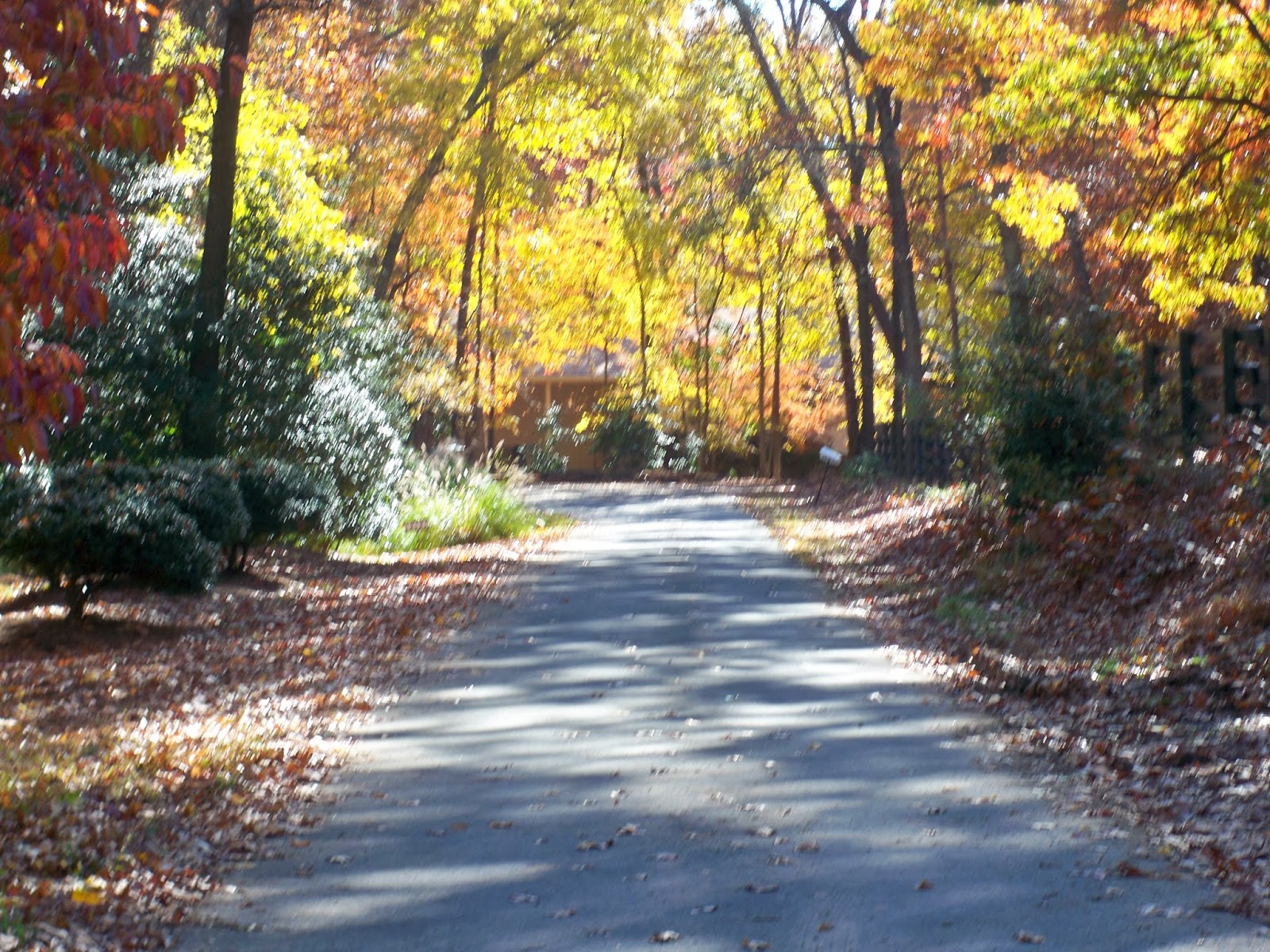
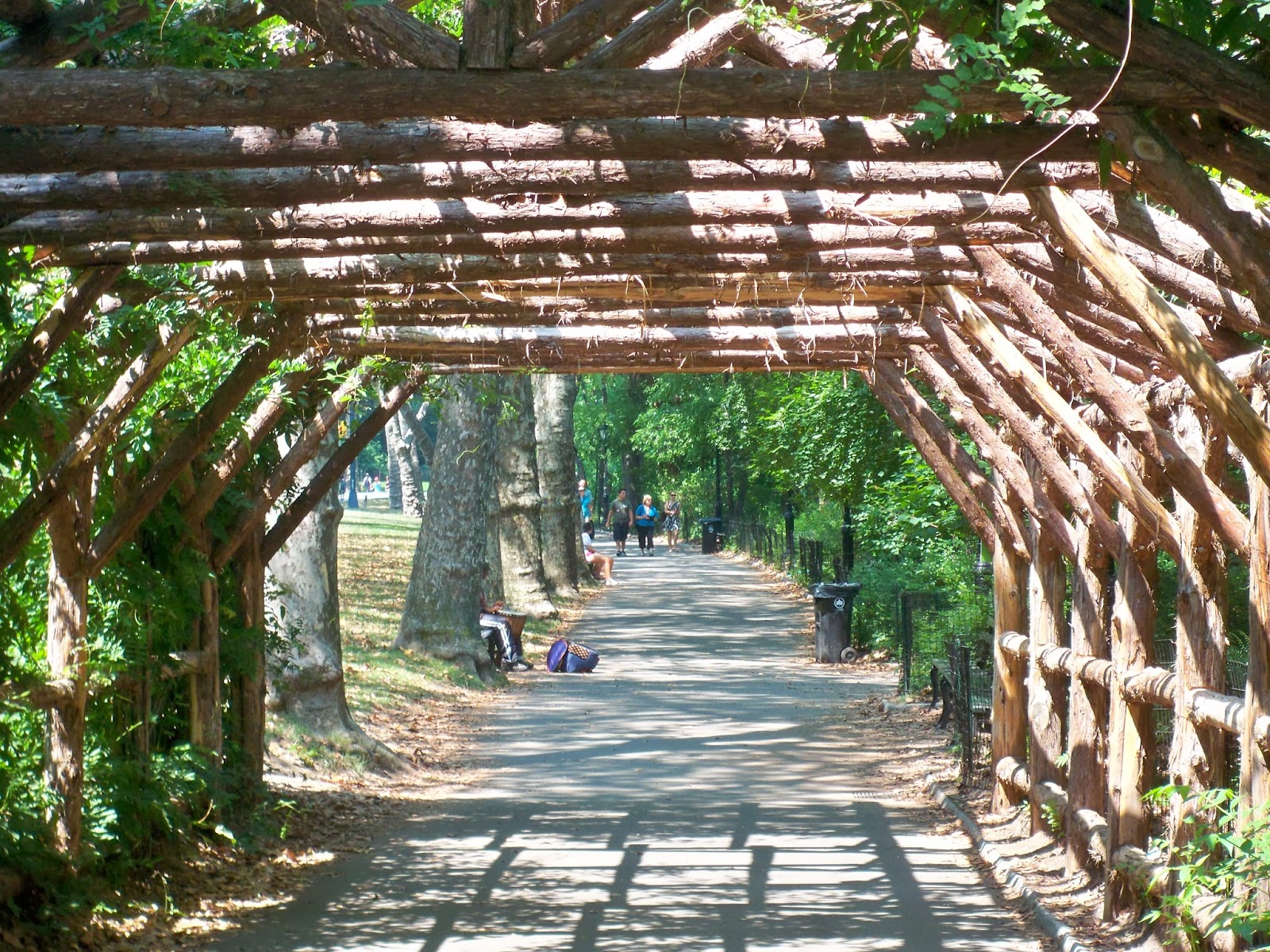
So here’s to the real woods I walk in that will always be touched with magic, and here’s to the magic of this lovely explanation why.

Where the Rain Begins

Where the Rain Begins

Last evening, after a long day at the office, I was sitting in the car waiting to turn left from the park and ride lot when I saw the rain begin. It was less than 50 feet away from me. I could see it sheeting the cars paused on the other side of the light but it hadn’t yet reached me.

At first it was like that infinite pause between when you cut your finger and you start to feel the pain from the cut — there’s often a lag there. On the other hand, there was a fellow-feeling with those cars drenched before mine, a sympathetic pain, almost flinching from rain that was not yet there.

Then I watched the rain advance across the pavement, fat drop by fat drop until finally it was pounding, pouring, a deluge.

I drove the two miles home with the wipers on full blast, and then, by the time I pulled in the driveway, it had almost stopped again.

I love the mercurial weather of summer, its flightiness, its lack of steady intentions.

And last night I loved watching the rain begin.

Deadlines

Deadlines

My business has a lot of them. I’m under pressure from one right now. Enough so that I postponed  this post until I spent a couple hours on an article I’m writing.

Deadlines are funny things, often self-induced. But once set they are hard to ignore.

They are the impetus and the framework. The hammer on the anvil. The doer of the action. They are the outside force that propels the inward adjustment.

Segments

Segments

Walking home from the Silver Line yesterday and driving to the Orange Line this morning, I noticed the journeys have something in common.

Like any trip, they are not just one long sweep of motion; they are segments cobbled together by time and movement.

I hadn’t driven to the Vienna Metro (Orange Line’s last stop) for almost four weeks, so I saw it with fresh eyes: the Fox Mill Road segment, up one hill and down another; the Vale portion, before the big turn and after it; the straightaway that is Hunter Mill Road; the short stretch of Chain Bridge; the newly repaved and bicycle-laned Old Courthouse, then the turn onto Sutton, Country Creek and right then left into the parking garage.

Walking gave me these eyes, let me see the drive in segments as I would a stroll. I’m grateful for that.

A Run to the Bus Without Tea

A Run to the Bus Without Tea

I gave up caffeine nine months ago, but when I don’t have time in the morning for a cup of my special decaffeinated blend, I am brain-fogged, blindfolded, cobwebbed in the head.

Can there be a tea addiction without caffeine? Could I have a taste addiction?

There is something about the warmth and the flavor and the sweetness on the tongue. Something bracing and forward-thinking about it. Something settling and stilling about it, too.

I check the hours of the cafe on campus. They open at 8. Yes! My blog post will be short; my tea break will be long. The answer to the questions above: yes and yes.

Winning the Match

Winning the Match

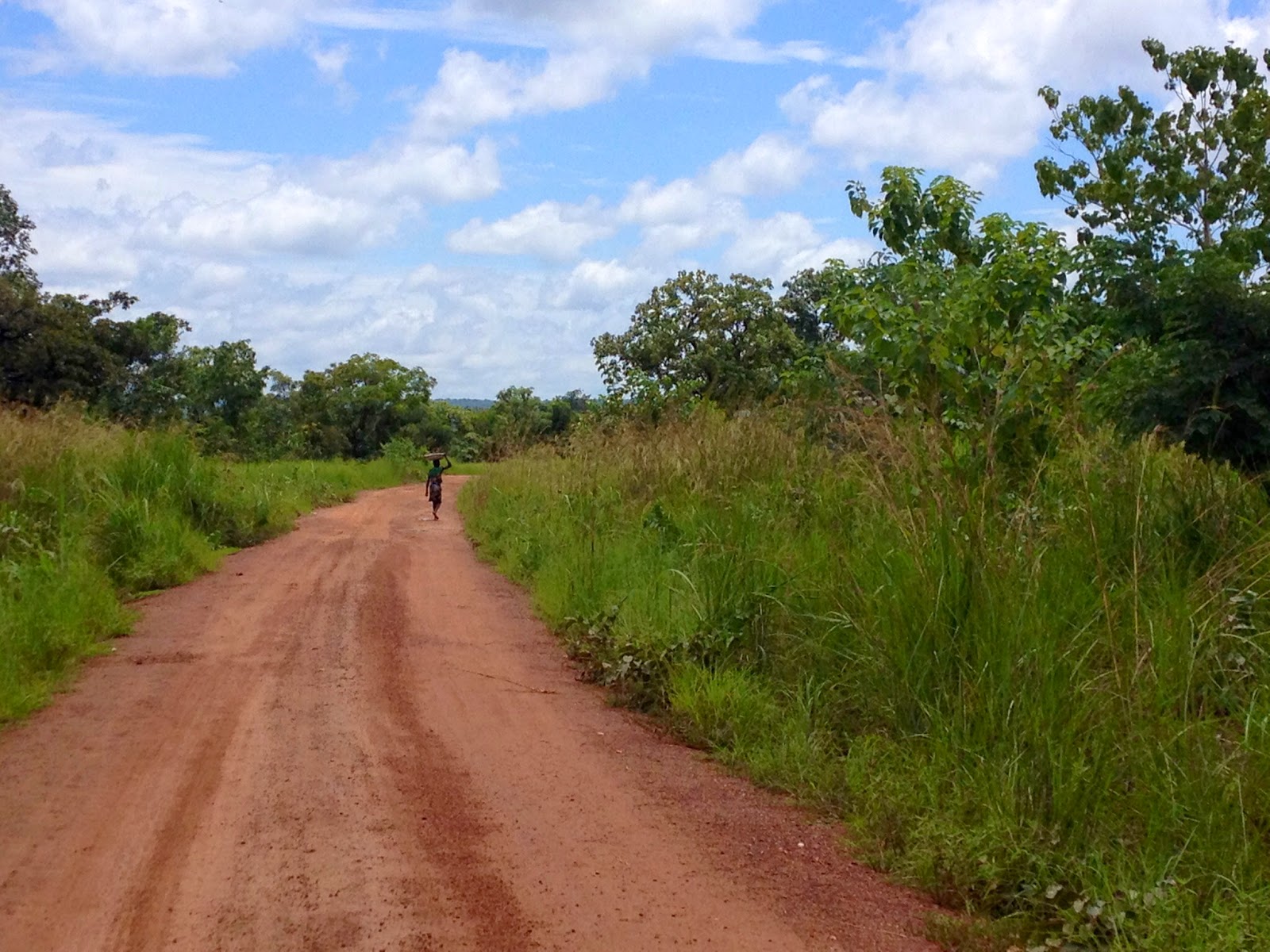
With a daughter in Benin, West Africa, I’ve been reading a lot about Ebola, especially the cases in neighboring Nigeria. So far, that country seems to be staying on top of the disease, but health experts are watching it closely because the nation is so populous. If Ebola spreads there, loss of life could be catastrophic.

Learning about the doctors fighting Ebola and dying from it — in some cases without even gloves to protect themselves and stem the contagion — brings to mind a favorite novel, The Plague, by Albert Camus. Its central character, Dr. Bernard Rieux, tends the plague-ridden in the town of Oran, Algeria. On the night of his friend Tarrou’s passing —Tarrou who had helped fight the plague and was its last victim — Rieux seeks to understand human suffering:

Tarrou had “lost the match,” as he put it. But what had he, Rieux, won? No more than the experience of having known plague and remembering it, of having known friendship and remembering it, of knowing affection and being destined one day to remember it. So all a man could win in the conflict between plague and life was knowledge and memories. But Tarrou, perhaps, would have called that winning the match.

At the end of the novel, the reader learns that Dr. Rieux has been its narrator, that “he resolved to compile this chronicle, so that he should not be one of those who hold their peace but should bear witness in favor of those plague-stricken people, so that some memorial of the injustice and outrage done them might endure; and to state quite simply what we learn in times of pestilence: that there are more things to admire in men than to despise.”

Photo: Katie Esselburn