Priming the Pump

Priming the Pump

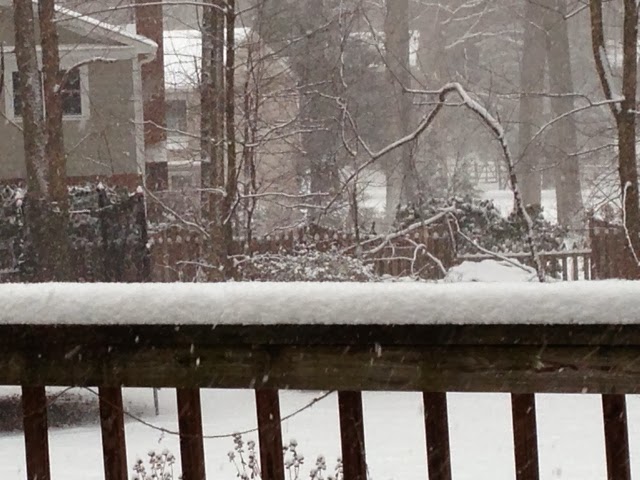
I sit here as I do on many work-at-home mornings. The top half of the plantation shutters are open to the new day. It’s still early. There are no colors yet, just dark
shapes silhouetted against the light. Soon I will leave the keyboard and
venture out. It used to be my morning habit, up and out before the day had any cobwebs
on it. But now I write first. It’s the only way sometimes. 

And sometimes it
works, the words pour out in a torrent. From the feel of the keys
beneath my fingers, this will not be one of those days. But no matter. I write
in all internal weathers; I prime the pump. And, on this day, which feels so
much like a first day, a new year, I will prime it some more. 
Summer Sun

Summer Sun

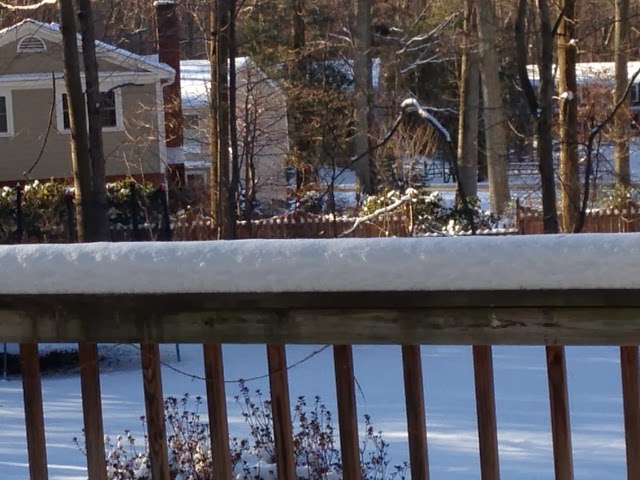
Light slants low from heaven this time of year. Yesterday it made rainbows on my office walls, pouring through a prism in the window — winter’s consolation.

But today the summer sun is on my mind: full-bodied, inescapable, soul-stirring and strong. 

From its rising to its setting, a benediction, a hymn of love upon the land.

Twenty-Five

Twenty-Five

I’m up early, but her birthday has already been underway for nine hours. Her 25th birthday. It’s happening in Greenwich Mean Time in the northern reaches of a tall, skinny country in West Africa, and in many ways I’m feeling very far away from Suzanne today.

But in other ways I’m not. I heard her voice less than 48 hours ago and, God willing (a phrase she’s begun to use with alarming frequency), I will again later today. I’ve had two emails recently and, within the past month, a rare and precious letter.

These, for now, will have to do. And I’m left where many parents of 25-year-olds are — to my own devices. Suzanne, after all, is her own person. They all are. And I am mine. Or at least I’m beginning to be again.

So what I think about today is not just that she is a quarter-century old, but that I’m 25 years a parent. Long enough to get the hang of it, you’d think. Not really, though.

(Photo: Katie Esselburn)

Standing Still

Standing Still

A post postponed. A post about sleep. Too long to get into today. Instead, a meditation on standing still, its importance in our lives.

Standing still to watch the grass waving in the wind; to ponder a fenced pasture.

Standing still to hear each leaf hit the ground, to feel a breeze I wouldn’t notice if I were moving quickly.

A walk moves you through space. But standing still lets space move through you.

Sunday Visits

Sunday Visits

Old-fashioned Sunday afternoons were for visiting. First there was church, then Sunday dinner — a heavy, midday repast (not brunch) — then chatting in the living room or parlor.

Even in memory, these childhood Sundays are interminable. Now I realize what they were for.

Yesterday I spent four hours on the phone. I talked with my mother, my sister, my daughter and my friend. The Sunday phone call is the modern equivalent of the Sunday visit. Because family and friends are far flung, the receiver (and now the smart phone) is the portal of togetherness. It is not ideal, but it is essential.

“A culture wise in love’s ways would understand a relationship’s demand for time,” says Thomas Lewis, M.D., and coauthors in A General Theory of Love. “Americans have grown used to the efficiencies of modern life … why should relationships be any different? Shouldn’t we be able to compress them into less time than they took in the old days? … The unequivocal limbic no takes our culture by surprise.”

So even though I “didn’t get much done” yesterday, I remind myself that there are no shortcuts to closeness. False starts, conversations that go nowhere, simply being available in case a conversation might happen — these are the currency of intimacy.

Alive and Well

Alive and Well

I heard the piano before I walked into the room. A dozen folks were already there, handing out music, warming up voices, renewing friendships. It was an anniversary gathering of the Georgetown Gilbert and Sullivan Society — and it was my reunion “duty.”

But for once it wasn’t a duty. To hang out for an hour or two with people who found time to practice songs from “HMS Pinafore” while also studying torts and contracts is not a hardship.

So I listened, took notes and photos. I thought about the plays I was in as a kid, how in love I once was with that world. I thought about theater people, how alive they are. Breathing all that music in and out.

The last number was “He Is an Englishman.

I couldn’t stop myself. I had to sing.

Light through Leaves

Light through Leaves

All morning long I’ve watched the leaves wag in the cool breeze, the light filter through the canopy to the deck and the French doors into the living room, where I work.

All morning long I’ve wanted to capture that light in word and image. Now that I’ve snapped the photo, I can’t think of anything to add.

It’s autumn, the rains have ended.

Light through leaves.

Best Time for Leaving

Best Time for Leaving

I usually try to get away before the sun rises, when the house is still and the road still cool beneath the tires. I leave behind the natural savannah of the Bluegrass, the farms and the fences, the green fields stretching out across the horizon.

I point my car east. It pretty much knows the way.

Over the mountains and up the valley.

I’m home.

Pisgah Pike

Pisgah Pike

Here is a place that deserves a book not just a post, but for now, see the trees lacing over the road, the fences running beside it, the hills rising gently beyond the berm. Farther on, there are stone walls and gnarled osage orange trees dropping plump green hedge apples. There are cattle and horses and crisped corn stalks swaying.

Pisgah Pike is not just a road; it is a national historic district. Its twists and turns are protected, its houses and outbuildings, too.

Knowing this brings a certain comfort, that beauty is worth keeping —and is being kept here.

Composites

Composites

There were two of them, composite photographs of my fourth and sixth grade classes. At first the faces were familiar but nameless. But the longer I looked, the more the names returned: Teresa, Diane, Melissa, Amelia, Jody, Joan, Carol, Julia, Peggy, Debbie. And from the earlier one, Dickie, Jay and Charles. (We were the one outlier class still “mixed” at that age. The nuns preferred same-sex education after third grade.)

Fourth grade. Nine years old. Before I worried about my hair. Before I cared about boys. We played four square (the ball game not the social media app) across the divided playground — two boys on one side, two girls on the other. (Yes, the playground was “same sex,” as well, divided down the middle.)

What do I remember most about that year? That we had a lay teacher, Mrs. Hollis, a bit of an outlier herself. And that at the end of day, when she had crammed us with all the religion, math, science, reading, writing and social studies we could hold, she played recordings of Broadway musicals on the stereo.

I’ve loved them ever since.

(This is the “welcome” mat for Christ the King School.)