Waiting for Spring

Waiting for Spring

An early morning trip to see the cherry blossoms. The only pink I see is in the sky. The buds, tight-fisted, will hold out a few days more.

They are bundled up as warmly as I am in coat, scarf and gloves.

But they’ll be worth the wait. They always are.

No Fooling

No Fooling

Easter’s proximity to April Fool’s Day this year — plus a sermon yesterday mentioning how an agnostic might think that Jesus’ disciples hid his body to build the case for resurrection — makes me ponder faith, naivete and what it means to believe.

As the mother of a teenager I’m accustomed to defending my church-going behavior. It’s not hedging bets, not really, but at some point I think we choose to believe.

This may not be faith. But it’s close enough for me.

Eggs!

Eggs!

Consider the egg. I will be considering dozens of them today. Consider its potential. Consider it theoretically, of course.

If left alone an egg would become a larger food, with more protein and heft. But instead it’s consumed early in its life cycle. Which makes it precious. When Suzanne arrived in a small African village, her compound-mates offered her an egg. It’s the food of welcome —and welcome food, too.

Today and tomorrow, eggs all over Christendom will be punctured, boiled, blown, colored and hidden. Some of these eggs will have their yolks lifted, fluffed, seasoned and stuffed back into their whites. And then they will be admired and eaten.

But this morning, early on this day of preparation, eggs are still in their cartons. They haven’t yet been put to the test. They are still more potential than actual, which is what they always are, when you think about it.

The Valley

The Valley

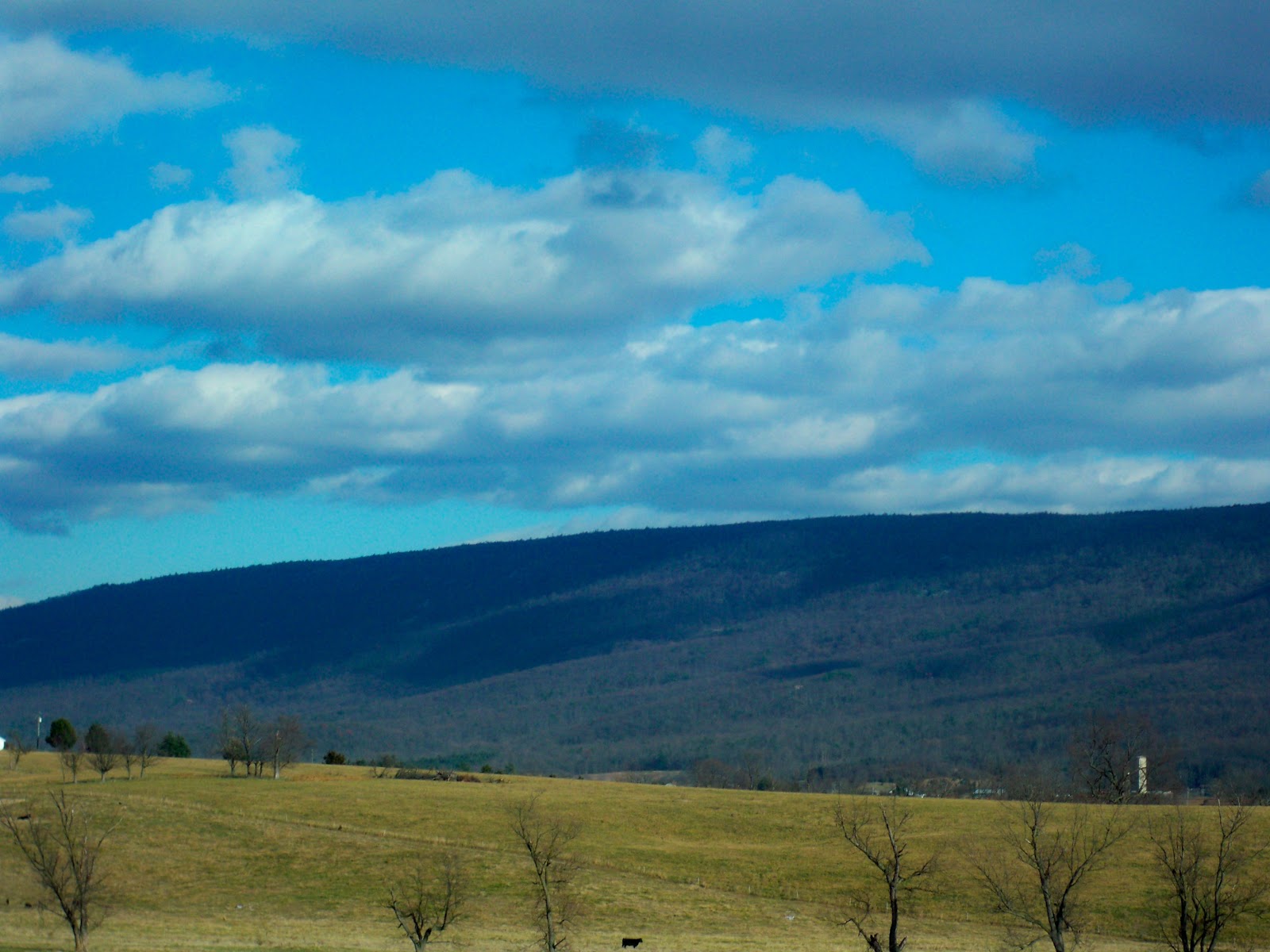
On the way to Kentucky it’s the prelude; on the way home, it’s the coda. But whether coming or going it’s never a destination of its own, only a blurred backdrop at 70 miles an hour.

Still, it’s a pleasant one: broad fields, middling mountains, the eye drawn to that combination of height and breadth; to the purples, blues and browns; to the cattle grazing black against the green.

The Shenandoah Valley slices down the western side of the state, 200 miles of in betweenness. If it weren’t for the pulse-pounding traffic of I-81 it would be a meditation. Some day, I’ll pause and make it one.

A School

A School

To visit a hometown is to walk with ghosts. To look at streets and see what used to be. To peer in windows and imagine life on the other side of time.

A church, a house, a park, a store.

And here, a school. My first. Here in this hallway we waited for a drink at the fountain on the first warm days of May. We lit the Advent candle in December. We scuttled in with our new penny loafers and pencils and school bags the first week of September.

All so long ago now as to have been a dream. But it wasn’t a dream. I have the evidence right here.

Arms and the Walker

Arms and the Walker

A walk I remember, a man in front of me with his arms clasped in back, an image I recall now, weeks later.

Seeing him stroll like that brought to mind characters in Russian novels wearing great long coats; they held their arms like that, too. Is it the posture of thought?

The arms not moving in tandem with the legs in motion, but anchored, as if to keep the emphasis on the cerebral.

I think more freely when striding naturally, legs and arms in opposition. It’s the rhythm of footfall. The arms are along for the ride.

Late-Season Snow

Late-Season Snow

Winter won’t let go this year. More snow here, white flakes on green boughs, and little icicles dangling from the low rafters.

The daffodils hang their heads. Too soon, they must be thinking. (Too soon being an occupational hazard for the daffodil.)

As the season lingers, I ponder its good points, the way it keeps me inside, with an internal focus. Not yet ready for the late nights of summer, the outward focus of warmth and light.

The flurries out my window are welcome. I watch them as they float aimlessly to the ground.

Unbroken

Unbroken

I finally read the book Unbroken, by Laura Hillenbrand. Published in 2010, this is the story of Louis Zamperini, Olympic athlete and World War II airman who was shot down over the Pacific.

Zamperini and two other crew members drifted thousands of miles (47 days with sharks constantly encircling their flimsy raft) before being captured by the Japanese — and their real troubles began.

Beaten, starved, humiliated — but somehow never giving in — Zamperini survived the war and the first difficult years that followed. He has lived a rich, full life.

It’s an old-fashioned good read, and it stays with you. Not the details of plot, but the lessons of character. Read a book like Unbroken and it’s difficult to feel sorry for yourself.

What We Look For Now

What We Look For Now

It’s been a wild, wet, windy, snowy March — time to look ahead to warmer days.

To seek the spot of color in the still brown woods. The bright break in the clouds when the sun shines through.

The clutch of boats beneath the bridge, their hues out of place in storage but not when skimming the water.

Which they will do soon. We know this will happen. It always has before.

Double Duty

Double Duty

In the midst of a long-postponed office clean-up, looking through every file folder, feeling virtuous about the growing pile of to-be-recycled papers, I learn that my e-mail is being upgraded. Quick, I have to purge my electronic files, too.

Are we the only generation who will straddle this digital divide? What does it mean to live with one foot in the world of paper, books, interview notes printed and stapled, marked-up manuscripts — and the other in e-mail, text messages, tweets, jpeg and mp3 files?

Does it make us more tolerant? More inventive?

Or does it just make us more tired?