Perfect Air

Perfect Air


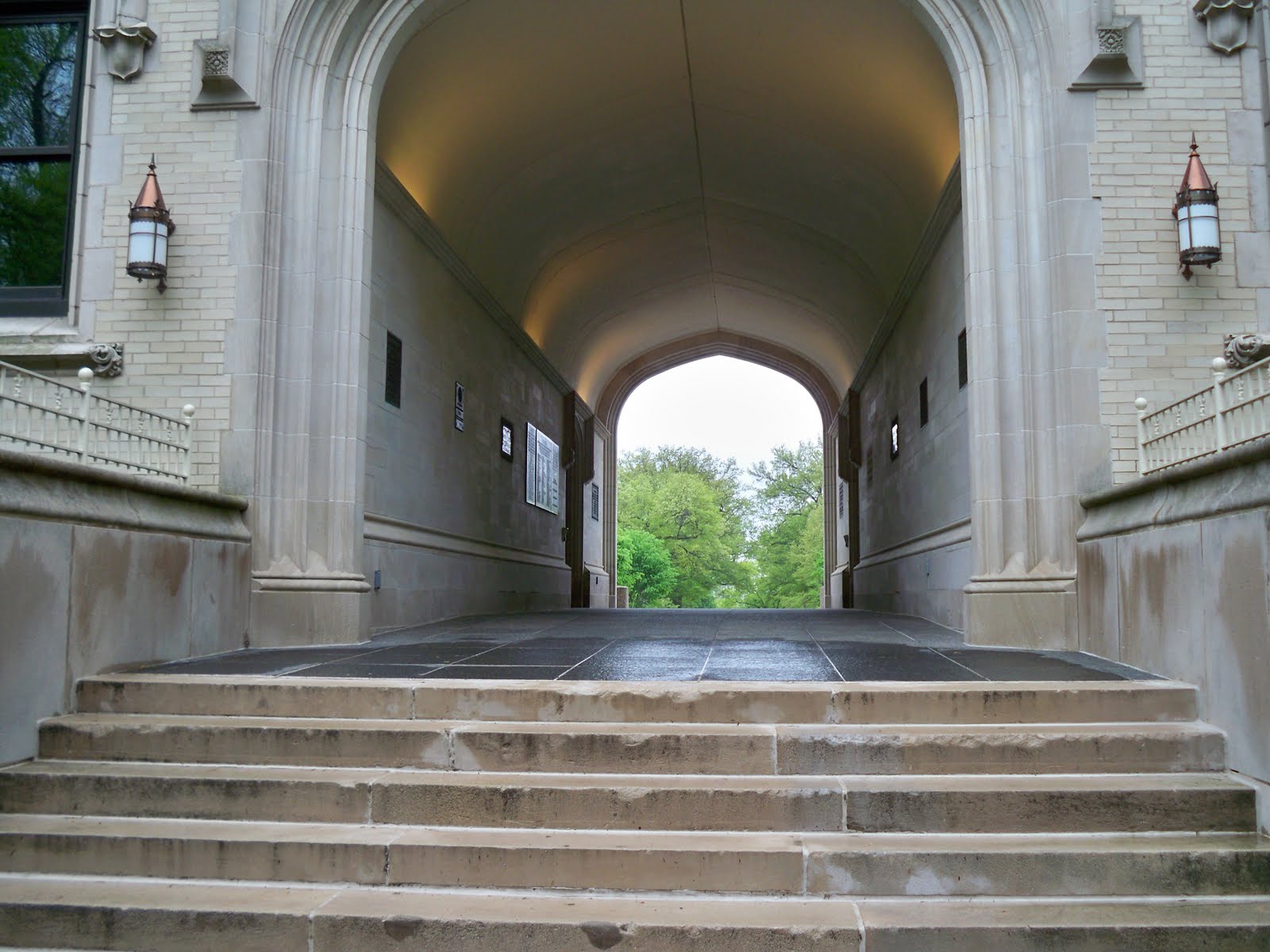
Walking home from Metro last night, the air temperature so perfect it felt like there wasn’t any air there at all. I tried to pass through each stage of the walk as fully conscious as I could be: the trees that lace over the path before the tunnel; the joyful racket of cicadas; the houses busy with after-dinner errands, one man pulling out of a garage, another idling in one.

I crossed the street quickly. Other folks were taking the night air, too, a family of five, two young sons (twins?) and an even smaller girl in a bright pink dress. The mother stops to help the youngest tie her shoe. The father turns to see what’s keeping them. Meanwhile, the boys make it to the next corner. Wait, their parents say. Stop there.

And there are others out for the evening air, joggers and dog walkers. Everyone strides quickly; it is easy to do this evening. There is neither warmth nor humidity to stop you.

And so I make my way to the car. I know I’ve missed dinner, and it’s too early for bed. I’m glad to be moving through space, toward home.
Stream Valley

Stream Valley


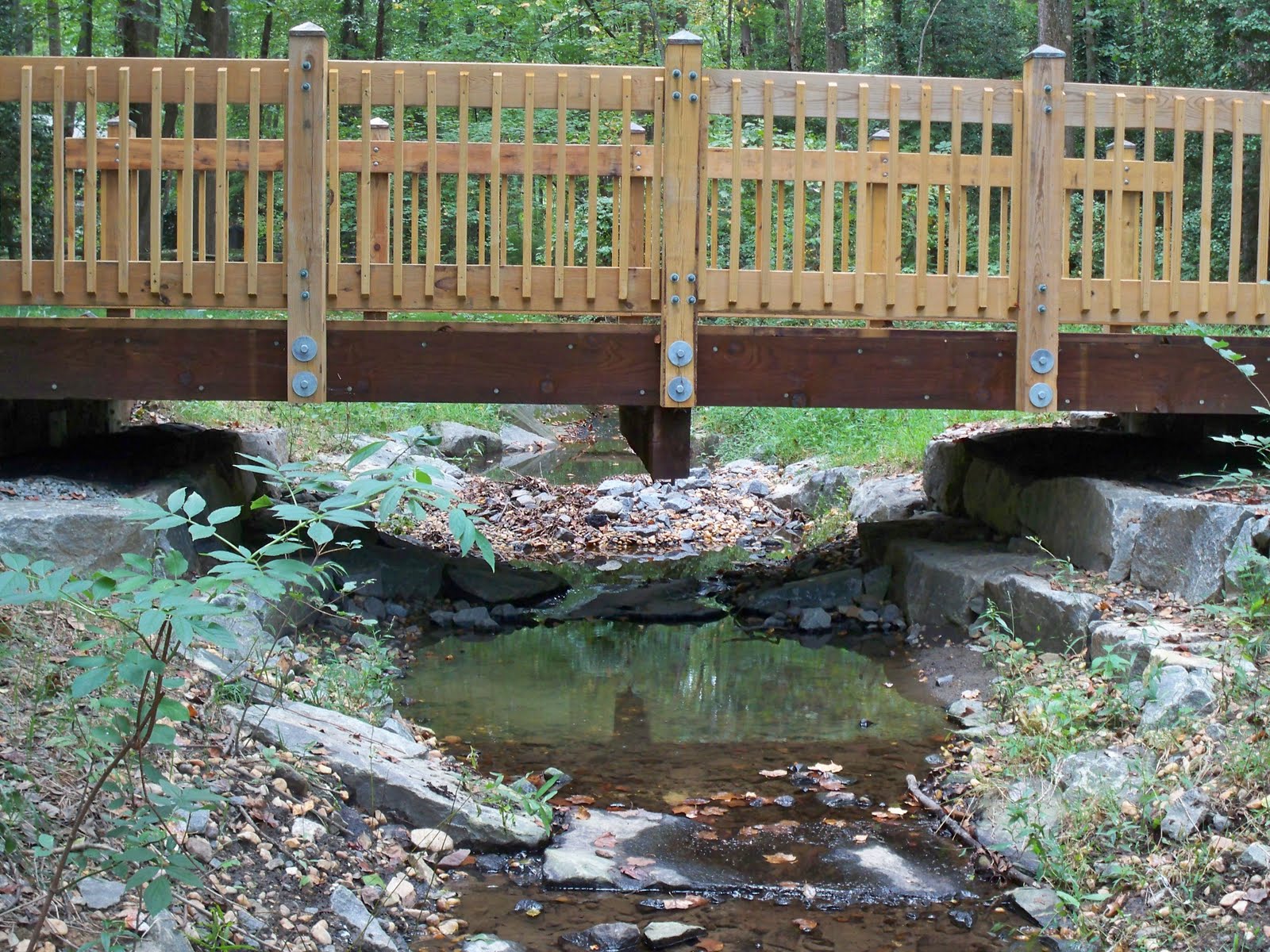
A few days ago I walked a small section of the Cross County Trail, from Miller Heights to a rock bridge across Difficult Run. I was pretty close to Vale, I think, and I paused to read a sign about stream valleys and their value to indigenous people: rich soil, nuts and berries to forage, animals there for the same purpose and ripe for the hunting. Obviously water there, too. These green secluded places were early hunting and fishing grounds. They were home.

Now these same places are helping save the area as it once was; it is through the stream valleys that the Cross County Trail (which runs from one end of the county to the other) is threaded.

We walk the paths our ancestors walked. But we walk for different reasons. We walk our dogs; we walk for health. Our livings are made elsewhere. We work for money. We work for prestige. We come to the trail to work out.

But the shaded packed dirt of the Cross County Trail may yet give us back our lives. Or at least it may give me back mine — by helping me learn to love the place I’ve landed.

Mossy Hill

Mossy Hill

You would think that out here in the congested Northern Virginia suburbs it would be next to impossible to lose a hill. But that is exactly what happened. At least for a while.

My children found the rise, named it the mossy hill, and took me there for the first time nine or ten years ago. I was impressed. It was high enough to give a good view of the stream valley below. It made me feel like I was somewhere else entirely, in the foothills of the Blue Ridge or Ozarks, somewhere with more sudden elevations, those squiggly lined places on the topographical maps. But instead I was only half a mile from our house, roaming through a suburban woods.

And then the kids got older, left for track or band or music lessons; the mossy hill was forgotten. I tried to find it many times but the path there had disappeared, vanished under the ferns and sticky vines. But last winter, Tom and used a topo map to find the place again. We looked for those squiggly lines. We approached the matter scientifically. And now I can find the place by heart.

Yesterday Copper and I walked there. We sat on top of the rise and looked into the woods below. The sun struck the ferned forest floor in patches of golden light. Cicadas provided the soundtrack. It was a humid, still, late summer afternoon. The mossy hill was mine again.

Books Before Breakfast

Books Before Breakfast


Sometimes when the house is very quiet I can sneak in a few hours of reading early in the morning. I’m sharper after a night’s sleep, not dropping off on every page, and what I run my eyes over stays with me longer.

What stays and what doesn’t is the subject of the book I just finished, Moonwalking with Einstein, by Joshua Foer. It’s a book about memory and memorizing, how a journalist covering the U.S. Memory Championship spent a year developing his memory — and became the U.S. Memory Champion himself.

Basically, anyone can improve his or her memory, Foer says. Or anyone with reasonable intelligence willing to spend hours a day practicing. The mnemonic techniques Foer uses were well known hundreds of years ago, before printed books made memorizing less important.

In my favorite chapter, “The End of Remembering,” Foer provides an intellectual history of memory’s steady assault by scroll, codex, silent reading, indexes, the printing press — and more recently by computers, cell phones, Google and Post-It notes. Why bother to hold information in our heads when there are so many other places to put it?

“Our memories make us who we are,” Foer writes. “They are the seat of our values and source of our character. … Memory training is not just for the sake of performing party tricks; it’s about nurturing something profoundly and essentially human.”

I couldn’t agree more. But just to be sure, I will now write “Joshua Foer, Moonwalking with Einstein” in the back of my journal. It’s where I inscribe the names of all the books I read. If I didn’t, I’d forget I had read them.

First Things

First Things


A welcome blast of cool air has revived our mornings, and I wake up ready to run. It’s interesting how habit dictates one’s timing and route. I always used to walk in the morning, but that was before I started writing in the morning. Now my mornings are like the lead paragraph in a complicated article. There is so much I want to put in them that they sometimes collapse from their own weight.

And my walks, I might postpone them till noon or later. But of course, you only get so many newborn hours in a day. I miss the silken start of a day that begins on foot. But not today. Today I’m out the door and on my way.

Nature’s Way

Nature’s Way


Sometimes I think the Perseid Meteor Showers are nature’s way of getting us house-dwellers outside at least one night a year. The annual event is not a particularly good way to see shooting stars, at least not in our light-polluted corner of the world.

But this morning I woke early, threw on a white hooded sweatshirt and padded outside. First I walked to one end of the block but house lights and flood lights took away what little darkness there was. Then I ventured the other direction, to the meadow.

There’s an old baseball diamond there and I sat down on home plate, then reclined on the grass, hands laced under my head, eyes scanning the heavens. I looked and looked and looked. A couple of times I thought I saw a flash of light, but I decided it was just a twinkling star or a lightning bug.

It didn’t really matter, though. It was enough to gaze at the stars, to bask momentarily in the immensity of space.

Out is Up

Out is Up


A climb to the top of the Vienna Metro parking garage yesterday gave me pause. And not only because I was winded from the steps. It was because of what I saw from that perch. The long-planned retail and housing development beside the Vienna station is finally underway. Urban density is coming.

I have mixed feelings about urban density. I appreciate the efforts of Robert E. Simon (founder of the planned community, Reston) and other urban pioneers who have envisioned new ways of living in the suburbs. (In Simon’s case, it was to create European-style “new towns” in the middle of Virginia hunt country; his experiment has been only marginally successful.) And yes, it is true that our long driveways and wide lawns, our streets without sidewalks, do not foster walking or biking. They keep the automobile king.

But from my vantage point yesterday all I could see were bulldozers and barren soil stripped of grass and trees. The price of urban density is suburban leafiness, the openness and beauty that drew us here in the first place. But up there on the fifth level of the Metro Parking Garage, the future was clear: The way out is to build up.

The Bloom of the Present

The Bloom of the Present


A nod to the “Writer’s Almanac,” which informed me that today is the anniversary of Walden‘s publication. When it was published on August 9, 1854, Thoreau wrote in his journal: “To Boston. Walden published. Elder-berries. Waxwork yellowing.” After the book sold out its initial 2,000 print run in 1859, it went out of print (encouraging news for us mid-list authors).

Here are the lines that caught my attention this morning when I heard them on the radio: “There were times when I could not afford to sacrifice the bloom of the present moment to any work, whether of the head or hands. I love a broad margin to my life.”

I have felt that way often this summer — that it is enough simply to be. To walk or run, to swim or bicycle. To stand still and listen to a mockingbird.

Walking Hot

Walking Hot


Yesterday we went to Arlington Cemetery, arguably the hottest place on the eastern seaboard. We crunched across the grass, skirting gravestones, asking directions, finding what we thought was the quickest way to President Kennedy’s grave site but learning that we had taken the long road.

Once we found the site, I found my eyes darting away from the eternal flame; surely it was redundant on a day with a heat index of 100. The warmth was everywhere, shimmering off the pavement, slipping a veil between us and the landscape. A guard stopped people from bringing snacks up to the site. The guard had several bottles of ice water in a cooler bag and she chewed on ice in between barking orders to the crowd. We asked her directions, we shared her pain, we told her to stay cool.

But no one stayed cool yesterday, at least no one outside. The fitful showers that showed up about 4 only served to re-humidify the atmosphere so that by the time we got home the windows were fogged and the air conditioner chugging. We were walking, but walking slow. Walking hot.

Conversation

Conversation


Quick on the heels of my New York trip comes a visit from my dear friend Kay and her son, Emile. Kay lives in Paris so visits from her are rare and treasured. We have been chatting about one thing or the other almost nonstop since she arrived Thursday.

Instead of walking, then, I’ve been talking. And the talking has sparked ideas and freedoms that have been buried lately. Nothing liberates the soul like a good conversation. Afterward one feels supple and limber — ready to take on the world. Conversation is a bridge to a better place.