Once Upon a Meadow

Once Upon a Meadow


Sometimes when I’m walking through the suburbs I ponder street names. Our neighborhood has a faux English theme: Folkstone, Treadwell. You half expect to be strolling through the Cotswolds — but of course you are not.

Close by are roads with names like Flat Meadow, Hay Meadow, Cross Creek and Still Pond. These belong to the neighborhood called Franklin Farm. The farm is gone, the creek is but a shadow of its former self and the meadow is a narrow strip of land hemmed by houses. The ponds are so still (that is, stagnant) that this summer they were renovated, if that’s something you can do to a pond. The trees around them were felled so daylight could freshen them up.

The small dairy farms that still dotted our landscape half a century ago are gone now. We grow families here now. But in my walks through the woods and fields, I like to pretend. The place names make it easier.

Rainy Day

Rainy Day


The rain began earlier than we thought it would, and I wasn’t ready. I had an umbrella, it wasn’t that. I’m just not prepared for the cold pelting, for the gloom. But who ever is, I ask myself?

The optimistic word for this weather is “cozy.” It is for making soup and cleaning the basement. But that’s only if you’re inside. If you have to trudge out into the world, as I do, this weather is for wearing big comfy sweaters and curling up at your desk with a mug of hot tea.

But whether inside or out, it is a time for turning inward.

The Morning After

The Morning After


In Lexington, Kentucky, the new mayor-elect, Jim Gray, took my father out to McDonald’s a couple weeks ago. Until Dad fell last month, he had been working on Gray’s campaign, and he felt bad that he wasn’t able to squire the candidate around to some retired-guy coffee groups as he promised he would.

But no problem, about a week ago (and more importantly, a week before the election), Candidate Gray stops by the house, picks up my dad and drives him to the coffee groups. How many votes did Gray snag that morning? Maybe half a dozen. Frankly, I haven’t heard of such a neighborly act from a politician in a long time. Maybe ever.

I couldn’t vote for Jim Gray, of course. And in our corner of the world the election wasn’t as dramatic as it was for much of the country. But I like to think that there are hundreds more Jim Grays out there today — I’d like to think that at least in a few places, the good guys won.

For All Souls

For All Souls


Yesterday was All Saints Day; today is All Souls Day. Of the two, I’ve always been partial to the latter. For one thing, it never required a visit to church, not being a “holy day of obligation.” (There’s a phrase and a practice that’s on the way out!) For another, I figure that I know more souls than saints. Today is democratic: we pray for all those who have died.

But, expanding the meaning a bit, today can be a day of contemplation for the souls of all of us, the living, too, for the part of us that ripples beneath conscious thought, for our essence. “The soul is often hungrier than the body, and no shops can sell it food,” said the abolitionist and clergyman Henry Ward Beecher. Today, for me, will be about feeding the soul.

Judgment Day

Judgment Day


Evenings are chilly, there are frost warnings at night. For the plants on our deck, the moment of judgment is at hand. Will they make the cut? Will they be allowed inside where it’s warm — or be left outside in the cold?

The choice is not as clear-cut as it sounds. Sometimes I think bringing them in is the crueler alternative. Inside they languish by the hearth, where there isn’t enough light, or in the basement, where I forget to water them. By comparison, sudden death in a killing freeze may be the more merciful choice.

Human nature is weak, though, and I have a soft spot for the large fern. It will definitely make the cut. If only I can keep it alive until next spring. Ah, next spring! It already sounds good.

Happy Halloween

Happy Halloween


A gunman shooting at Marine installations, explosive packages bound for the U.S., a local terrorist plotting to bomb the Metro system — all in all it hasn’t been an easy week to live in Washington, D.C. — or anywhere in this country, for that matter.

Which is why I’m glad it’s Halloween — the holiday that puts fear in its place. Of course, Halloween is mostly about getting dressed up and eating candy and watching scary movies. But at its root it’s about thumbing our noses at fear and death. It’s about looking the other way. It couldn’t be here at a better time.

A Time for Irony

A Time for Irony


A word about today’s gathering on the National Mall, Jon Stewart and Stephen Colbert’s “Rally to Restore Sanity and/or Fear.” It’s clever and it’s funny and lots of people I know are going, but I don’t want my daughter to be one of them.

She’s young enough that I’d like her first experience of such an event to be an actual and not an ironic one. It would take much more than a single blog post to describe how I feel about kids and irony. In short, I think it’s an attitude toward life best developed slowly and with experience. Best to at least start off life with some sense of purpose. There will be plenty of time later to become jaded.

I was heartened to read an op-ed in the Washington Post last week on this topic. In “A Like-In for Generation I,” Alexandra Petri, a self- described member of the Millennial generation, says, “To Generation I [that’s “I for irony, iPhones and the Internet,” she writes], “for whom life exists so we can put as many things as possible in quotes, this ‘rally’ is the closest we will ever get to a love-in. It’s a ‘like-in.'”

At the risk of sounding earnest and old-fashioned and absolutely square — give me a love-in every time.

Out of This World

Out of This World


I walked outside this morning onto the darkened deck. A cool, steady wind was blowing and the moon and stars shone bright and clear. I thought about the worlds that exist beyond our world, about possibility and eternity. Then I walked inside to read this headline: “Galaxy may have gobs of Earth-size planets.”

In a paper published in the journal Science astronomers posit that there are “tens of billions” of planets the same shape and size as Earth in the Milky Way. This conclusion is based, among other things, on measuring “the minute wobbles [I love that phrase] of stars caused by the exoplanets that orbit them.” And also by a method called “transiting,” which looks for reductions in light coming from the star and planets being observed. Fascinating stuff, for sure. Also fascinating is the discovery of a rocky planet in a “habitable zone” around a star close to Earth.

It’s too soon to know for sure of course, but it seems increasingly likely that we are not alone in the universe.

Unseen Connections

Unseen Connections

In The Whistling Season, by Ivan Doig, Paul Milliron pauses for a moment to muse outside his one-room schoolhouse:

“There at the waiting pump I could not sort such matters out totally, but even then, I am convinced, began in me some understanding of how much was recorded on that prairie, in those trails leading to the school. How their pattern held together a neighborhood measured in square miles and chimneys as far apart as smoke signals.”

This passage makes me think about all the connections that are stitched into a community, often invisible and tenuous but there just the same. These connections are particularly hard to discern on the outer edge of a major metropolitan area. But I figure if Doig could see them on a prairie I ought to be able to feel them — and to sing them — in the suburbs.

Tree Aglow

Tree Aglow


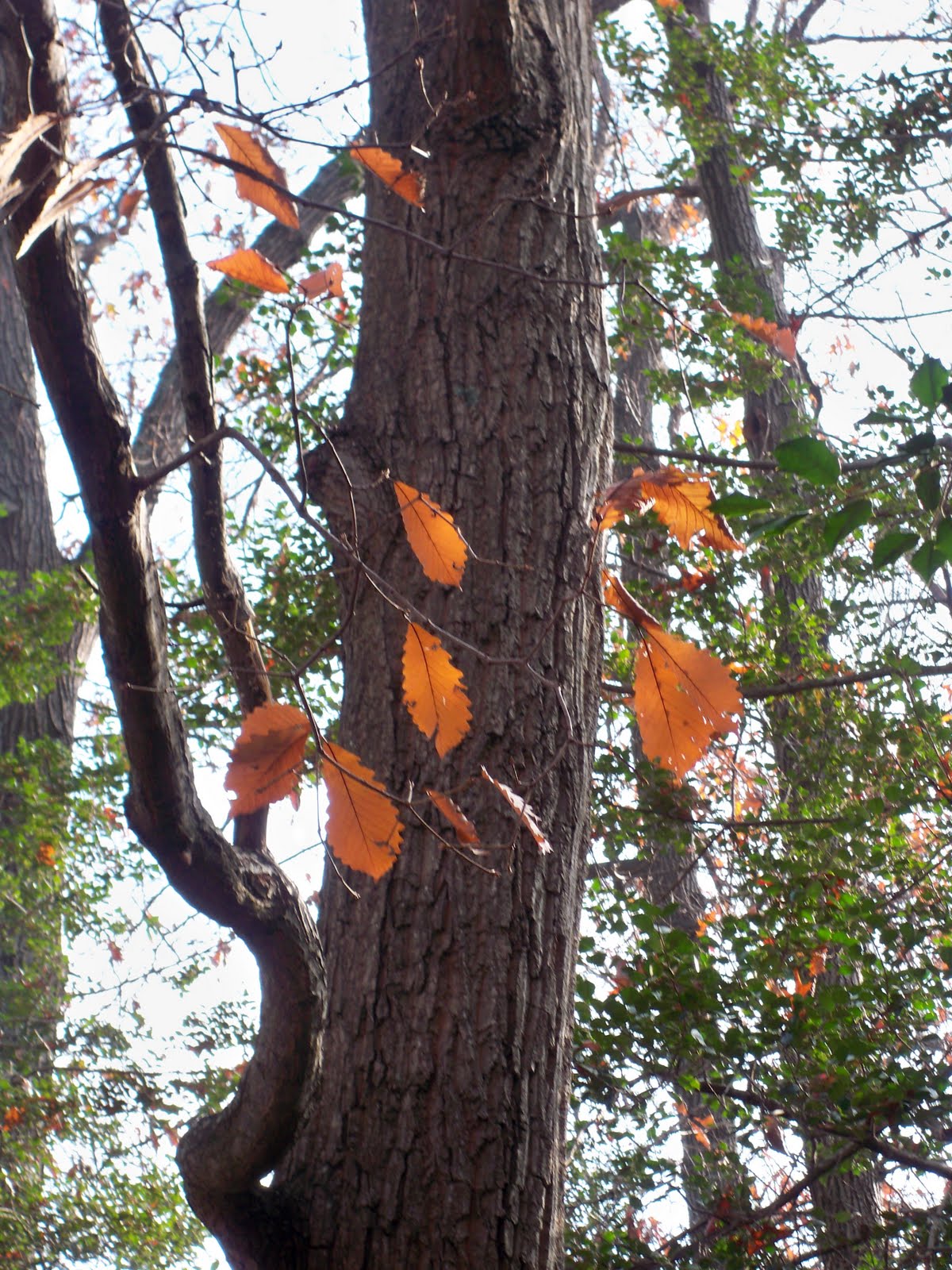
I waited weeks for the leaves to change, and now they seem to have done it overnight. I drive home from Metro through tunnels of green and gold and that familiar acrid scent. Back home, I rush out with my camera to photograph the most beautiful trees in our neighborhood. The shimmering maples, the burning bush, and behind it all a wash of brilliant yellow from the turning oaks. We’re expecting wind and rain later this week and the leaves that are now on the trees will soon be on the ground. It is good to acknowledge the fleeting nature of beauty — and of cameras.