A Mind of their Own

A Mind of their Own


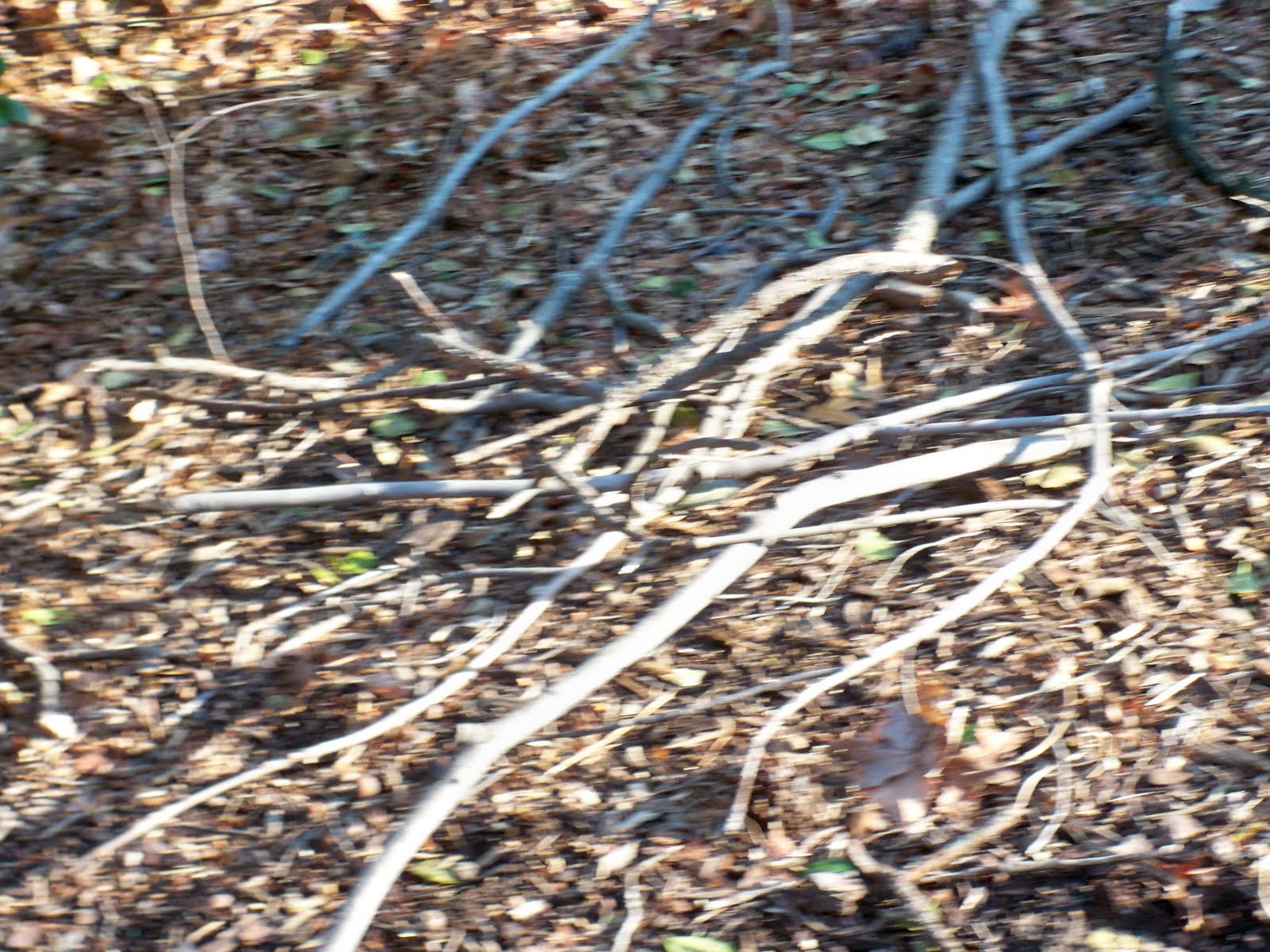
I have a theory about inanimate objects; I believe that sometimes they fix themselves. This belief has been roundly ridiculed by my family. But I write about it today because it has happened once again. My trusty Kodak Easy Share camera broke over the weekend, took odd wavy pink-tinted photos (see above). And today, now that I’m no longer in scenic Holmes County with a buggy in every parking lot, it is once again snapping fully tinted photos.

This — or something like it — has happened with radios, CD players, iPods, toasters and more than one computer. It has happened enough that I’ve begun to think these objects have minds of their own. They are like balky wayward children who when left alone will finally come to their senses. They want to be good. But as the parenting books say, they need to develop their own autonomy.

Just as the nonbeliever can always find a scientific explanation for miracles, so too can the skeptic poke holes in my theory. I realize that beneath this personification are loose circuits, faulty wires, software glitches. But I hold fast to my theory. I wait a day before calling for repairs. I believe that there is much about this world that we do not understand.

The Quiet Life

The Quiet Life

On Saturday we toured Holmes County, Ohio, home to the world’s largest Amish population. We passed buggy after buggy, and after a while I noticed there were different models. Some were like sedans; others resembled little trucks. All were pulled by beautifully sleek black horses.

In the village of New Hope, Amish men with long white beards rode their bikes up to the hardware store. A few miles outside the village, past the small school, a woman named Lavina met us in her home and showed us the quilts she and her sister, Mary, had made. The quilts were piled on a double bed and she flipped each one over to reveal the varying patterns and colors of the one beneath.

A few miles away we bought stainless steel cookware at the Yoder Bargain store. A young girl with head scarf and long dress browsed the sewing notions. An Amish family looked over the baby clothes. We found an entire small room devoted to rubber stamps. The store was dark and quiet, and when we left to get in our car I glimpsed a fall tableaux: red-leaved trees, corn crib, white-hatted Amish grandmother tending the mums, a buggy in the distance. No electric wires or telephone lines in sight.

This is a quiet world, one without radio music, car horns or text message beeps. I couldn’t live in it, I certainly couldn’t blog in it, but I could enter as a visitor and savor the stillness.

Cross Country

Cross Country


The birth of a first child is also the birth of a family. So today, as we celebrate Suzanne’s birthday with her, I think about all the places our family has taken us. Not just the states and the countries we have traveled to but the kind of people we have become because of each other.

Suzanne loves to run, and yesterday we stood on a crisp, windy course and watched as she and her teammates raced across the green grass, through the yellowing trees, and up an agonizingly long hill.

The wonderful thing about cross-country is that even the spectators participate. To see the race properly you must trot from one vantage point to another. So at the end of the race the runners aren’t the only ones who are exhilarated. Everyone is.

It’s kind of like a family.

Spirit of the Season

Spirit of the Season


It’s the time of year when scarecrows lean on lampposts, monster spiders scuttle along rooftops and corn stalks cluster near hay bales. Halloween decorations have always seemed a little redundant in our house, though. Without even trying we have cobwebs in the corners, a squeak in the stairs and a haunted lamp in the living room. We usually put up other decorations too, witches, ghosts, even some fake cobwebs a few years ago. But those seemed rather silly. This year we may go “au natural.” We’ll let our house speak for us.

Life Among the Savages

Life Among the Savages


I’ve been reading Shirley Jackson’s memoir of raising kids in an old house in a small Vermont town and marveling at how well she captures the endearing chaos of family life. “Madcap” is a word that comes immediately to mind, an “Erma Bombeck’ish” word that describes a certain style of postwar mothering that is loving but off-handed. And Life Among the Savages is certainly madcap. “Surprising” is another, because Jackson is known for her horror stories (she wrote the short story “The Lottery”).

Some of my favorite scenes in the book are set around the dinner table — one child demanding, another pouting and still another floating around in her own imaginary world. There’s a rise and fall to the dialogue that is exactly like the real thing. It makes me nostalgic for our own madcap days. Most of all, though, it makes me smile.

The Importance of Terrain

The Importance of Terrain


One thing that cyclists, walkers and new drivers have in common is a renewed appreciation for topography. In our house we have one of each of these — a cyclist, a walker and a new driver — and we are all feeling the hills.

The long slow grades are the toughest for cyclists and walkers. But for the new driver it is the unexpected dip, the unanticipated downhill.

When you’ve been driving for years you forget that vehicles move even when your foot is not on the gas pedal. Cars can zip backwards down a driveway before you know it; they can pick up enough steam on a slow descent to push you quickly over the speed limit. Lesson one, I say to Celia, my voice wavering just a bit from the passenger seat: The brake pedal is your friend.

To myself I think: It’s good to remember the importance of the terrain. Topography keeps us humble.

Autumn Rose

Autumn Rose


There is a shade that appears this time of year in leaf and twig and flower. It isn’t russet or rust; it’s more of a rose. Not the vivid rose of spring but the faded rose of fall, a purplish rose. It’s an elegant hue, subtle enough to show up on a runway or in a fashion magazine. But not pretentious either. It’s a quiet color and you won’t see it first when you gaze at a stand of trees. But go for a woods walk as I did yesterday, or do some weeding in the flower beds, and you’ll find it.

A World of Books

A World of Books


A few weeks ago, at back-to-school night, I saw the list of books our high school sophomore will read for English this year. I had to bite my tongue not to say “Oh, we have those, somewhere…” — because usually I can find every other book but the ones we need. Someday we will discover a box in the basement containing every missing selection on the high school curriculum: All Quiet on the Western Front, The Jungle, The Scarlet Letter.

Meanwhile, the books that I do find are distressingly yellowed and priced at 69 cents. You must open them carefully, so that their bindings don’t crack and their pages fall out. Along their margins is such English major scrawl as “obsession with the body shows the importance of the physical” and “dichotomy of city and country echoes Romantic themes.” But I’m proud of these books, and of the occasional comments the girls have reported back to me from their English teachers: “I used to have that edition when I was in college” or “I can see your family holds onto things.”

The late Susan Sontag said of her library of 15,000 books: “What I do sometimes is just walk up and down and think about what’s in the books, because they remind me of all there is. And the world is so much bigger than what people remember.”

The Small House

The Small House


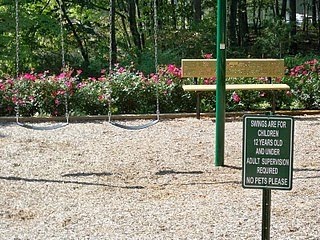
I read today that Builder magazine has come up with its concept home for 2010. It’s called a “Home for the New Economy,” and it’s 1,700 square feet. Previous concept homes have been as large as 6,000 square feet, so this is quite a departure. The article goes on to say that it will take time before homeowners embrace the smaller-is-better concept of this concept home. And certainly where we live, McMansions still rule (see above).

But the “Home for the New Economy” makes me feel vindicated. We live comfortably in a 2000-square foot house with a room for every child, a cozy former dining room that long ago became our ersatz family room and a kitchen where we —— and most people who visit us —— spend most of our time. There isn’t as much house to clean or pay for and, best of all, the small house keeps us together. Where we belong.

Living History

Living History


Yesterday I met a 98-year-old man who is still practicing law, the fifth generation of his family to do so in his North Carolina hometown. He and his (slightly) younger wife had driven five hours to attend a reunion, and after a luncheon for 50-year (and 50-year-plus!) graduates, the man took the microphone and sang the Georgetown fight song in a strong, clear baritone.

As it turns out, the man is the great grandson of Stephen A. Douglas, of Lincoln-Douglas debate fame. My recall on this being a bit shaky, I just read the Wikipedia entry on these debates. There were seven of them, held in various towns in Illinois, as Lincoln challenged the incumbent Douglas for the U.S. senate seat. The debates covered big topics, especially slavery, of course, and they were so important that newspapers sent stenographers to take down every word the men said. But the newspapers that were for Douglas edited his words and left Lincoln’s in rough form — and vice versa for the newspapers that supported Lincoln. After he lost the election, Lincoln cleaned up all the text of the debates and published it in a book. The book’s popularity helped lead to Lincoln’s nomination as Republican candidate for president of the United States.

And just to think, I learned all this because of a little old man at a luncheon.