Pie Crust

Pie Crust


Like everything else, cooking has its seasons. Fall is the time for hearty soups and stews, for roasts and root vegetables and, of course, for pie. I’ve never been too interested in the fillings; for me, the point of the pie is the crust.

I use Crisco. No butter. No margarine. And when in doubt, I use more Crisco. I sift two cups of flour with one teaspoon of salt, then cut in three-fourths cup (or slightly more) of Crisco. Once that’s blended into a pebbly mixture, I add six to eight tablespoons of ice-cold water and lightly stir (just until blended) with a fork.

At this point I barely touch the stuff — I just quickly turn it out onto a floured board, roll, shape and slide into the pie pan. The more I fiddle with it, the tougher it gets.

Pie crust, like so many things in life, is best approached with a full heart and a light hand.

The Buzzing Brain

The Buzzing Brain


Just as we gravitate to candidates or causes because we already know and like what they have to offer us, so too do we choose books because we expect them to reflect a world view — or a hunch — we already have.

And so it is with The Shallows by Nicholas Carr. I remember reading a review of this book when it came out a few months ago and wanting to buy it immediately. But I forgot the title and the author. This is a telling fact. Because the subtitle of the book is What the Internet is Doing to Our Brains.

I was hoping to find in this book an explanation for why it seems more difficult for me to concentrate, why I interrupt my reading or writing constantly throughout the day to check e-mail or Google a word. And I’m finding that and so much more.

“Our use of the Internet involves many paradoxes, but the one that promises to have the greatest long-term influence over how we think is this one: the Net seizes our attention only to scatter it.” Carr cites brain studies and other research to support his claims. He provides an intellectual history of the reading brain. And he reaches this conclusion: “The mind of the experienced book reader is a calm mind, not a buzzing one.”

So it may be that I chose this book because I knew it would support a theory about the world I already have. But even so, this once-calm but now-buzzing brain thinks Carr is onto something.

Little Cat Feet

Little Cat Feet


The most poetic of weathers has visited us this morning, the kiss of cloud on earth, that which comes in on little cat feet (as in the short, oft-anthologized poem by Carl Sandburg) — I’m talking fog, of course.

No fun to drive in but so nice to wake up to, fog makes the real world go away. It softens the edges of landscapes, blurs them, smudges them deftly into each other. It’s funny how I can remember foggy weather that happened decades ago: an entire week of mild misty early winter days in Chicago. A hike in the Rockies when I thought we’d lost our way. The glorious summer on a mountaintop in Arkansas, when we were often unable to “come down the mountain” because we were totally socked in by the stuff.

A light fog is fine walking weather. Not so thick as to obscure the path ahead, but soft enough to embrace it.

Let Us Entertain You

Let Us Entertain You


The dust is flying. The drinks are chilling. The food is “being prepared” (I say, to keep the parallel structure of the sentence). The food preparer, of course, is me — so this post will be brief.
We are, in short, entertaining, something we used to do more often but something that has taken a back seat to raising children the last decade or two. But it’s something I hope we do more of in the years ahead.
I think of the great parties of our past, the ones we attended as well as gave, and in them there’s a certain alchemy of people and place and libation that I hope we can achieve tonight. Our wine cellar is not quite as ample as the one above, but I hope it does the trick.

Our Films, Our Selves

Our Films, Our Selves


Today “Harry Potter and the Deathly Hallows” opens in theaters, the first half of the seventh and final Potter book to hit the silver screen. When the first Potter film came out the girls were in first, fifth and seventh grades. Now two are in college and the youngest is in high school. You need only look at Daniel Radcliffe’s jawline, no trace of boyishness left, to know 10 years have passed. But through the magic of cinema his 11-year-old face will always be with us and will remind me, at least, of those relatively (and in retrospect!) serene elementary school years.

Actors are pegged not only to the ages of their debut (think Shirley Temple) but also to their strongest performances. I learned the other day that Jill Clayburgh passed away in early November. For me she will always be the devastated wife and mother of “An Unmarried Woman.” I must have seen that film half a dozen times in its heyday and was always inspired by the New York setting and by Clayburgh’s journey to selfhood (which sounds very transactional and 1970s but, hey, that’s when the movie came out).

The last scene is a classic, as Clayburgh attempts to carry a huge painting that her lover (Alan Bates playing an artist) has given her. Bates is dreamy and Clayburgh loves him, but he’s leaving town and she has worked too hard at independence to follow him. So he hands her the large canvas as if to say, here, you want to be a self-sufficient woman, try this on for size. Or at least that’s the message I took from it at the time. I was much younger then.

How Can I Keep From Singing?

How Can I Keep From Singing?


Last night I watched the film “Young at Heart.” It’s about a chorus of senior citizens who find in communal singing a joyous antidote to growing old. The singers started out crooning vaudeville tunes, but their director keeps pushing them artistically until they can belt out rock and punk and Motown – everything from “Schizophrenia” to “I Feel Good.”

As the movie progresses its tone becomes more serious; mortality bears down hard. Two of the singers die a week before a big concert. They leave a huge hole in the chorus. But the others decide to go on. Their absent friends would want it that way. The last scene is the group on stage, singing their hearts out. Because of the music, they are “forever young.”

Watching this movie brought to mind a hymn, one that Pete Seeger made famous:

My life flows on in endless song:
Above earth’s lamentation,
I catch the sweet, tho’ far-off hymn
That hails a new creation.
Through all the tumult and the strife
I hear the music ringing;
It finds an echo in my soul–
How can I keep from singing?

Color’s Last Stand

Color’s Last Stand


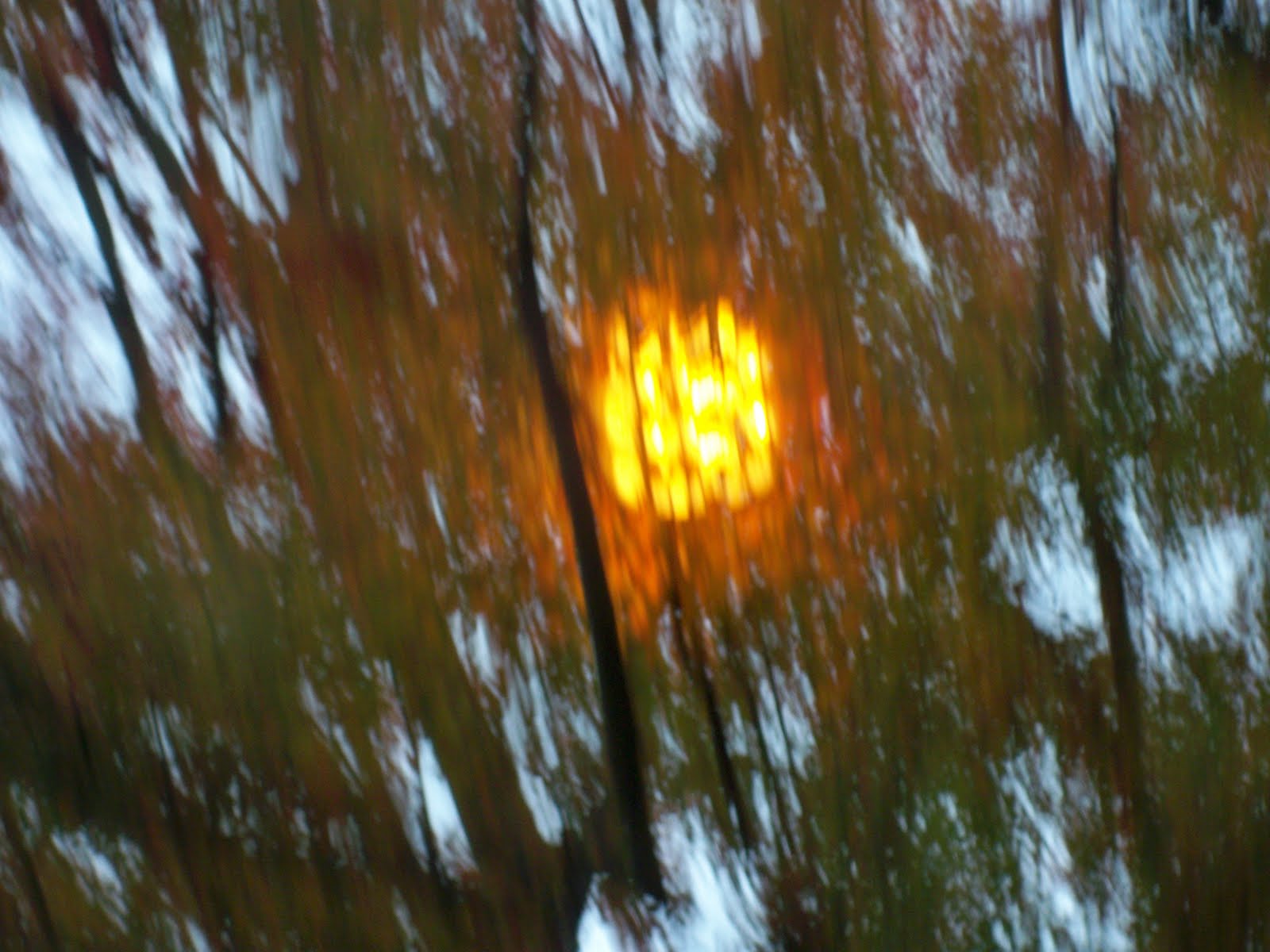
Rain wasn’t the only thing that was falling yesterday. Leaves were twirling and swirling and landing lightly on hedges, yards and streets. They were mixing with the raindrops, they were dancing to the ground.

The reds, yellows and oranges that had so impressed me last week — in fact, I was marveling at how many trees seemed struck in mid-October rather than mid-November — were fading to brown and gray. Soon we will have monochrome. But before the color is all gone, a picture in its honor (photo by Suzanne).

A Walkway in the Sky

A Walkway in the Sky


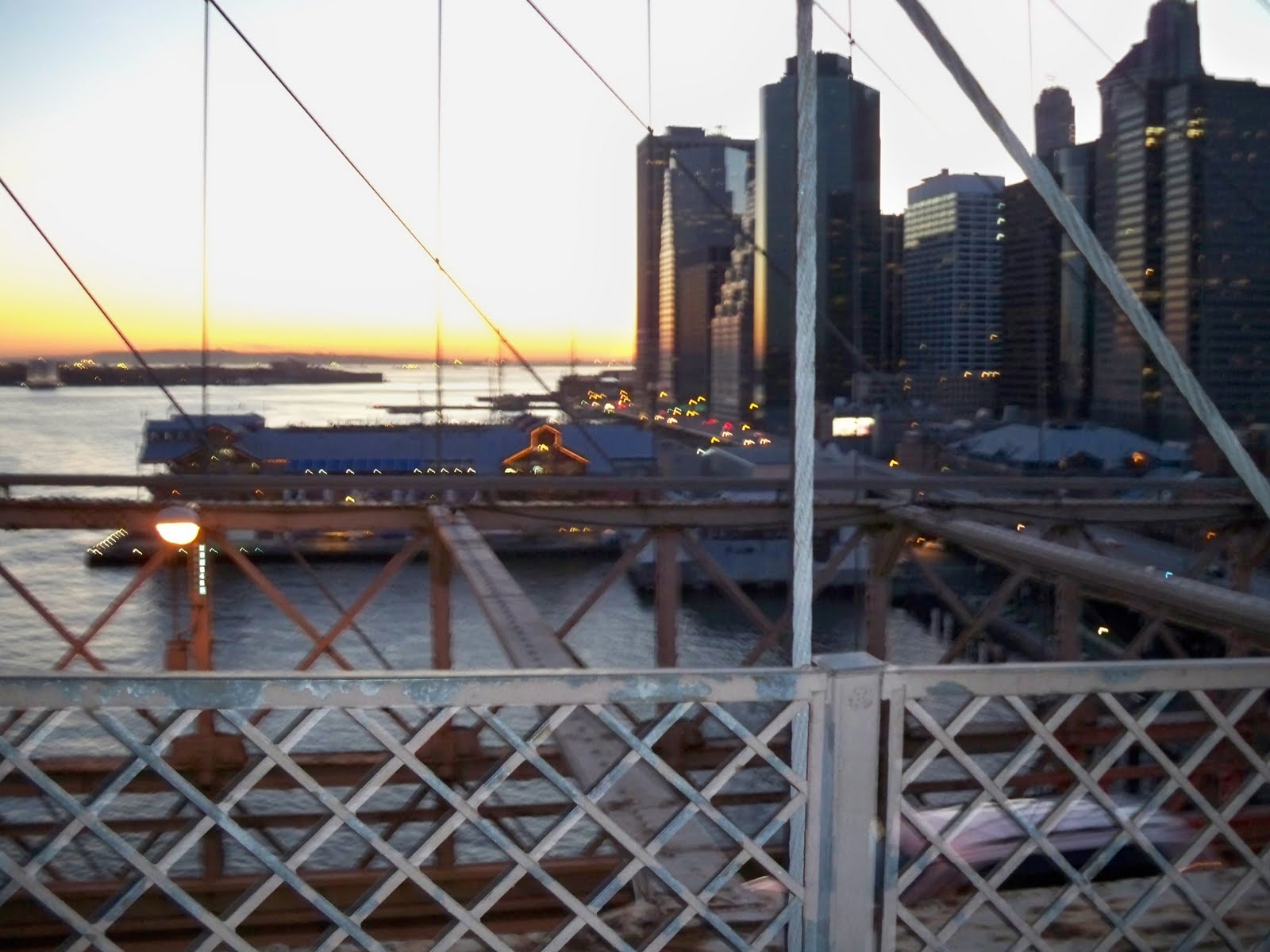
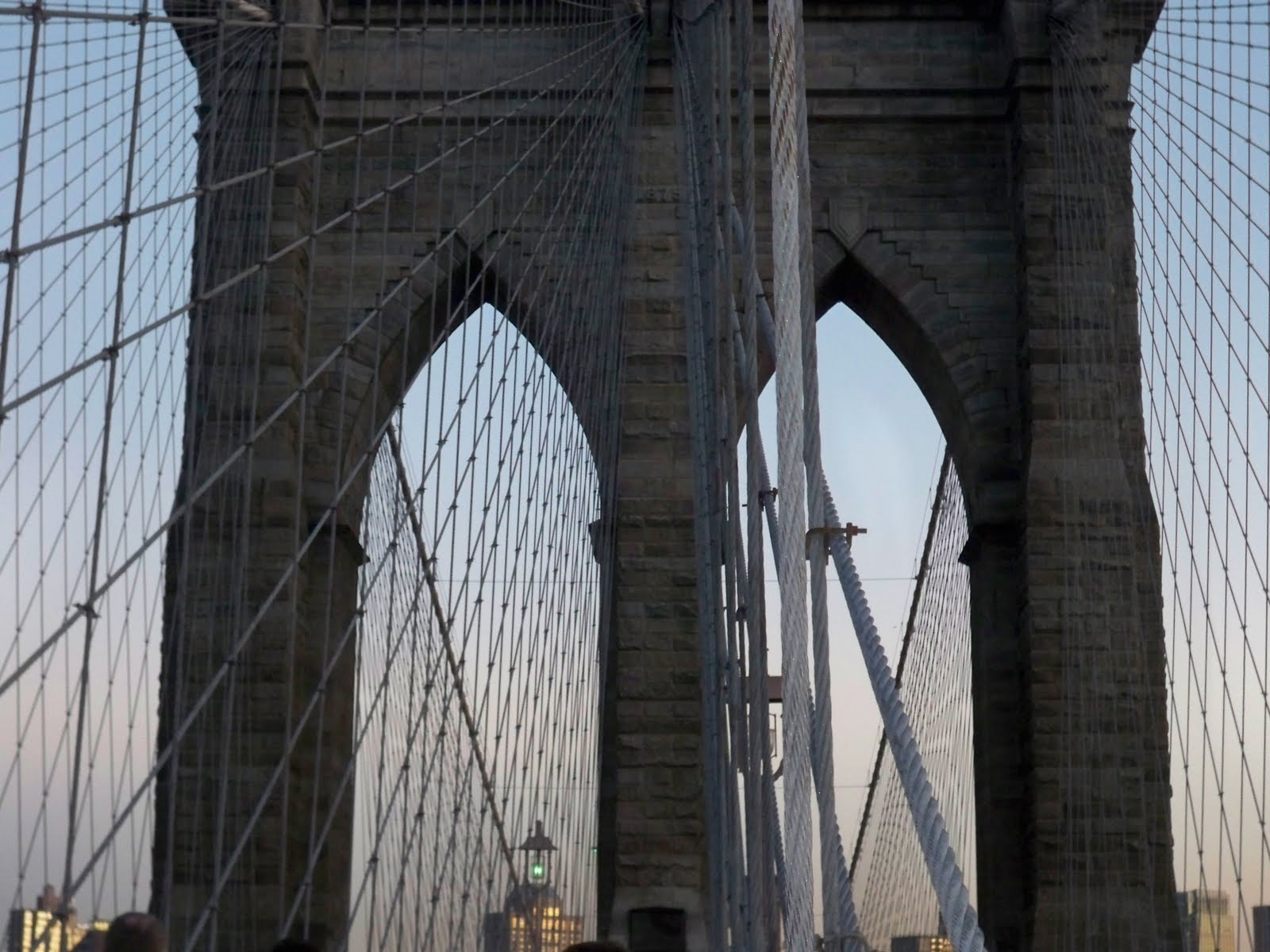
One of the world’s greatest walks is the pedestrian path of the Brooklyn Bridge. Stroll across it at sunset on a balmy late fall afternoon and see the city at its finest.

If you’re walking toward Brooklyn, on your right is South Street Seaport, lower Manhattan and, once you’re out far enough, the Statue of Liberty. On your left is midtown, with the Empire State Building and the Chrysler Building. Ahead of you is this view, the towers and cables of the bridge itself, built six times stronger than it needed to be, built for the ages, and now 127 years old. A bridge that has inspired poets and madmen and ordinary citizens who need to believe in beauty.

New York, N.Y.

New York, N.Y.


Sometimes a place you used to live reaches out to you from the distant past. It is an old lover from whom you once parted with great sadness (you adored each other but were incompatible). You had learned to live apart but then you ran into each other. There’s that old familiar catch in the throat. You had forgotten how you felt in that old life.

Here is a place that made you feel more alive than you’d ever felt before. You can’t go back to it — you are a different person now — but you are forever grateful — and yes, more alive again, too — just for having been reminded.

A Day in the City

A Day in the City


My sister, Ellen, was the pioneer. She moved to New York City first. I was next. Then my brother Phillip. Within two years, three of the four kids in my family were living in the Big Apple. Now none of us do.

But we haven’t gotten it out of our systems (does anyone ever?), so today Ellen and I take our daughters to the big city to celebrate their birthdays. We’ll walk through Times Square, the Village, Chinatown. We’ll shop, snap photos and take in a show. We will have more money in our pockets than we did in the old days. (That isn’t hard to do.) And we won’t walk as fast. But we will be more or less the same. And that’s something to celebrate.