Mood Lighting

Mood Lighting


One of the most important housekeeping tricks I’ve taught my daughters is to keep the lights low. Makes up for a multitude of sins. But I don’t do this just to hide the dirt. I feel more relaxed and comfortable when I’m not sitting in a pool of harsh light. At home I run around snapping off the overheads and turning on small lamps. At the office I shun institutional florescence for incandescent alternatives.

I was thinking of all this the other day while riding Metro. The platforms are so dim that it’s difficult to read small print when I’m waiting for the train. But I’m grateful for the perpetual twilight. How much worse it would be to stand shoulder to shoulder in a harsh glare. How much calmer and more inconspicuous I feel waiting in the darkness.

11/11

11/11


You know you are removed from a war when literature is what it brings to mind. But such is the case with World War I, which ended 92 years ago today.

I think first of All Quiet on the Western Front, a book I read so long ago but which saddens me still: “He fell in October, 1918, on a day that was so quiet and still on the whole front, that the army report confined itself to the single sentence: All quiet on the Western Front.

He had fallen forward and lay on the earth as though sleeping. Turning him over one saw that he could not have suffered long; his face had an expression of calm, as though almost glad the end had come.”

And I think of the poets, their modern disillusionment stuffed to overflowing into the restrained stanzas of formal rhymed verse:

“If you could hear, at every jolt, the blood
Come gargling from the froth-corrupted lungs,
Obscene as cancer, bitter as the cud
Of vile, incurable sores on innocent tongues, —
My friend, you would not tell with such high zest
To children ardent for some desperate glory,
The old lie: Dulce et decorum est
Pro patria mori
.”

This poem is by Wilfred Owen. He died in France — a week before the Armistice was signed.

Shoulder Season

Shoulder Season


Listen hard and you can almost hear it. The silence. The great pause. A momentary intake of breath before the hard exhale. It is shoulder season. Summer is over and the holidays have not begun. The fields are empty; the nights are long. November is peaceful, muted. It asks nothing of us now.

Surviving High School

Surviving High School


For some reason I have ended up on an email list for people planning my high school reunion next summer. This is funny to me because I was not one of the popular people then. But somehow now I’ve slipped through the ropes and gotten into the club. It’s enough to make me believe in democracy after all.

Last night I went to an obligatory driver’s ed meeting at Celia’s high school. As we stood in line to enter the auditorium, memories came rushing back. I thought about the cliques, the snubs, the constant measuring of one’s self against an ideal that probably does not and never will exist. Maybe democracy is a myth. Maybe I haven’t gotten over high school after all.

Solvitur Ambulando

Solvitur Ambulando


The phrase jumped out at me from the page, in this case a review of Tony Hiss’s new book In Motion in yesterday’s New York Times Book Review. I was reading the paper in the car, and the sunlight fell over my shoulder and onto the words. The letters seemed to glow:

Solvitur Ambulando. “It is solved by walking.” An adage beloved by pilgrims and monks and wandering scholars. The belief that there is wisdom in stepping out the door, putting one foot in front of the other, leaving the world as we know it behind.

Had I heard it sooner, I might have named my blog Solvitur Ambulando. Too late now. There is already a blog called Solvitur Ambulando.

But I move forward in the spirit of this phrase: that when the mind spins, when the spirit sags, it never hurts to lace up the old shoes, grab the Walkman (ancient technology though it is) and take to the road. “It is solved by walking.”

Channeling Mrs. T

Channeling Mrs. T


One of our favorite books to read aloud when the children were young was The Tale of Mrs. Tittlemouse by Beatrix Potter. Mrs. Tittlemouse is a very tidy little mouse and she lives in a small house full of passageways tucked into the roots of a hedge.

Mrs. T. has her hands full in the story. Ladybugs, spiders, bees and a large untidy toad named Mr. Jackson all come to call — without invitations — and Mrs. Tittlemouse shoos them out of her house, wipes up their footprints and undertakes a spring cleaning that lasts a fortnight.

It’s about this time of year, every year, that I began to feel like Mrs. Tittlemouse. My attention turns from outside to in. I suddenly notice the piles of junk in the basement, the dust on the tables, the stains in the carpet. I make people take off their shoes when they enter the house.

This attitude won’t last long. Soon my eyes will grow accustomed to the dim light; I’ll no longer notice what needs to be done. But today, at least, I’m channeling Mrs. Tittlemouse.

(Illustration by Beatrix Potter)

Once Upon a Meadow

Once Upon a Meadow


Sometimes when I’m walking through the suburbs I ponder street names. Our neighborhood has a faux English theme: Folkstone, Treadwell. You half expect to be strolling through the Cotswolds — but of course you are not.

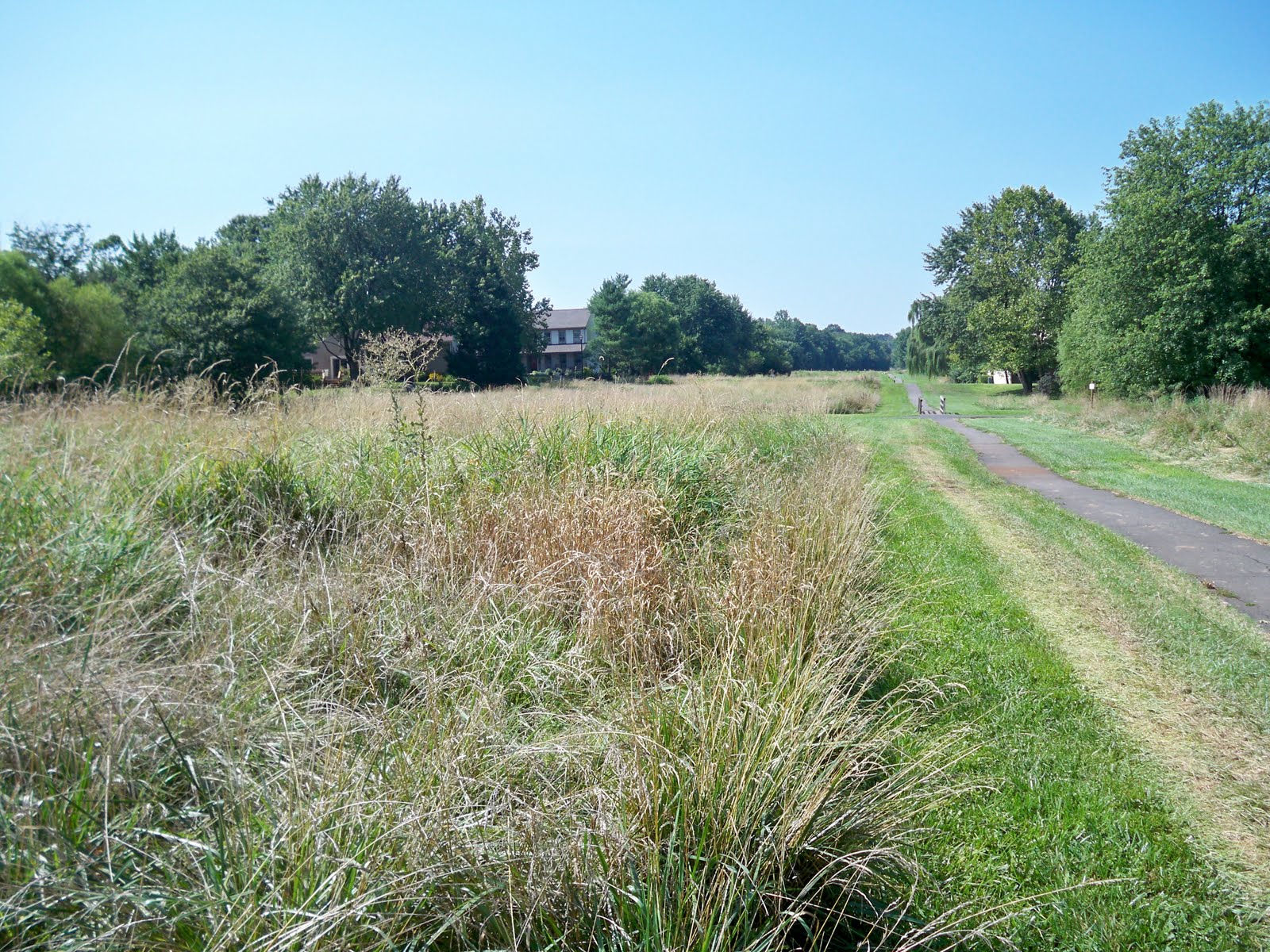
Close by are roads with names like Flat Meadow, Hay Meadow, Cross Creek and Still Pond. These belong to the neighborhood called Franklin Farm. The farm is gone, the creek is but a shadow of its former self and the meadow is a narrow strip of land hemmed by houses. The ponds are so still (that is, stagnant) that this summer they were renovated, if that’s something you can do to a pond. The trees around them were felled so daylight could freshen them up.

The small dairy farms that still dotted our landscape half a century ago are gone now. We grow families here now. But in my walks through the woods and fields, I like to pretend. The place names make it easier.

Rainy Day

Rainy Day


The rain began earlier than we thought it would, and I wasn’t ready. I had an umbrella, it wasn’t that. I’m just not prepared for the cold pelting, for the gloom. But who ever is, I ask myself?

The optimistic word for this weather is “cozy.” It is for making soup and cleaning the basement. But that’s only if you’re inside. If you have to trudge out into the world, as I do, this weather is for wearing big comfy sweaters and curling up at your desk with a mug of hot tea.

But whether inside or out, it is a time for turning inward.

The Morning After

The Morning After


In Lexington, Kentucky, the new mayor-elect, Jim Gray, took my father out to McDonald’s a couple weeks ago. Until Dad fell last month, he had been working on Gray’s campaign, and he felt bad that he wasn’t able to squire the candidate around to some retired-guy coffee groups as he promised he would.

But no problem, about a week ago (and more importantly, a week before the election), Candidate Gray stops by the house, picks up my dad and drives him to the coffee groups. How many votes did Gray snag that morning? Maybe half a dozen. Frankly, I haven’t heard of such a neighborly act from a politician in a long time. Maybe ever.

I couldn’t vote for Jim Gray, of course. And in our corner of the world the election wasn’t as dramatic as it was for much of the country. But I like to think that there are hundreds more Jim Grays out there today — I’d like to think that at least in a few places, the good guys won.

For All Souls

For All Souls


Yesterday was All Saints Day; today is All Souls Day. Of the two, I’ve always been partial to the latter. For one thing, it never required a visit to church, not being a “holy day of obligation.” (There’s a phrase and a practice that’s on the way out!) For another, I figure that I know more souls than saints. Today is democratic: we pray for all those who have died.

But, expanding the meaning a bit, today can be a day of contemplation for the souls of all of us, the living, too, for the part of us that ripples beneath conscious thought, for our essence. “The soul is often hungrier than the body, and no shops can sell it food,” said the abolitionist and clergyman Henry Ward Beecher. Today, for me, will be about feeding the soul.