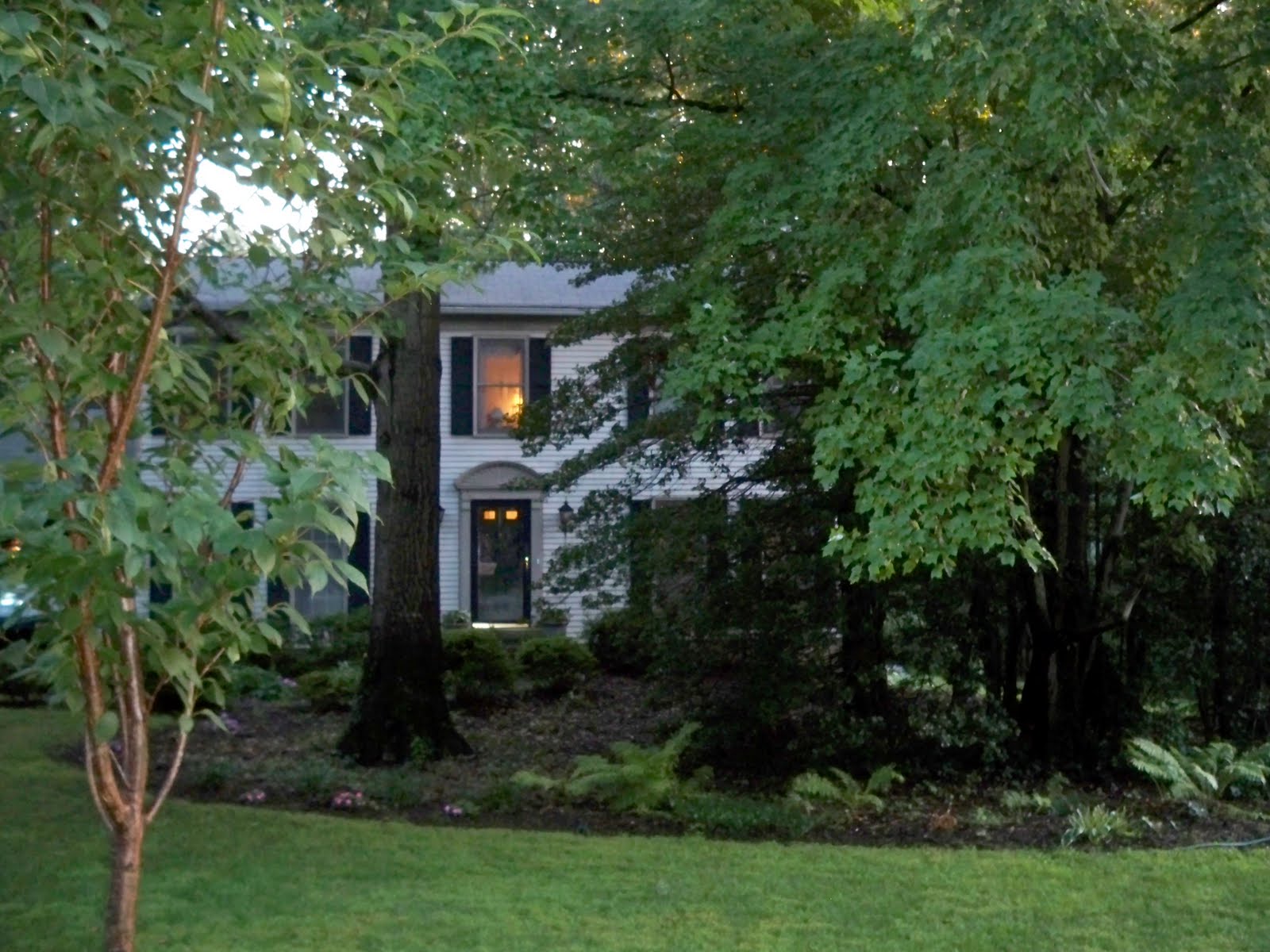
The nest may not be empty but the house certainly is. Claire moved into George Mason housing yesterday, Suzanne is well settled at Wooster and Celia spent the night at a friend’s. Am I only imagining it or does the place just feel emptier, the air thinner?
Being a parent means letting go — that’s something you learn from the very beginning. But that doesn’t make it any easier. Twice this weekend while walking I stopped to talk with friends about their children going off to college or grad school. Raising kids is what the suburbs are about. Which raises the question: What happens when the children grow up and move away?
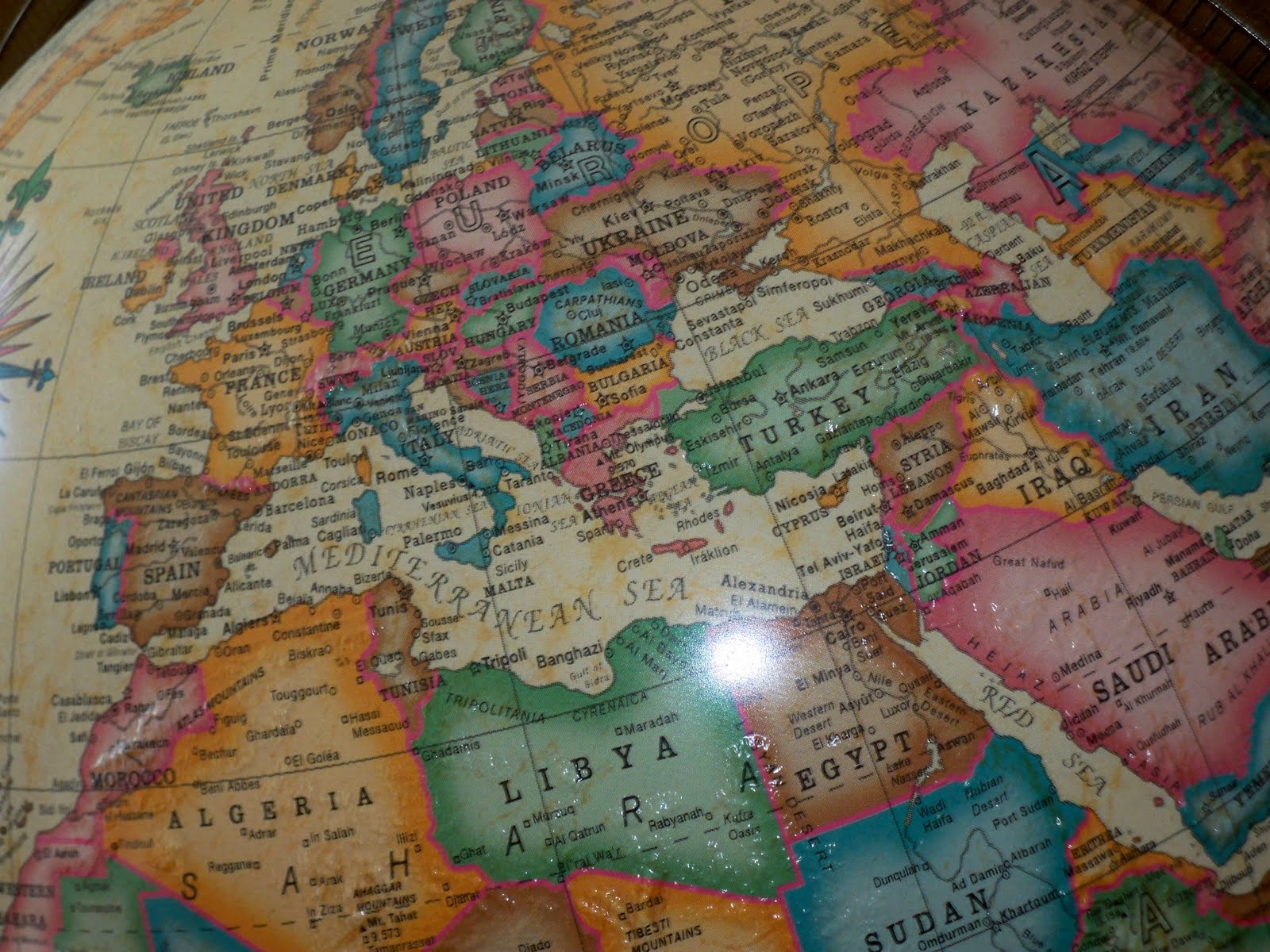
Yesterday Tom went to the map store to buy a world atlas — and the store was out of business. I did a little googling and found out that the store had been around for 40 years and that Tom missed the last day — and the incredible sale — by less than a week.
Then I thought, it’s the googling that’s the problem. Google Maps, that is. And Mapquest, and of course, the GPS. But today I don’t write to lay blame, only to celebrate. So let us now praise the printed map, from fold-out models to large, laminated ones that cover most of a wall. From globes to atlases. From street maps to nautical charts.
Maps let us see where we’re going and where we’ve been. They offer us all the possibilities, not just a narrow route ahead. I can stare at a map for hours, studying how one road leads to another, imagining the lives of the people who live where I’m looking. I love the way a map feels after it has a few trips under its belt, wrinkled and dog-eared, softened from use. In time it takes on the land it chronicles, becomes part of the process. A map is tangible proof of the miracle of travel, armchair or actual.
Today on my walk through the suburbs I listened to a violin piece by Paganini called “Perpetual Motion.” This work goes up and down the scale in an almost manic manner,and it reminds me, I’ll admit, of myself.
I’ve always liked to be on the move. I enjoy walking, running, biking, swimming — activities that keep the old body moving. This is fine, of course, good for the heart and lungs and large muscles. It’s good for the mind, too; it scours away worries and anxieties.
Perpetual motion can be a problem, however, especially when you don’t allow yourself time to process one task or emotion before you move on to the next. In that case, efficiency can be counterproductive. It stifles creativity, which thrives in a looser loam. So as I was walking I vowed to be less productive in the future. Not today, though. I have too much to do!
Yesterday morning I turned right out of our neighborhood and entered a world of water. At the bottom of the first hill were deeper pools than I thought I should attempt. But the road was too narrow to turn around, so I plunged through, plumes of spray arcing above the windows. For the rest of the 20-minute trip, I struggled to see the road in front of me enough to figure out which side of it was most submerged. Sheets of rain poured across the pavement. I gripped the steering wheel with both hands, turned the wipers to the highest setting, and drove very, very slowly to the Metro parking garage. It was, in short, terrifying. Emily Dickinson said it best: “Nature, like us, is sometimes caught without her diadem.”
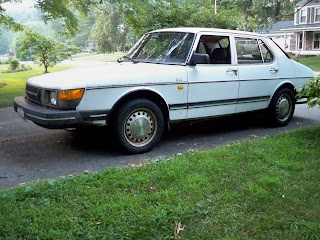
Today our beloved 1986 white Saab sedan takes one final trip when the vehicle-donation truck comes to pick it up. It’s like losing a member of the family. We brought all three of our babies home from the hospital in this car. We took countless trips to Kentucky and Indiana to see our families in it, chugging up and over the Appalachian Mountains more times than I can count.
The Saab has been to Montana and Arizona and New Mexico, to Oklahoma and Texas and Tennessee. It moved us from Arkansas to Massachusetts and then, a couple years and one baby later, from Massachusetts to Virginia. We carried tools in it, bikes in it, even a cello and a string bass in it. I still remember which side the gas tank is on by imagining Suzanne as a baby in a car seat, diagonally back and across from me in the driver’s seat.
Tom bought the Saab before we were married, and we first drove it on the brow of a flat-topped mountain in Arkansas. From this idyllic childhood, the Saab moved on to a serviceable middle age. In the last five years it managed to keep going through a few minor ailments and what we all feared would be its final illness, an injury that involved rust, an axle and the entire front end. For months the car languished in our driveway. But Tom put it back together again.
We have no idea how many miles the Saab has logged; the odometer broke years ago. The headliner is long gone and the finish is pockmarked. But through it all, the Saab has maintained its dignity, its good nature and its fine bones. It is a noble, willing car; it has heart.
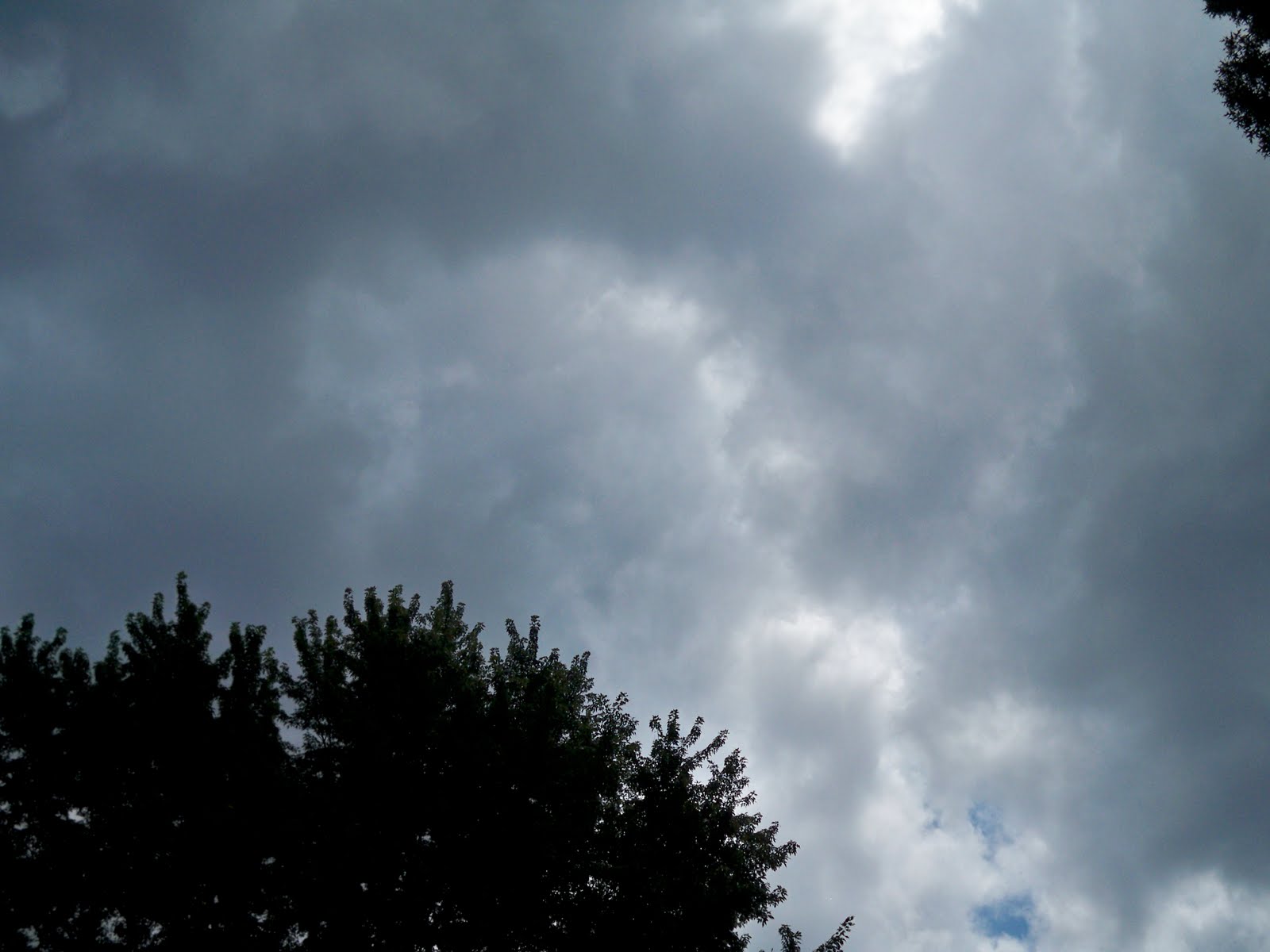
I once wrote an essay about the day we finally broke down and bought a mini-van. It was raining when we went to pick it, I said. Even the heavens were crying. Well, it’s raining today. Raining buckets. We’re losing the Saab. Even the heavens are crying.
Yesterday I rode eight and a half hours in the passenger seat. I could read on the straightaways, but on the curvy roads I napped or snapped photos or just looked out the window. There’s a place in the middle of West Virginia that looks like the West. Jagged rocks, a wildness to the landscape. It makes me think of all the long road trips we’ve taken, how they always feel like the real thing. Getting away to a place you can drive to, a world apart at the end of the road.
Yesterday 70 of us gathered in an old monastery boarding school to visit with people we barely knew or didn’t at all know, first cousins, second cousins, third cousins, with many degrees of “removed.” People connected by the slenderest but strongest of threads. Family. We came with covered dish and grandma’s jam cake, with old photographs and family trees, with stories and reminiscences. There were many pairs of dark, deep-set eyes. So many of us have them that they must be a family trait.
Afterward I looked at Dad’s photo album, a gift from his sister, my Aunt Dolly, gone now. Inside were pictures of two of the cousins I had just seen, only instead of 75 and 70 they were 12 and 7 — a long-legged boy, a pigtailed girl — all their lives ahead of them. And seeing both in one day, the real people and their younger selves, was a punch to the gut. Because people, even the best ones, do not live forever.
“Only connect! That was the whole of her sermon. Only connect the prose and the passion, and both will be exalted, And human love will be seen at its height. Live in fragments no longer. Only connect…”
I’m a morning person, at my best when the sun is rising and dew is on the grass. But sometimes the thoughts of day settle best at night. Sometimes, it’s only when everyone else is asleep that I can put the day to rest, can concentrate on a task, can finish the chapter or paragraph or journal entry. Today has been like that. We’re in Kentucky, visiting with family, fixing food, working on a project. My mind is a jumble of words and emotions and things to do. But one by one, the doors close, my mind clears. The words flow, my keyboard rattles, the familiar rhythm. Soon I’ll be spent, I’ll read a few minutes and fall asleep. Maybe sooner than I think.
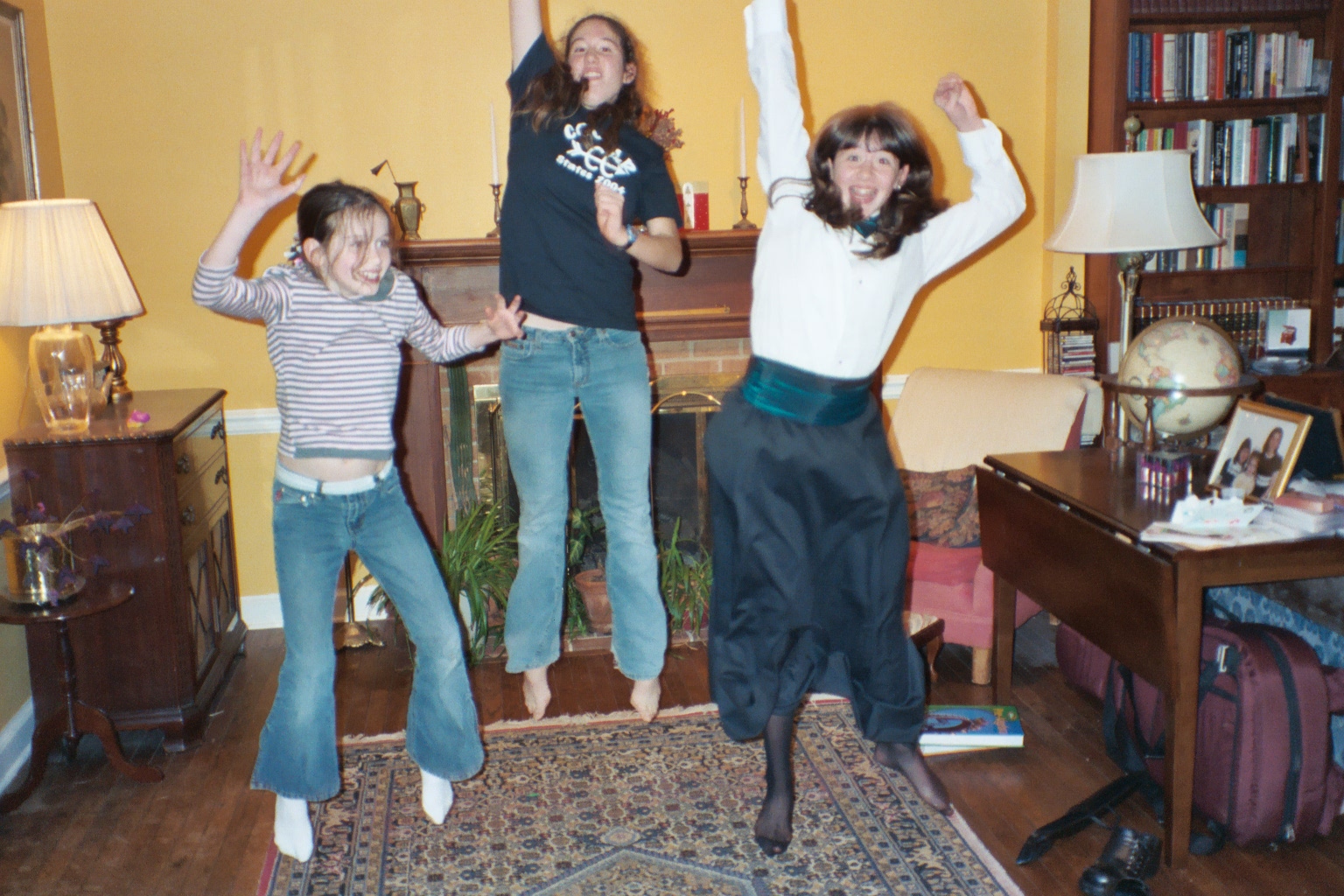
We looked for shooting stars last night and didn’t find them. But inside our house another rare phenomenon was occurring. The convergence of three sisters, all together, in our kitchen. This doesn’t happen very often, it won’t happen again until, oh, probably November. But how it gladdens my heart to see our girls together. Here they are in earlier days — which now seem so long ago.
Tonight, if we’re lucky, we’ll look skyward and see specks of light streaking across the night sky. It’s the Perseid Meteor shower, late summer’s elusive fireworks. I say elusive because clouds or city lights often edge them out of eyesight. But some years the heavens have cooperated. One summer we saw the meteors from lawn chairs by a lake in Arkansas; another year we camped out in our neighbor’s driveway. More often than not we just turn off our porch light, walk outside and wait. The brilliance is fleeting and it’s easy to think you’ve imagined it. But you haven’t. It’s a glimpse of the beyond, and it’s unforgettable.