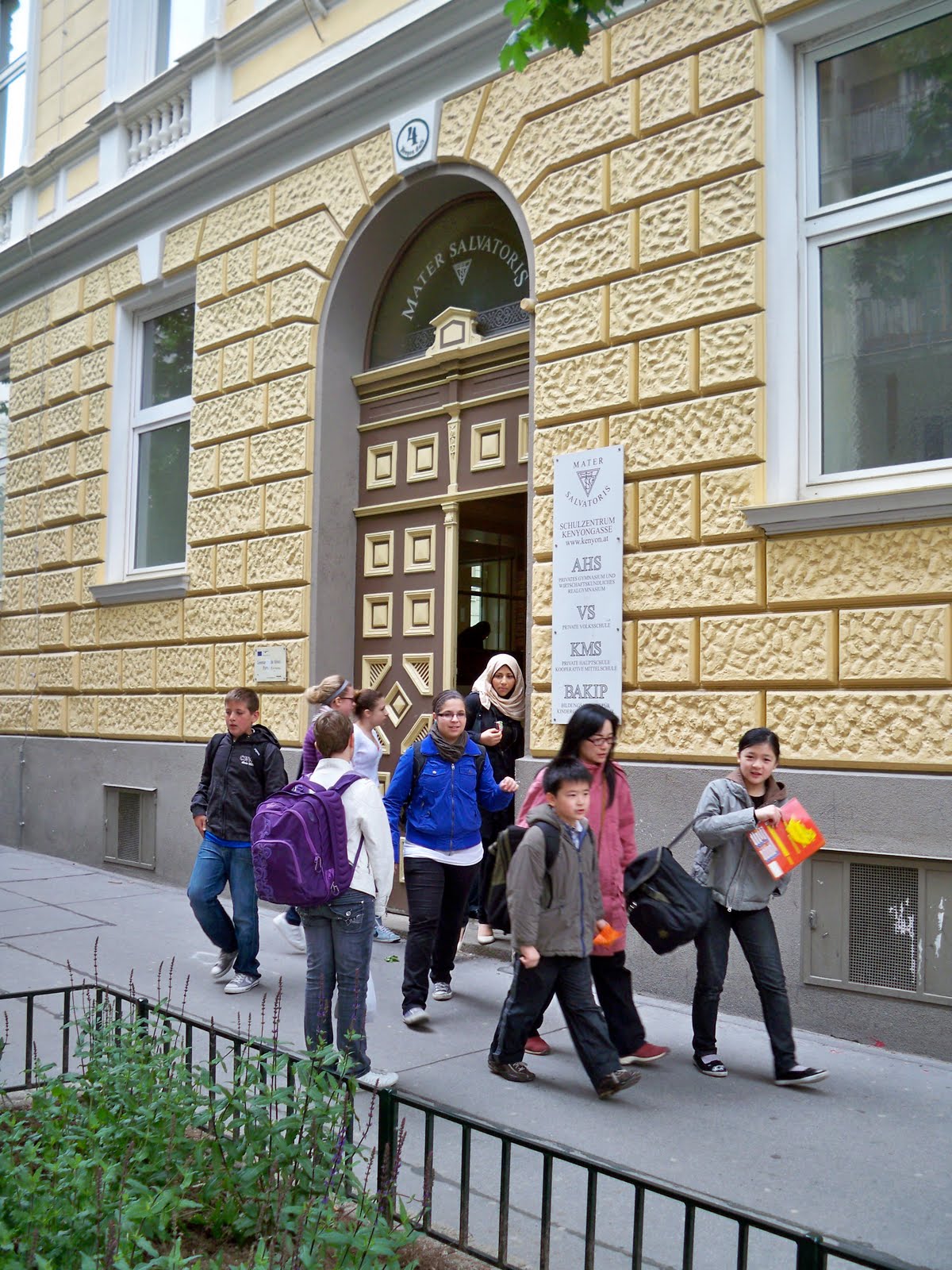
I haven’t been a high school student or teacher for many, many years. But the day after Labor Day I forget that fact. For me this day will always be the first day of school and the last day of summer, and therefore worthy of a quick sigh, a backward glance. Even though in steamy July I might long for the clean page, the crisp new start, even though this season will, eventually, energize me — for now it’s bittersweet. The crickets chirp more slowly, the morning air is brisk. Last night I wrote names and numbers on emergency contact and other school forms. Seems like everyone has homework before school begins — even parents. My lesson is brief but painful: Summer passes more quickly every year.
Yesterday we rode our bikes farther than we thought we would. It was cool and the air had a tang to it so we pedaled past Vienna, across the Capital Beltway (such a feeling to cross that monster road on a pedestrian bridge), almost to Falls Church.
For the first part of the route the wind was at our backs and the path was mostly downhill. We were flying. I found myself dreading the uphill climb back home. A moment of insight, then: To try and take the road as it came, not to worry in advance about the hard parts, but just to suck in my gut, push harder and tackle them as they came.
It worked, sort of. The ride was pleasant all the way. Only when it was over (and today) have my muscles talked back.
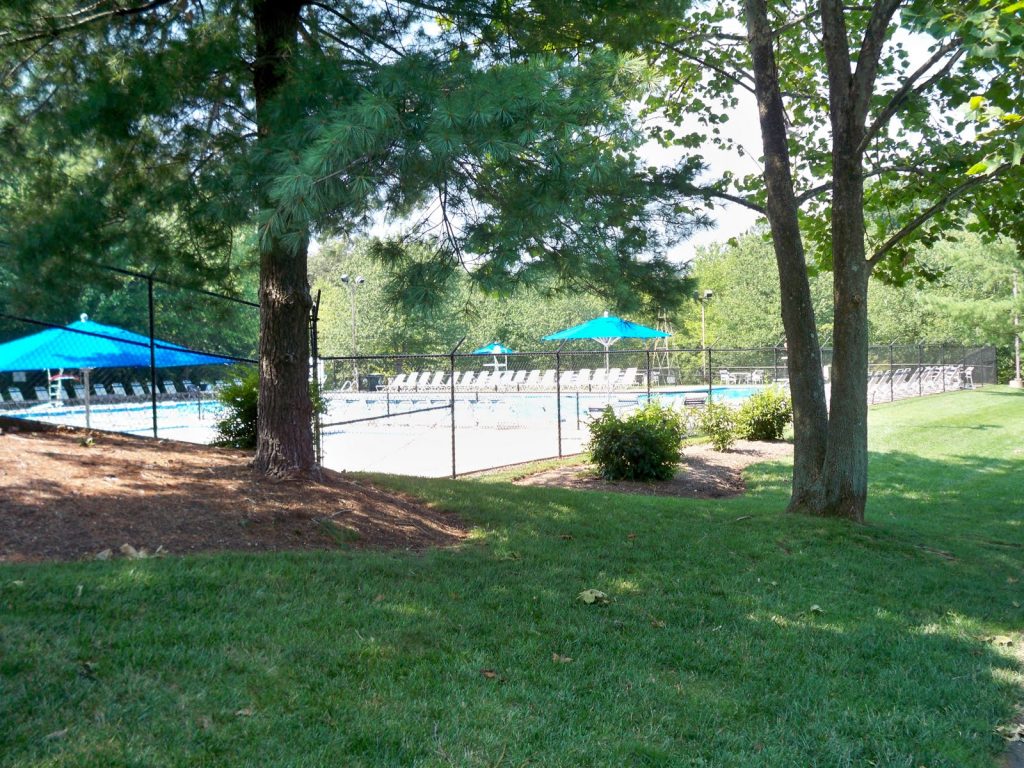
It became a habit this summer, a welcome one. I’d leave home a little after 8, do some laps or aqua jog in the deep end if no one was diving. At 8:45 the guard blows the whistle; the last 15 minutes are adult swim. I sidestroke in the gloaming. While treading water, I look at the Franklin Farm windmill. I listen to the conversations around me, the mothers with babies on their hips, the fathers bonding, tossing balls with their kids. One guy with a bald spot on the back of his head does what seem like labored laps while his kid sprays him with a soaker gun every time he reaches one side or the other. I think the guy is slow, but when we swim next to each other I notice he’s just as fast as me — in other words, I’m just as slow as he.
Last night I went for what I thought might be the last swim of the season. Turns out the pool will be open the next two weekends, but I doubt I’ll make it. It will be a cooler, and one of the best parts about swimming this summer — the reason I’ve done so much of it, I think — is how hot it’s been. I don’t mind bathtub-warm water.
For these reasons and more, last night’s dip felt like a valedictory. It was much earlier in the evening, of course, since it’s dark by 8, and I left quickly so I could drive kids to the first high school football game of fall. The pool was almost empty at the end — except for a surprise birthday party about to happen. As I was pulling out of the parking lot in the twilight I heard behind me a burst of sound. “Surprise!” and then a bunch of whooping and clapping. It was for the birthday girl, I know, but I couldn’t help but think it was a round of applause for summer itself.
I’ve seen this little guy (or someone like him, I should say, because this is not my photograph!) here before, drawn by the coleus flowers on our deck. An iridescent-necked hummingbird so improbably tiny that each time I see him I think at first that I’m looking at an insect.
The hummingbird makes me think of one of my favorite essays, “Joyas Voladoras” by Brian Doyle, which begins: “Consider the hummingbird for a long moment. A hummingbird’s heart beats ten times a second. A hummingbird’s heart is the size of a pencil eraser. A hummingbird’s heart is a lot of the hummingbird. Joyas voladoras, flying jewels, the first white explorers in the Americas called them, and the white men had never seen such creatures, for hummingbirds came into the world only in the Americas, nowhere else in the universe…”
And because this tiny bird brings an essay to mind I think of him as a muse, flying inspiration, bound to lead to a productive writing day. I hope.
For the last few days, flight has been on my mind. Because it is September, because I saw in an almost-dark sky an unmistakable “V” of geese, because soon animals in our part of the northern hemisphere will search for a place to stay warm for the winter. Perhaps for all these reasons and more, I’ve been thinking lately about where to live when the children are on their own, when our nest is empty. Realizing, of course, that this is not a single decision but a joint one, that I love our house because we’ve raised (are raising) three daughters in it, still, still I’m restless on this subject.
What is it that binds you to a place? Family, friends, work, of course. But to what degree is it the land itself, the way it feels under your feet and as you drive through it on a late summer evening, aware suddenly that this once alien place, like it or not, is home.
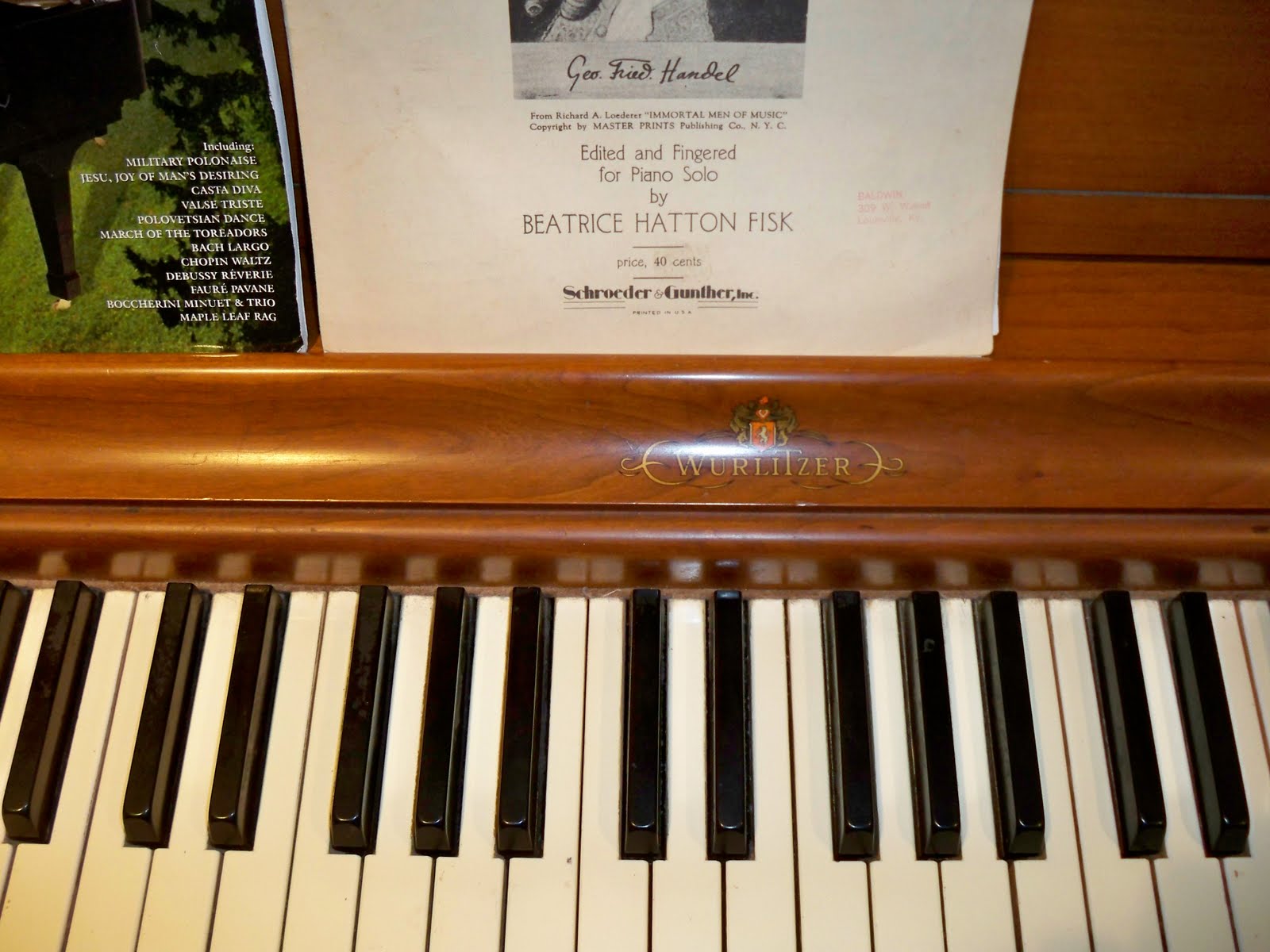
Last night I heard on the radio the story of Michael White, a jazz clarinetist who lives in New Orleans. Katrina destroyed his home, forced him to move out of the city for a while, but he — and his music — are back. Threaded throughout this story were tunes from his clarinet, such rich, reedy sounds — we used to hear such sounds when our clarinetist was still in high school. And they made me want to play the piano — our poor spinet has languished this summer — and to teach Celia, who said the other day that she’d like to learn.
It was always my goal to fill our house and our lives with music. Too often that means turning on the radio. But I tell myself what I tell our girls: Once the music is in your fingers, it is yours forever.
It was music, in fact, that brought Michael White and his New Orleans back to life. Here’s what he said: “And then I came to realize the most valuable thing that I have, I never lost. It’s inside. It’s that music tradition. It’s the memory of all of those parades, of all of those older musicians who — who brought the spirit of New Orleans’ music and passed it on to me, so that I could help to pass it on to others. And the spirit of that music is with me every day. Every time I play my instrument, everything I ever knew and felt about New Orleans is still alive.”
As summer winds down, I think of vacations past, of long drives along unfamiliar roads, of pulling into a place we’ve never been before. The western United States and Canada are good for this. Endless highways, scenery that never stops. A few days in this landscape and the shoulders drop, the headache goes away. Something relaxes in me that I hadn’t known was tight.
Funny thing: After I write this post I read (on Metro) from a chapter in Marianne Wiggins’ book The Shadow Catcher called “Lights Out for the Territory,” these words: “The drive had all these syncopations, then — the percussion of the asphalt road, the alternating rhythms of the landscape braiding, like convergent channels of a river, through divergent threads of time.”
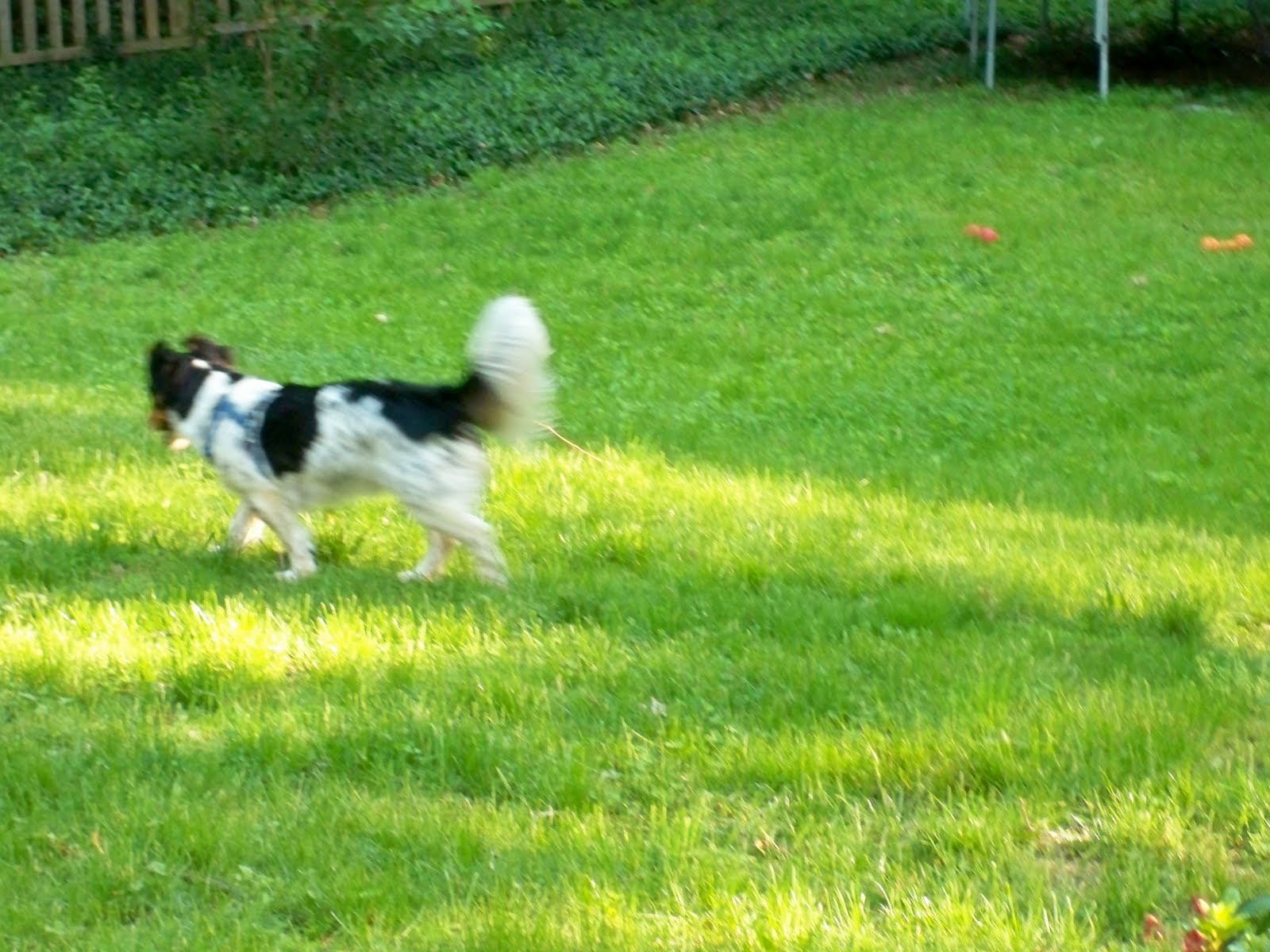
On days I work at home I spend quiet time with Copper and Hermes. They’re with me now on the (rapidly warming) deck. If I need to stretch, I’ll throw the ball with Copper or take him on a walk (a word which cannot be said unless immediate action is intended). I turn to Hermes for mental stimulation. He talks, after all, though his vocabulary is limited. He is also good for comic relief, especially when he sneezes at the wild birds to get their attention. They must wonder what kind of creature lives in a cage and says “I love you.”
The company of animals on a busy Monday morning. They keep me humble; they keep me sane.
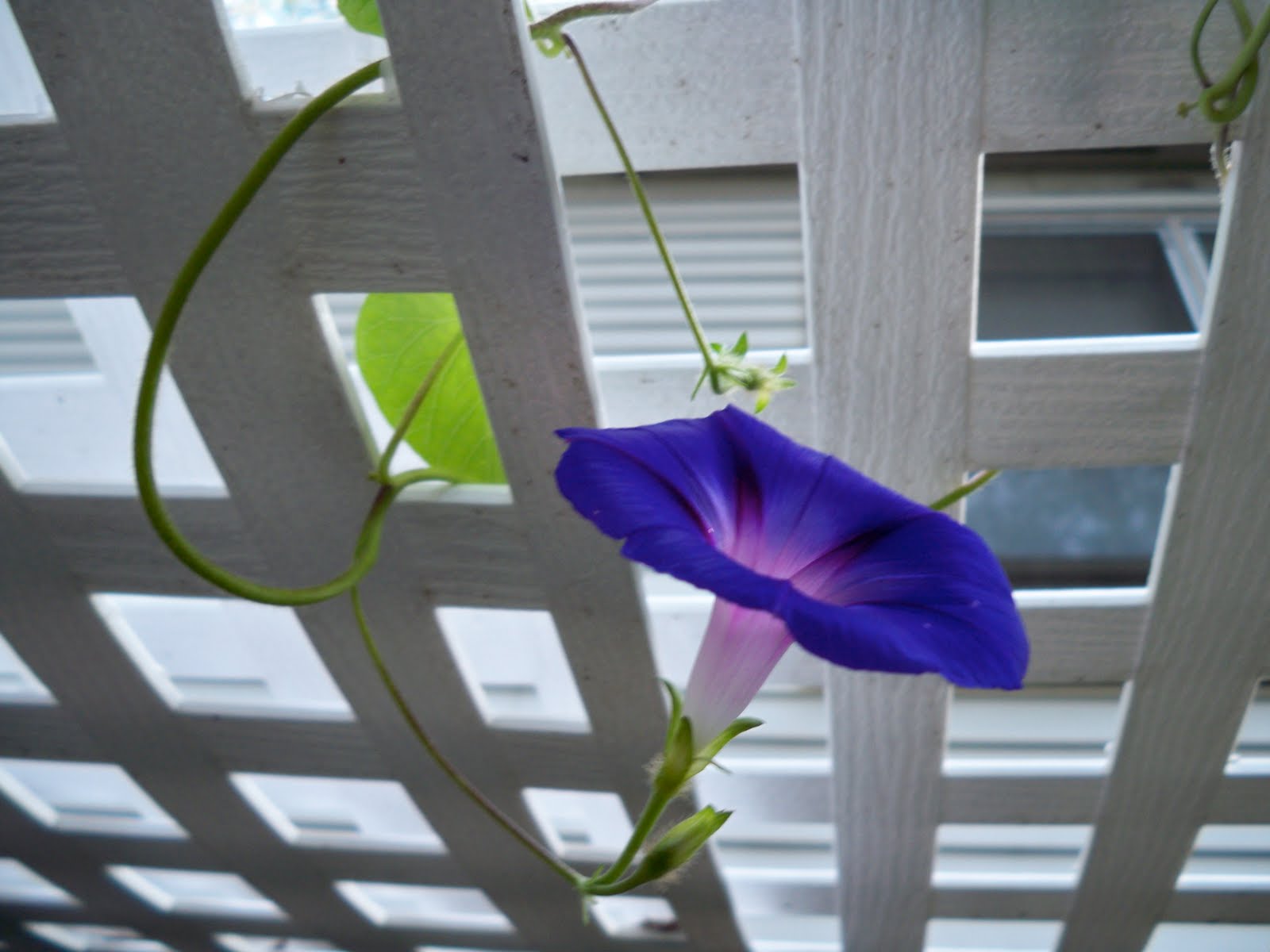
When summer began I had high hopes for a flowery bower, a vine-entwined pergola under which we would sip tea in the morning and eat our raucous dinners at night. The deck was empty without the climbing rose, and we would make up for it with some cheap lattice panels and the promise of a vine. It’s taken the whole summer but finally we have tendrils, slight, clingy things that wrap themselves around whatever they can find. And today, we have a purple morning glory, a sweet gift at summer’s end.
Finally home after a 12-hour workday, I flop on the hammock. It’s almost dark, and Tom is grilling. He uses a clip-on light to see what he’s flipping. Two lamb chops (for him), portobello mushrooms and zucchini for Celia and me. From time to time there’s a flare of orange light — our grill is a feisty thing — which brightens the deck. I feel lazy lying in the hammock. But not lazy enough to get up and move. Instead, I watch the color disappear from the leaves. As I swing, they fade to black.