Browsed by
Author: Anne Cassidy

Wintry Mix

Wintry Mix

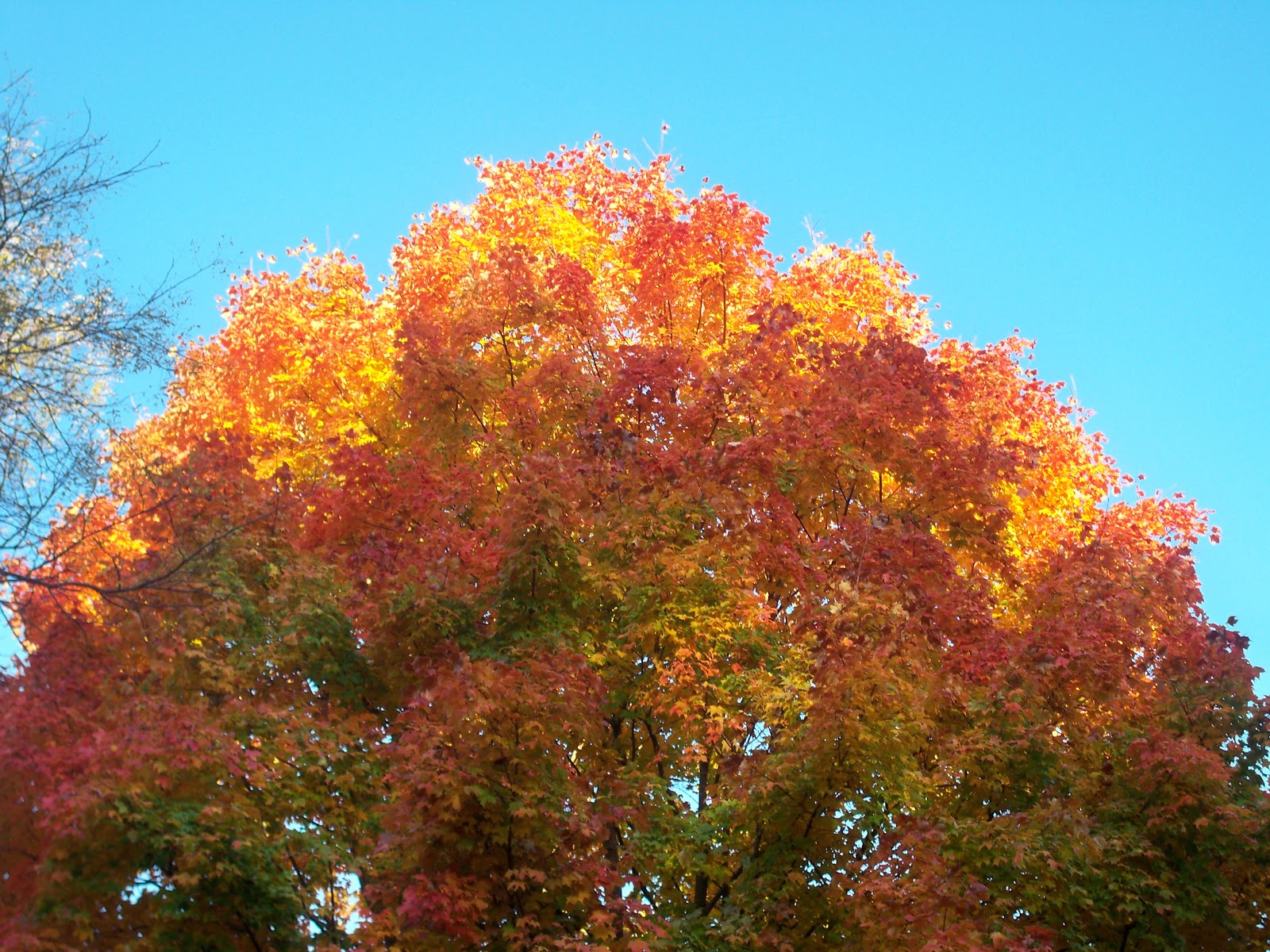
They’re forecasting rain and snow today. But it’s still autumn, I silently protest. It’s not even December yet. Let’s just say rain and hope for the best.

Weather is neither kind nor vengeful. I know this. Yet I must harbor some ancient belief or prejudice that makes me permeable to the meteorological mood.

One reason I like the climate of Washington, D.C., is that, despite its muggy summers, it’s a surprisingly sunshiney place. If a “mix” is predicted (like today), it’s more likely to be rain than snow, sunny than cloudy.  That’s a mix I can live with.

The Shenandoah Valley, snapped from I-81 on Saturday, when no wintry mix was forecast.

R.I.P.

R.I.P.

When I bought it, all three girls were living at home, one still in braces. When I bought it, the first iPhone had not yet been released.

Life was simpler then. An email was an email, a text a text. There was no cloud, or at least none accessible by a hand-held device.

I was proud of my flip phone. I could talk on it, text with it and even take photos with it (an innovation my earlier phone had lacked). I kept it in a case, for which the girls teased me mercilessly. They also teased me about my text messages, which I would laboriously type out letter for letter, including “Love, Mom” at the end.

For the last year and a half people could barely hear me when I called them. I stubbornly refused to replace the phone, though (it still texts! I only charge it once a week!), because I didn’t want to become a frantic email-checker (texter, tweeter?) who plays Solitaire on Metro instead of reading books.

So the iPhone has stayed in a box for 10 days, taunting me with its clever packaging, its superior camera (what I’m looking forward to most), its elegance, its functional beauty.  Until last night, when I gave in, kissed my flip phone goodbye and entered the 21st century.

But not before snapping a picture of my old phone and making it the wallpaper of my new one. A seamless transition. Kind of like the cloud.

All Gone

All Gone

A few days ago we basked in the mellow sun of late autumn, leaves falling slowly, desultorily, to earth. But arriving home on the back edge of the west wind, I find a cold, winter landscape in its place.

The stubborn leaves have finally fallen. Trees are gray and bare. All gone, all gone, the wind sighs. It is easy to feel bereft.

I remember the times of fullness. What is left after the last piece of pie.  All gone then, too. But isn’t that the point?

Missing Words

Missing Words

Half an hour into Wednesday’s eight-hour drive I realized that I had left my journal behind.  It wasn’t the sort of item one turns around for, this notebook of half-baked ideas, first lines of poems, morning thoughts. But for the last two days I’ve felt its absence.

What I’ve missed is not just the potential, the blank pages waiting. I pressed my calendar into service on that errand right away, and now the odd week or two when I had no appointments, nothing in particular to remember, are covered with scrawl.

No, what I miss is the weight I carry with me, the journal as repository. It’s as if without the words I’ve written I’m not exactly me.

Thanksgiving

Thanksgiving

It’s a harvest holiday, of course, planned for a time of bounty. But it arrives during a season of stripping down, of bare trees and chastened skies. The hills yesterday on our drive through the mountains, they are purple in the distance, no longer green or orange.

When all else is peeled away there is the essential, gratitude.  Thanksgiving — what one does too often in between times.

When Fog Obscures

When Fog Obscures

Today is winsome and gray. 
Our backyard is covered with leaves, and they soften the landscape, too.
Early autumn is a time of sharp contrasts as the sun drops lower in the sky. But as
the season deepens and the weather changes, I take comfort in a blurring of
vision.
I remember a week of warm, foggy days one
November when I lived in Chicago. This was before global warming. November was
winter in the Windy City (maybe it still is). We’d already had some cold nights
that year and the warmth was a gift, a gift that I think Chicagoans
appreciate more than most, so steeled are they to shiver five months a year.
In those days I had no car, and I met my ride to work by taking a bus down Clark Street and walking a few
blocks to our meeting place. I remember strolling down Deming and Wrightwood
and other streets in the neighborhood where I’d eventually (and now could not
afford to) live, the fog revealing only tantalizing bits of homes and stores
and churches. I imagined I was ambling through some Cotswold village. (What can I say? I was an English major.)
The point is this: When fog obscures, imagination endures. It’s a pleasant trade.
Worn Smooth

Worn Smooth

“I loved the place I was losing, the place that years of our lives had worn smooth.” 

Wallace Stegner

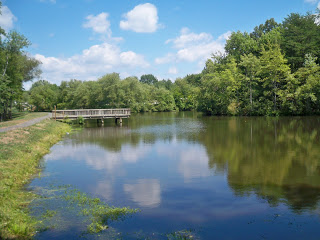
On a walk yesterday, I imagined how I would feel if we were leaving the suburbs I’ve railed against for years. Would I slip off the yoke of commuting and slide easily into city life?  Or would I long for what I no longer had, for morning walks through the meadow, afternoon ambles in the woods; for a pond that reflects the heavens back to us.

We have not worn our lives smooth. Suburban living exhausts because it demands daily compromise; it is not easily knowable. It changes enough to thwart routine.

What wears smooth is the woodland path, the trickling stream, the natural world that the suburbs  cannot quite eradicate.

Before the Walk

Before the Walk

Before the walk comes the poem, a verse or two to take along the path.

I see more clearly with downcast eyes, pondering a private line.

Words tilt the sky, straighten the trunk, unmask the liquid

line of the horizon.

There is still much more unnoticed than revealed.

Autumn Labor

Autumn Labor

The motion is hypnotic, timeless. An outstretched arm, the curve of a rake’s end the arm’s extension, reaching forward to gather what has fallen.

As I work my heart stills. There is progress, measured in leaves corraled, bags stuffed, sticks broken and tied.

My eyes look up to a swirl in the sky.

I’m not the only busy one.

A niggling wind has frisked the Kwanzan cherry and now, on the green grass, lies a pile of gold.
 

Walker Eats Words

Walker Eats Words

I walk daylight paths and share (mostly sunny) thoughts, but I walk because I want to, not because I have to. Most of the time there is a car at my disposal. Most of the time, but not last night.

It was a long day with a complicated automotive choreography involving three people and two cars. I was driving one vehicle in the morning and another in the afternoon. It was dark when I stepped off the commuter bus, and I had car keys in hand, ready to slide into the seat and drive home. But I couldn’t find the car; I walked up and down the lot, looking in vain for the distinctive luggage rack of our sedan.

I would have called and asked for guidance but I had no phone and the pay phone was out of order, probably has been for several years. Never mind, I told myself. There must have been some confusion. I’ll just walk home.

Walking home from that distance wouldn’t be daunting in the daylight, but it was at night. I found myself tripping on cracked pavement and dodging cars, even when I crossed with the lights. It took me 45 cold unpleasant minutes in my dark coat and too-tight work shoes. The only thing I could think about was how much I wanted to be home.

I hadn’t been in the house more than five minutes when Tom and Celia walked in. The car was in the lot (sans luggage rack); I had just missed it.

What I hadn’t missed was this: It’s easy to rhapsodize about walking when you don’t have to walk.