Browsed by
Author: Anne Cassidy

Judith Crist: 1922-2012
Judith Crist: 1922-2012

Four days ago, in my “morning pages” (my non-blog writing), I riffed about how film critic Judith Crist, who I had the pleasure to study with many years ago in journalism school, told me to
limber up my prose style, to shake myself like a runner prepping for a race.

Yesterday, Judith Crist died. She had taught at Columbia for 50 years. Generations of students are mourning her death. She was a brilliant critic and a devoted teacher.

When I was accepted into her class, Personal and
Professional Style, I was shocked and delighted. If getting into J School was
the cake, getting into her class was the icing. “Crist’s class,” we called it.
And it was nerve wracking. Never before or since have I had such a reliable
stomachache. Every week, like clockwork, right before and during her
class.  And no wonder: She had no tolerance for inelegant, insincere, pedestrian writing — and she would let you know it. 
But oh, when she liked your stuff, well, there was nothing
better. And even more importantly, she  zeroed in on what was wrong with our prose (see above for what was wrong with mine!) and helped us start to fix it.
In Crist’s class, writing mattered.  In RW 1 and my other classes, reporting
ruled. Good leads, snappy kickers, clean copy — yes, they were taught and
idealized. But they were always secondary to the facts and quotations I managed
to assemble.
But in Crist’s class tone
and voice were the focus. We were writing editorials, for God’s sake, opinion pieces. We didn’t have to attribute everything. We could
loosen up a bit. Never let down our guard and never, ever, do sub-par
work, of course, but we could let our imaginations wander into metaphor. We could pull
up the rug and study what was swept underneath.
Decades later, I’m still writing, still pulling up the rug, still trying to limber up.  Thank you, Mrs. Crist. Rest in peace.
Framing the Sky

Framing the Sky

Yesterday I looked up from page proofs long enough to notice how the hole in the sky left open when a large tree fell three years ago has grow a shaggy green border, enough to make a verdant frame for a patch of blue.

I stared at the “picture” inside that frame. It wasn’t a static one, of course, because high up in the canopy a faint breeze was stirring and white clouds bobbed across the blue, like so many duck targets at a state fair booth.  I watched long enough until I saw a hawk glide across the frame. At night I do the same thing with bats, sit in the gloaming and watch for them to dart through the air. They’re more visible when they cross our patch of sky.

It was a sad day when the great oak fell. But in the years since, I’ve grown fond of the space it left behind. Because of it, my eyes are more often drawn to the sky.

Above: a frame of a different sort. 

To Be In Benin

To Be In Benin

Today Suzanne visits the town of Toura, Benin, West Africa, for the first time. It’s in the far north of the country, in the Alibori region near Banikoara and close to an elephant migration route. She’ll be teaching English to middle-school students there for the next two years. It’s the first time a Peace Corps volunteer has served at this school.

The purpose of the visit is to meet people, visit her hut and see what she’ll need to order or buy to make herself at home in Africa.  Then she’ll return to Porto Novo for more language study and training before she starts teaching in September.

One of the big questions on Suzanne’s mind is how far the well pump is from her hut. She’ll have no electricity or running water so this is not an insignificant question. Already I’ve been turning on the tap less often, reusing sudsy water, thinking more about what goes down the drain. There’s no way to ship it to her, of course. It’s purely sympathetic. A futile attempt to be in Benin with her.

When I do a Google image search on Toura, what comes up most are pictures of wells (water portals) like this one. Image: watsanportal.org.

Utilitarian Pasture

Utilitarian Pasture

My walk yesterday was far hillier than I expected. There was
one moment when I stood still to appreciate where I was. The insects were buzzing and the heat was radiating from the dry grasses and the land rose and fell in such a way that I
could barely see the swell of the earth around me. 
It was a rough looking pasture, with scruffy
weeds, prickle vines and thistles. It could have been a Scottish
moor, so remote and wild did it seem.
But it was, in fact, a pipeline meadow or an electric transmission
meadow, some sort of utilitarian pasture. Our open space is not for grazing but
for the humming wires and busy pipes that bring us what we need to survive.  
Beauty, in this case, is a byproduct. 
 

Paper Cut

Paper Cut

Injuries incurred while meeting deadline:

Eye strain

Neck pain

Paper cut

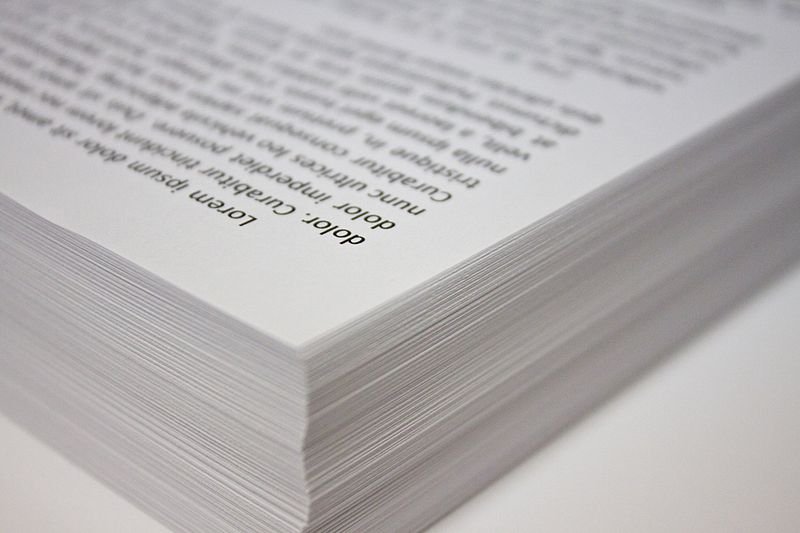
Yeah, I know, the last one sounds silly. But, as I said to myself when I sliced my hand (and right on the life line, wouldn’t you know),  paper cuts don’t happen in a digital world. Carpal tunnel syndrome maybe, or some other repetitive stress injury, but not paper cuts.

They are, then, a dying malady. A problem that will (it’s safe to say) plague us less in the future.

Say what you will about the printed word, that it’s being eclipsed by tablets and smart phones and bottom-line bosses — it can still make us weep and make us bleed. At least for now, we continue to live in a tangible, touchable, tactile world.

Split Seconds

Split Seconds

Into the torpor of a muggy Washington summer, where it doesn’t much matter whether you saunter down the street in 20 minutes or 10, comes news from a place where every second counts.

“Americans miss out on a men’s eight medal by 0.3 of a second,” screams one headline, describing the time that separated the U.S. men’s rowing team from a bronze medal.  Or, a more positive example, swimmer Nathan Adrian surprised everyone by pushing past the Australian, French and Brazilian favorites to win gold in the men’s 100-meter freestyle — by .01 second.

We watch sports for the drama and the fun, to marvel at what the human body is capable of. But do we also watch because time is compressed? The slow-moving outcomes of our own sometimes tedious lives are sped up in the pool and on the playing fields. In competition, as in books and movies, we get to see how it all ends.

ISO Map

ISO Map

August 1. A new month. And by any measure, the last month of summer. It hasn’t been much of one for me. All work and little play. No mountains, no shore. The creative juices barely flowing.

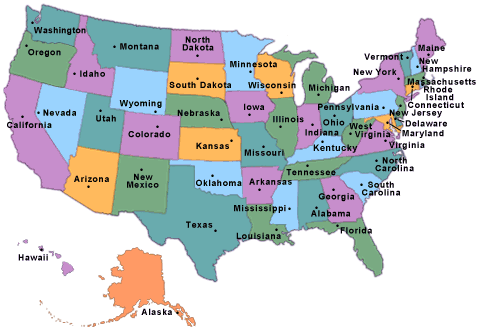
I find myself studying maps of the country, looking for the best route to North Dakota. I could go through Chicago into Wisconsin and then up 94 into Minnesota. Or drive straight across Kansas to 29 and follow the Missouri River north.

It’s armchair travel at this point, and the only map I could locate last night showed me just half the country — the eastern half. But there are other maps out there.

Even imaginary adventures require a little graphic inspiration.

Map: Info Please

Mad Dogs and Englishmen

Mad Dogs and Englishmen

The older woman was driving slowly, opening her window as she rolled to a stop. She probably needed directions, I figured, so I walked up to the car.

But no, she was shaking her head and wagging her finger even before she spoke.  “You’re going to make yourself sick out here. It’s too hot to be walking,” she said. “Take care of yourself.” And that was all. I nodded and smiled, mumbled something like, “It’s hot today, isn’t it?” She closed her window and drove away.

And I had just been thinking what a pleasant day it was. High humidity, yes, but breezy and bearable. So I steadied my pace a little, thinking again about the time of day (yes, it was 1 p.m. — not the best time to be out) and the simple neighborliness I’d just witnessed. In all my years of walking through the neighborhood, this was the first such interaction I’d had.

Suddenly, I was feeling all warm inside. And it wasn’t from the walking.

The Poor Woman’s Library

The Poor Woman’s Library

The Writer’s Alamanc tells us that today is the anniversary of Penguin’s first paperback editions. Apparently, publisher Allen Lane was looking for something to read on the train and found only magazines and Victorian novel reprints. At the time, quality books were thought to deserve only quality bindings, which made them expensive to acquire and not very portable, either.

Lane remedied that by publishing Agatha Christie and Ernest Hemingway paperbacks in the summer of 1935; the books cost the same as a pack of cigarettes. The publisher then expanded into other titles (classics, nonfiction and children’s literature genres) and had soon sold more than 3 million copies.

I have a few Penguin classics in my collection; more to the point, I have a lot of paperbacks. Long ago I had to make a decision: I would either buy a lot of paperbacks or not very many hardcovers. I chose the former, figuring that what’s important is the content of the books, not their durability. It’s what you might call a poor woman’s library. But when I take down one of the volumes, and read the words on the (perhaps now yellowing) page, I couldn’t feel richer.

Twenty-one!

Twenty-one!

Claire arrived two weeks later than we thought she would, waiting for a break in the heat wave (back when heat waves meant temperatures in the 90s instead of the 100s) to make her debut.

She was a cuddly baby, a tempestuous toddler and, well, we’ll just say a lively teenager.  Now she’s a lovely, caring, accomplished young woman heading into her senior year of college. And today she turns 21.

Back when I wrote parenting articles and the children were younger, I would routinely mine their antics for anecdotes. I don’t do that anymore, of course. But on some days I can’t help but note how proud I am of them, how they continue to amaze me, how very grateful I am to be their mother.

Today is one of those days.