Browsed by
Category: history

Eighty Years

Eighty Years

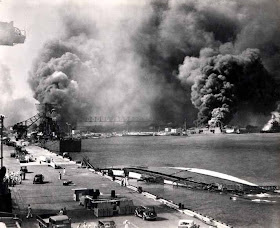
Shortly after publishing yesterday’s post, I realized that yesterday was the 80th anniversary of the Japanese attack on Pearl Harbor. Eighty years … 

I looked back to see what I’d written on the 70th anniversary, and there was something I’d forgotten about: a special showing of the movie “12 O’Clock High” at a Lexington, Kentucky, cinema, which Dad had organized and hosted. 

I remember that now, how excited he was about it, how he had a little display area out in the vestibule of the movie house, with uniforms and medals and other memorabilia loaned by members of the Kentucky chapter of the 8th Air Force Historical Society.

Now, the World War II veterans are almost all gone. One of the more famous, Bob Dole, just passed away at the age of 98. My dad was not one of the more famous, except to me and the rest of us who loved him. But Dad was World War II to me, and since he’s been gone, I read as little about it as possible. 

(Photo: Genealogy Trails History Group)

Scott Hotel

Scott Hotel

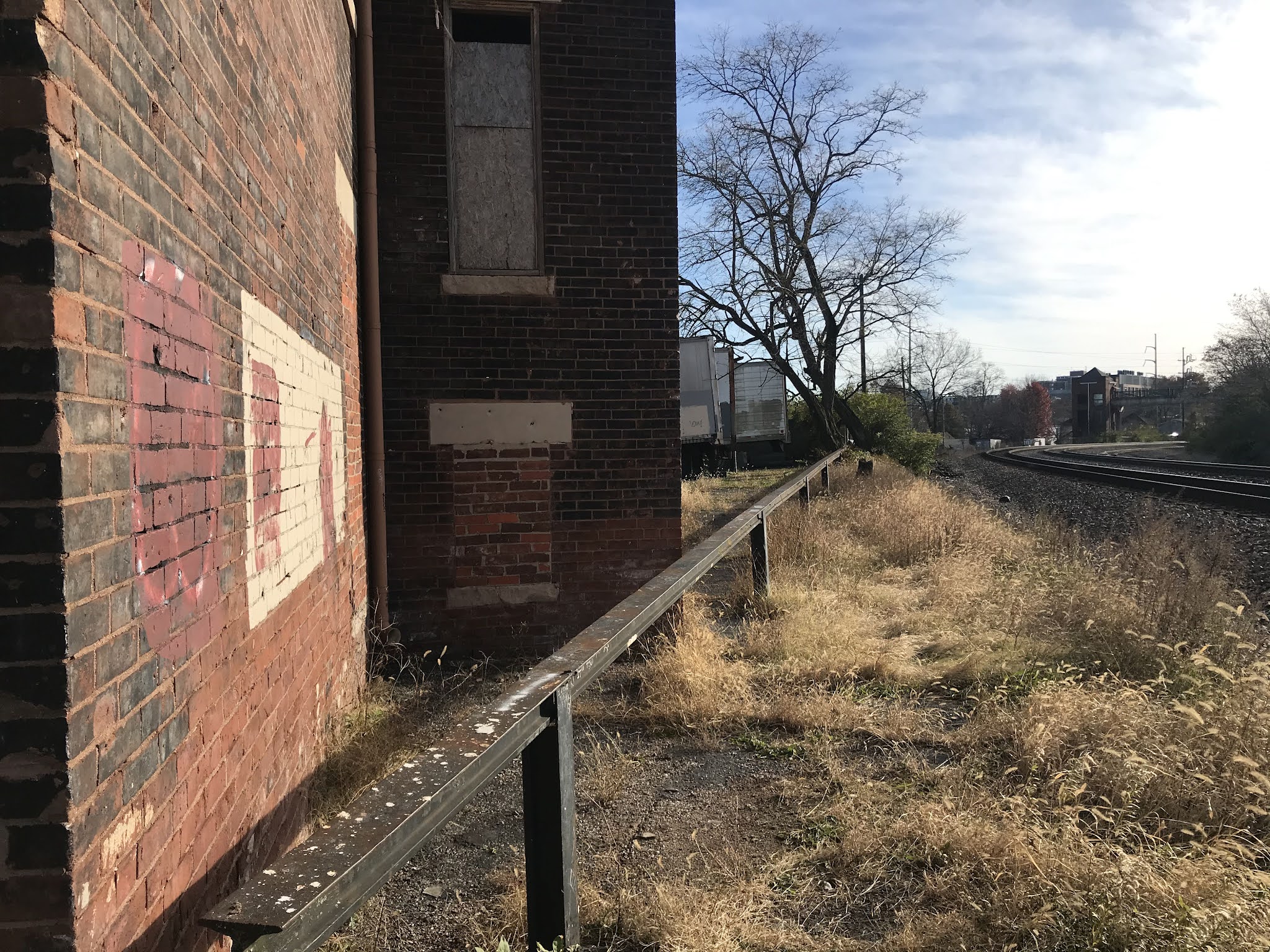
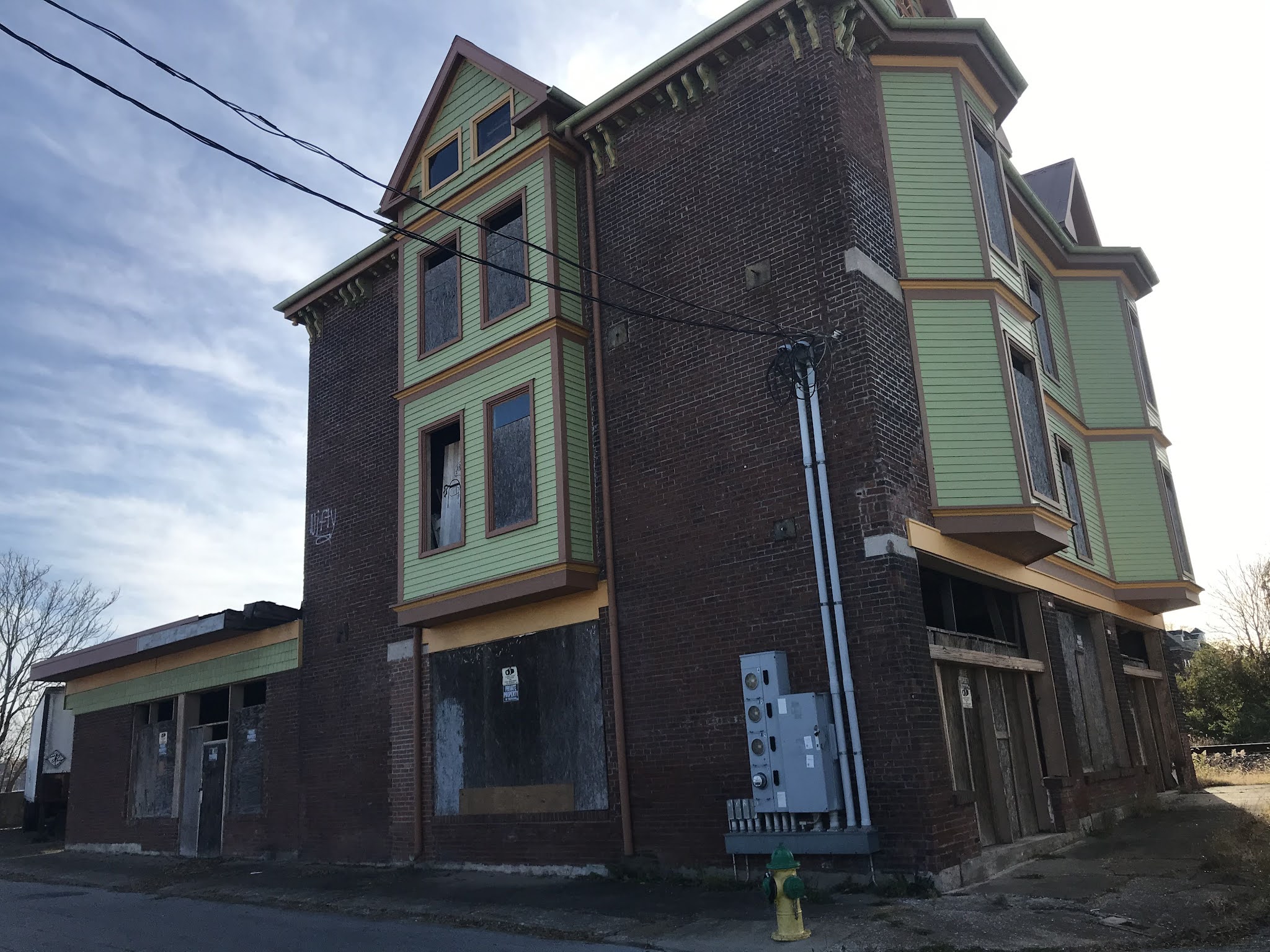
Only time for a short walk yesterday, but I had a destination in mind: the Scott Hotel, once owned by my grandfather and great uncle. Mom and her family lived at the hotel intermittently through the years, sharing quarters with the horsemen and the tobacco farmers in to sell their crops. 

The hotel was right across from the Southern Railway Depot, a natural place to stay for a night or two if you were in Lexington on business.

It was a less likely place to house three young daughters and a son. But these were different times, harder in some ways, easier in others.

The hotel is abandoned now, has been for years. It stands in mute testimony to those long-ago lives. 

Vienna Walk

Vienna Walk

I found myself in Vienna last Friday. Not Vienna, Austria (though that would have been nice) but Vienna, Virginia, which is 20 minutes from my house, a place I often pass through on my way to somewhere else.

There is a strange disconnect to walk along streets one usually drives, sort of like flipping a video from regular play into slow-mo. 

There is the house on the corner lot with its split-rail fence and funky upstairs addition — but instead of zipping by it I can see the details, the little upstairs deck with its wrought-iron tables and unmatched chairs.

There are streets whose names elude me at 35 miles per hour: Garrett and Malcolm and Holmes. Solid middle-class names, though their neighborhoods are ones made pricey by their (mostly) large lots and desirable location within walking distance of Metro (back when that mattered). 

I ambled along Center and Lawyers, past Salsbury Spring, which was the only source of water for the area during the drought of 1930. I saw the place with new eyes after learning that, felt a little more connected to this place I (almost) call home. 

The People Behind the Pill

The People Behind the Pill

I’ve always been an earnest, note-taking reader, especially now that I’m in class again. But increasingly more I enjoy the sidetracks and detours of reading, the rabbit holes, the inefficient digressions. 

For the next paper, we’re analyzing the public reception of a specific scientific discovery, and I’ve chosen oral contraception. It’s a rich topic, so rich that I’m reading more than necessary. 

For instance, in The Birth of the Pill, author Jonathan Eig tells the stories of the four people who are most responsible for the development of the pill:

There is Gregory Pincus, a brilliant scientist with a flair for publicity searching for compounds in his ramshackle laboratory in Massachusetts; Margaret Sanger, the founder of Planned Parenthood, who coined the term “birth control” and crusaded for women’s freedom all her life; Katharine McCormick, heir to the Cyrus McCormick fortune, who funded the experiments; and Dr. John Rock, a gynecologist and devout Catholic who took on his church to help the women in his care.

Though a drug company was involved — G.D. Searle — the pill would not have been created without the  “courage and conviction of the characters involved,” Eig writes. The book is a vivid reminder of how human personalities forge the technologies we inherit. It’s good to be reminded of that from time to time.

(Photo of Margaret Sanger courtesy Wikipedia) 

Ashland Park

Ashland Park

There are places I visit so often in my imagination that I need to recharge the memories as you would a battery. I did some recharging today when I strolled through Lexington’s Ashland Park neighborhood.

There was Woodland Park with its baseball diamonds and picnic tables, then my old place on Lafayette, the first of several former houses I would visit today (the others I drove by rather than walked past).

I ambled down South Hanover and Fincastle, letting my mind wander, fantasizing what it would be like to live in some of these places, the grand brick colonials, the charming round-doored tudors.  

Till I reached Ashland itself, the home of 19-century statesman Henry Clay, which stopped my reveries in their tracks. Ashland with its shaded walks and formal garden. Ashland with its historic pedigree and bountiful acreage. Even in fantasy, Ashland is out of my league. 

The Luckiest Generation

The Luckiest Generation

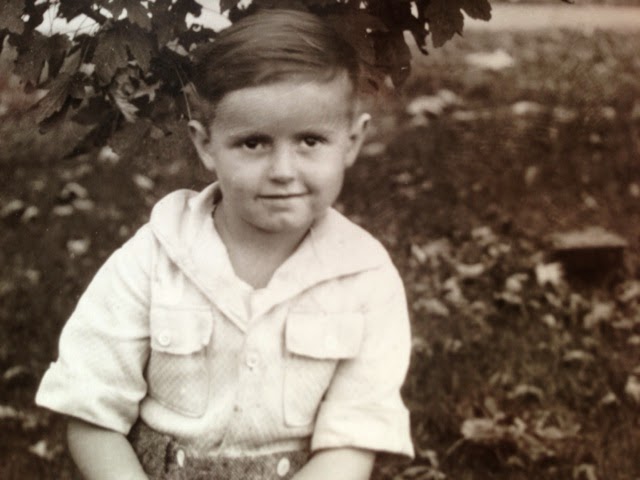
Dad would have been 97 today, a most beauteous day, as many of his birthdays were. I’ve been thinking a lot about Dad’s generation, often called the “greatest.” I think you could make a case that it was one of the luckiest, too.

Born into a Depression, members of Dad’s generation were schooled in poverty and deprivation. They learned early to rely on themselves. Families were close then, and many were multi-generational.

Dad joined the Air Force before he was drafted, and thus began the most romantic and far-flung chapter of his life. He was a preacher’s kid from Kentucky who was suddenly touring European capitals (albeit from 25,000 feet while scrunched into the tail gunner’s seat of a B-17).

Afterward, Dad’s generation returned to sweethearts and GI loans and one of the greatest economic expansions of all time. They came back to joy and acclaim. They had saved the free world, after all. That’s a lot to do before the age of 30.

Medicine matured as they did. They lived much longer than they would have had there been no antibiotics or bypass surgery. Which is not to say they did not suffer. But most of them lived lives neatly tucked between the 1918 Flu and COVID-19.

Which means that, world-events-wise, Dad’s generation suffered more at the beginning of their life span than the end. They came of age expecting little and left this world with much. They didn’t have it easy, but they did have it early. One of the greatest generations? Absolutely. But one of the luckiest, too.

Underland

Underland

Like the underworlds Robert Macfarlane plumbs in his book Underland: A Deep Time Journey, there is much going on beneath the surface in this marvelous new offering by one of my favorite authors

And there would have to be to combine prehistoric cave art, Parisian catacombs, the “wood wide web” (the fungal and rooted connectedness of trees in the forest), underground rivers, sweating icebergs and burial sites for nuclear waste — all in one book.

One theme that ties them together, besides Macfarlane’s exploration of them (no one is better than he at describing fear) is a growing recognition of the Anthropocene, the geologic age that experts have come to accept we are living through, one defined by human influence on the environment.

To comprehend the enormity of this designation, Macfarlane brings many tools to bear — literature, myth, science, philosophy and language, always language. “Words are world-makers — and language is one of the great geologic forces of the Anthropocene,” Macfarlane writes. But of the many terms for this “ugly epoch,” only one seems right with Macfarlane — “species loneliness, the intense solitude that we are fashioning for ourselves as we strip the Earth of the other life with which we share it.” 


“If there is human meaning to be made of the wood wide web,” he continues, “it is surely that what might save us as we move forwards into the precarious, unsettled centuries ahead is collaboration: mutualism, symbiosis, the inclusive human work of collective decision-making extended to more-than-human communities.”


And so the image at the heart of these pages, he explains, is that of an opened hand — extended in greeting, compassion, art — the prehistoric hand prints in ancient cave paintings and the touch of his young son’s hand. 


I know I will write more about this wonderful book; this is a start.

Modern Day MLK?

Modern Day MLK?

We need another Dr. Martin Luther King, a modern-day voice crying in the wilderness. We need someone who has a positive vision and can motivate others to follow it; someone grounded in faith who has moral clarity. Someone who understands sacrifice and can inspire others to make one.

I think about how the world sometimes gives us the people we need when we need them. Abraham Lincoln to keep our nation together. King to lead the Civil Rights movement.

We don’t always treat our heroes well, of course. King and Lincoln were both assassinated. In their case history righted the wrong, and they ultimately received the honors they were due. But honor is not what they were seeking. It was a cause beyond themselves, a greater good.

It’s hard to imagine such a person appearing now, someone who could heal the partisanship, who could bind us together again as one nation. But I’m an optimist. I have to believe there might be.

(Photo: Wikipedia)

Virginia is For …

Virginia is For …

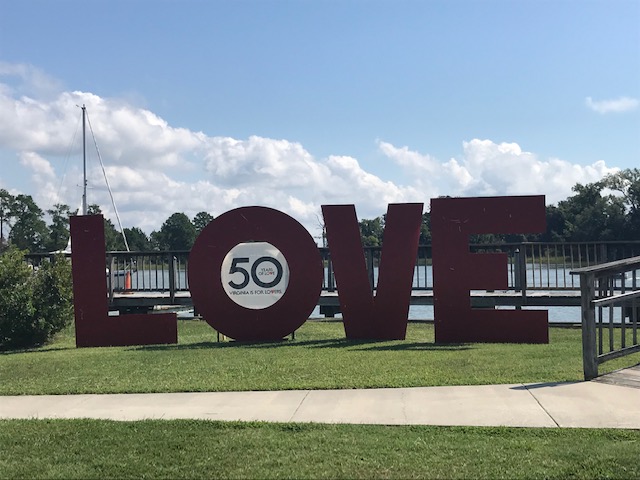
It’s been 50 years since the Old Dominion rolled out a new tourism campaign that went on to become one of the most successful ever. To celebrate this campaign, Virginia has placed more than 150 LOVE installations around the state. Seeing this one in Urbanna last weekend inspired me to do a little research.

“Virginia is for Lovers” has a contested history. Some say it was the original brainchild of a $100-a-week copywriter who came up with “Virginia is for history lovers” — until others in the Martin and Woltz agency out of Richmond (now the Martin Agency) decided to punch it up. Others say it was a more collaborative effort from the start.

Whatever the exact story, “Virginia Is For Lovers” is a classic example of less is more, because the removal of “history” gave the fusty state a whole new image. The campaign debuted with an ad in Bride’s Magazine in 1969, the year after the summer of love. And the rest really is … history.

Urbannahhhh!

Urbannahhhh!

It’s really Urbanna, but I couldn’t resist adding a sigh of pleasure at the end. Where have all these sweet Virginia port towns been all my Virginia life?

Like Reedville, Irvington and Kilmarnock, Urbanna is a small place with a large footprint, large because its role in the beginning of American history gives it a certain heft. In all these small towns, homes and shops cluster around landings that became docks that became marinas that now lie sparkling in the sun. But before the sailboats and motorboats there were steamers and sailing ships, and the harbors and quays were where business was conducted, not pleasure.

To reach the Urbanna marina, for instance, you walk down Prettyman’s Rolling Road, one of the oldest thoroughfares in America, a historical marker says. The “rolling” was named for how 1000-pound hogbacks full of tobacco were moved from custom house to ships and from there to the motherland more than 3,000 miles away.

I walked instead of rolled. But once down the shaded lane, it was easy to imagine the bustle of yore because of the modern busyness.  It was a glorious late-summer day, and sailors, kayakers and sightseers all gathered at the harbor.

 I watched one sailboat motor slowly down Urbanna Creek on its way to the Rappahannock and, ultimately, the bay. It would be back by nightfall. It wasn’t traversing the Atlantic. But as the water gleamed and a breeze promised smooth sailing, it was easy to imagine otherwise.


(No wonder I like the town. I later read that it means “City of Anne,” which I should have figured out from my ninth-grade Latin. Named not for me, of course, but for England’s Queen Anne, most recently portrayed — and not prettily — in the movie The Favourite.”)