Sunsets in Arlington

Sunsets in Arlington

Yesterday I saw the house where Suzanne and Appolinaire will live. It sits on a ridge in Arlington where, on a wintry day when the house across the street has been torn down and the new, big one not yet built in its place, you can almost see the Capitol dome and the red light atop the Washington Monument.

It’s an amazing situation, made possible by the generosity and hard work of two dear friends (who live next door). And the more of the place Suzanne and Appolinaire saw yesterday, the wider their eyes became.

This is not your typical one-bedroom apartment in the boonies or crowded share in Columbia Heights. This is kismet — perhaps what you get after living for years without electricity or running water.

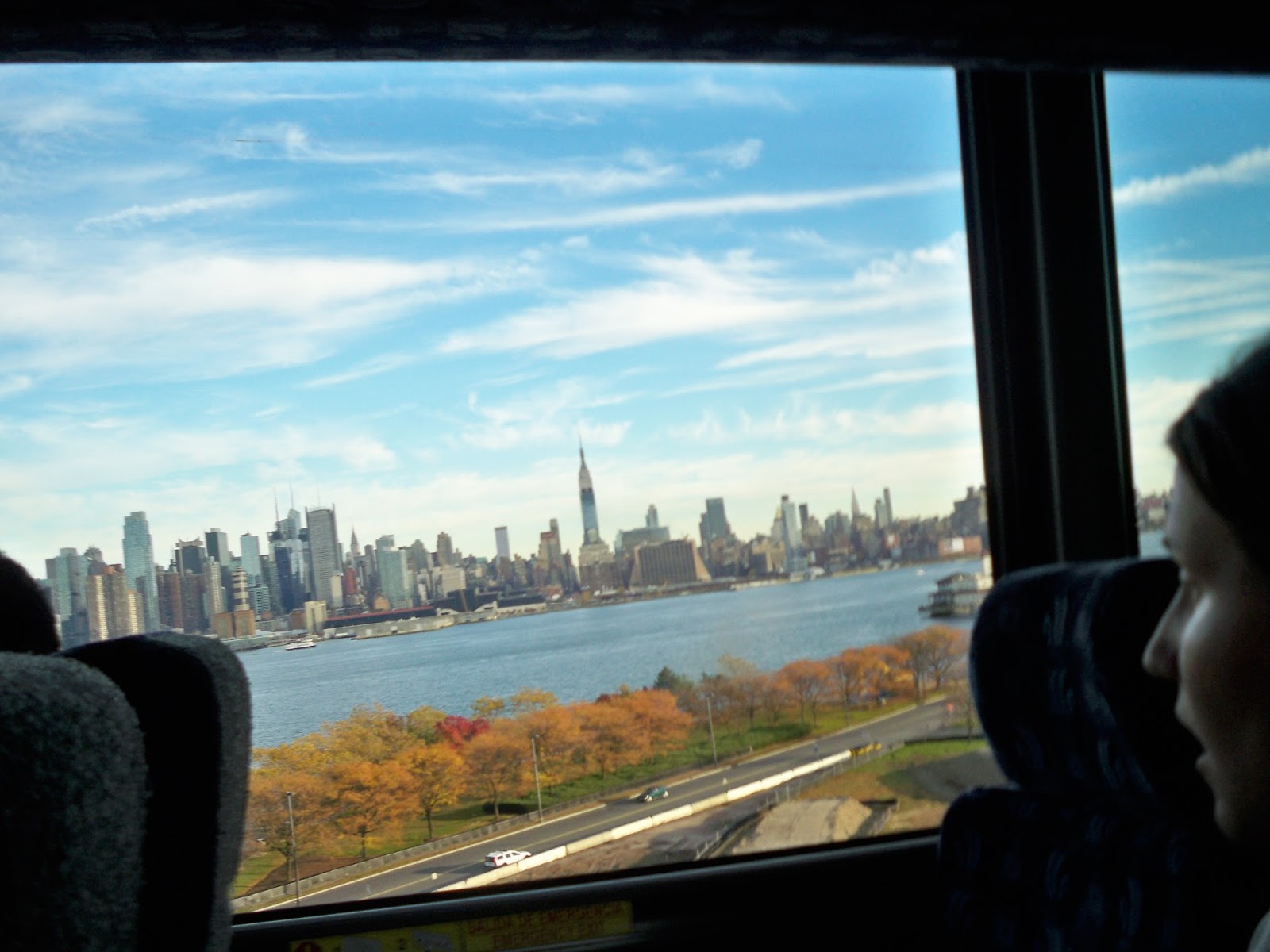
Whatever the reason, come January, the happy couple will move in and inherit not only an enviable, close-in location but also an untrammeled view of the western sky.  A bank of kitchen windows will see to it that they end each day with views like this. And if I know them as well as I think they do, they will end each day feeling as blessed as they do now.

Book Group P.S.

Book Group P.S.

Last night in the course of emailing about our new list my book group friends and I discovered that one of the books, Confederacy of Dunces, was on the list in 2012. It was our August pick and sometimes we skip August, so that might have been the reason.

But this brings up another advantage of hanging with the same bunch of people for years. You are growing old and forgetful together. You can tell each other that, yes, you were well into the last mystery before you realized … I’ve read this one before.

You can admit that not only must you now keep a list of all the books you read, but you must also annotate the list, add some quick phrase or note that will help you recall what each book was about.

Because the books, they come faster than the years.

A New Chapter

A New Chapter

My book group met night before last, only four of us this time out of a dwindling number of eight. It was our annual book picking — but we decided to add new members, too.

We did not come to this decision lightly. We’ve taken in no new members for eight years. But what’s eight years when you’ve been together 25?

The children we were birthing when the group formed are now marrying and settling down. It won’t be long before there’s a grandchild or two. But what time and busyness couldn’t derail, major life changes have. Two of us left and came back years later. But the recent departures will be permanent. People are retiring and moving away. We want to keep a quorum of sorts. We want to keep gathering on the first Wednesday of the month (more or less) to chat about Lila, The Short and Tragic Life of Robert Peace and anything else that crosses our minds.

So in January we add a new chapter. We become a slightly altered group — but this time altered by addition rather than subtraction. 

Active Shooter

Active Shooter

On the day of the latest mass shooting in the United States, I took part in an active shooter exercise at my workplace. We learned how to run — low to the ground in a zigzag pattern. We learned how to hide — turn off the lights, close and lock your door, barricade it if possible. And we learned how to fight — go for the hand that is holding the gun, do whatever you can to slow or disrupt the killer.

I sat politely, even took notes. Colleagues joked and laughed about crawling under their desks, George Costanza-style. “I learned a lot from watching Seinfeld,” said our presenter. 

I don’t know if employees at the Inland Regional Center in San Bernardino had taken active shooter training. But could a 30-minute presentation have helped them  counter the assault rifles and semiautomatic handguns? And more to the point … is this how we want to live?

(M2 Browning machine gun, courtesy Wikipedia)

The Great Migration

The Great Migration

I’d wanted to read The Warmth of Other Suns for years, from when I first heard about it. I knew little about the movement of African Americans from the South to the North other than that it occurred.

I hadn’t realized the time frame of the migration — that it lasted from World War well into the 1960s. And I was unprepared for the calmly recited horrors of the Jim Crow South that drove people North and West.

The three people author Isabel Wilkerson chooses to follow — chooses after conducting more than 1,200 interviews — talked with her over days, weeks and years. They shared every detail of the fearful, stunted lives they left behind and the hardscrabble lives they found when they arrived.  We take the train with Ida Mae and her family as they head to Chicago and with George as he escapes to New York. We ride along with Pershing later known as Robert as he drives across the country fighting sleep because few motels accepted black guests.

Wilkerson accompanied the three on trips to visit friends and family, back to the southern lands they left behind. She visited them in the hospital and attended their funerals. She knew their dreams and disappointments.

So it was with no small measure of authority that at the end of the book Wilkerson could write:

The three who had come out of the South were left widowed but solvent, and each found some measure of satisfaction because whatever had happened to them, however things had unfolded, it had been of their own choosing, and they could take comfort in that. They believed with all that was in them that they were better off for having made the Migration, that they may have made many mistakes in their lives, but leaving the South had not been one of them.

(Tens of thousands of emigres from the South moved to Harlem in New York City.)

Dark House

Dark House

Woke up this morning to a dark house. It was an early rising, and I’m used to coming downstairs to  dim light and shadows, thanks to a fluorescent light over the kitchen sink that has become so much a fixture that I don’t notice it anymore — unless it’s out, as it was today.

Gone were the shadowy shapes of the worn couch and wing chairs. Gone the hutch and table. Gone the carpet and trim. Instead, the blue dial of the clock radio face asserted itself, and the microwave timer threw its glowing dots into the void.

It was a different downstairs that greeted me this morning, a blank and mysterious one. One that made me realize that what I usually think of as darkness isn’t that at all. It’s only a dusky substitute.  

Power of the Press

Power of the Press

I saw the movie “Spotlight” with one of my favorite millennials. “It was a little slow,” she said as we walked out, providing the perfect opening for a (groan) story.

Not that things were wonderful back in the days when you looked at old newspaper articles on microfiche (mine inevitably got jammed) and did research by looking at actual physical books (sometimes they actually physically were not there).

But watching the movie reminded me of the excitement of reporting a long, complicated story, something you’d immerse yourself in for weeks or months, something you’d begin to dream about or wake up thinking about.

It reminded me of the power of the press and the great profession of journalism, from which not only I (doing media relations at a law school) — but the whole country — has drifted. Few news organizations have the time and resources to devote to long-form investigative pieces. It’s a sound-bite world, and we’re all the poorer for it.

(Web offset printer, courtesy Wikipedia)

A Door Ajar

A Door Ajar

It’s a mild day so I write with the French doors slightly ajar. A small breeze wafts in across the deck. The deck where we hung out yesterday eating crab dip before the big feast.

Afterward there was a game of bocce ball — and some energetic raking preceded it. (Hard to play bocce ball with leaf piles everywhere.)

It was a different kind of Thanksgiving. New people to share it with. A tinge of sadness, too. A dish or two we’ve never tried before. All befitting a change, a shift.

I liken the shift to the door ajar. A door through which one sort of life has ended and another sort of life has begun.

Smile, It’s Thanksgiving!

Smile, It’s Thanksgiving!

Thankful for the warm air that’s moved in today. Thankful for the walk I took before everyone was stirring. Thankful that the turkey is already in the oven. Thankful that the pies didn’t totally burn up last night (they’re only slightly singed). Thankful that someone else is bringing the rolls, sweet potatoes and whipped cream.

Thankful that when I picked up the dish detergent under the sink and found it sitting atop a crushed eggshell that it made me think of an eggshell mosaic I made when I was a kid. Thankful that the eggshell mosaic recollection triggered a happy, peaceful memory of Mom, who I miss so much.

Thankful that the stuffing is made and the green bean casserole soon will be. Thankful that the clan is gathering or has gathered. Thankful for a day that’s about thankfulness.

Practicing Gratitude

Practicing Gratitude

The winds have stilled. The temperature has risen. Crows call from tree to tree. Thanksgiving has come a day early as I spend this half workday at home.

I’m glad not only because I save the three hours I would have spent commuting — which means a head start on the pumpkin pie and stuffing for the crowd of 14 that will be dining here tomorrow — but also because I have an extra day to practice gratitude.

It is, if not a muscle, at least a skill to be honed and fine tuned. One I should practice much more than I do.