Adopt a Spot

Adopt a Spot

Walking home yesterday from Metro I noticed a sign. “Adopt a Spot,” it said. This is new to me. Adopt a highway, yes. But adopt a spot?

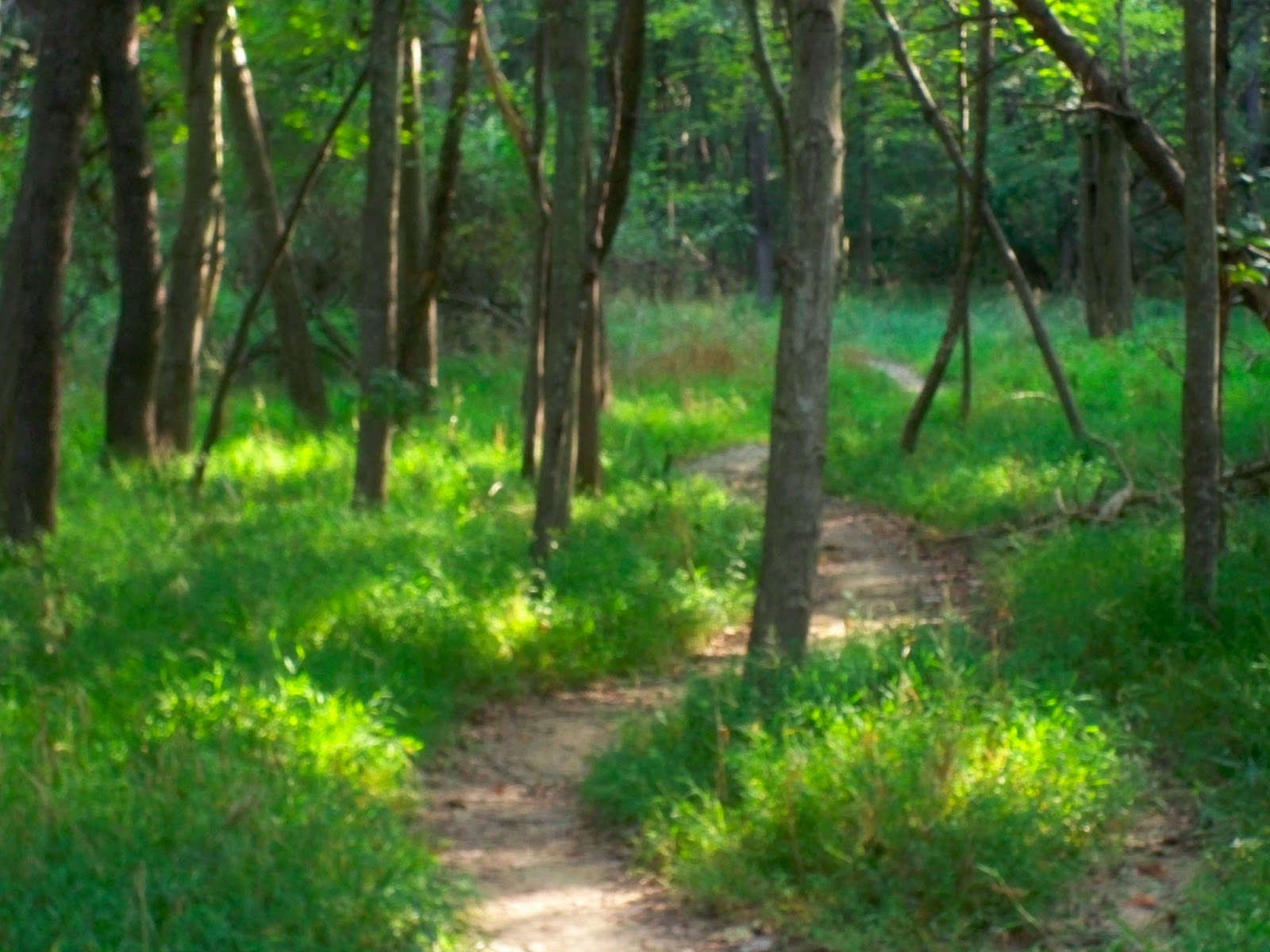
How good to know that spots have  clout, too. That a clump of trees, a curve of trail, a stand of meadow grass could be noticed, claimed, taken to heart.

I think about the spots I love, places I pass daily, corners worn smooth by passage, roads ridden and paths walked. A new boardwalk in the woods. A nubby stump in the forest. A block of sidewalk in the city, pavement stones ragged.

These are the textures that become dreams, that take hold of us and won’t let go.

Do we adopt the spot — or does the spot adopt us? 

Full Circle

Full Circle

Our neighbors are expecting their first grandchild, due any day now. These folks have lived next door since we moved into the house 26 years ago. I remember their daughters as little kids and they remember my daughters as babies.

It wasn’t a foregone conclusion that we would stay in the house more than a quarter century (maybe two years?!), but stay put we have, and the staying and the putting have brought a great full-circle quality to life that almost makes up for the years lost to traffic jams and Metro delays.

So on this red-letter day for my family — one daughter celebrating a birthday and another learning that a long wait will soon be over  — I pause to savor the richness of it all — and to give thanks.


(Two rush hours, two red-letter days, much gratitude.)

Frontier Learning

Frontier Learning

I’m just starting Wallace Stegner’s Beyond the Hundredth Meridian: John Wesley Powell and the Second Opening to the West and am captivated by Stegner’s observation of the haphazardness of learning on the frontier.

I knew books were scarce; teachers, too. But Stegner riffs on this “homemade learning” and how boys (and they were mostly boys then, of course) were often captivated and bent by the first man of learning (and they were mostly men then, too) they encountered.

The closest books Abraham Lincoln could borrow were 20 miles away — and they belonged to a lawyer. The closest books John Wesley Powell could borrow belonged to George Crookham, a farmer, abolitionist and self-taught man of science. Crookham collected science books, Indian relics and natural history specimens.

So “[w]hen Wes Powell began to develop grown-up interests, they were by and large Crookham’s interests,” Stegner writes. Powell went on to explore the Grand Canyon and to champion the preservation of the West — all of this with one arm; he lost the other in the Civil War’s Battle of Shiloh. (Powell was a major with the Union forces.)

I think of us now with more influences than we know what do to with. Libraries at our fingertips. Information bombarding us day and night. Would we climb on a raft and venture down uncharted waters? Well, I know what I would (not) do. How about you?

The Utility of Trees

The Utility of Trees

Thinking this morning of the utility of things and how they change through time.

The tree that once shaded the backyard, whose sturdy trunk supported first a baby swing and then a porch swing, has been a branch-less trunk for more than a year now. It’s the Venus de Milo of the backyard.

But what it lacks in shade and stability it makes up for in bird habitat. No branches for nests but a great tall expanse of trunk for woodpeckers. I heard the birds yesterday, rat-tat-tatting for insects and grubs, and thought of the tree’s gracefulness in good times and bad.

“I like trees because they seem more resigned to the way they have to live than other things do,” Willa Cather said.  She could have been thinking of this noble, denuded, pockmarked oak.

Just Sitting

Just Sitting

Who was it that said, “Sometimes I sit and think — and sometimes I just sit”?

This is a “just sitting” kind of morning. Which is too bad since I have lots of work to do. But for a few minutes “just sitting” is what I plan to do.

The cicadas are in high-summer mode. Their sounds ripple through the air, the aural equivalent of a dip in the pool or a Popsicle dripping down the arm on a sticky afternoon.

The morning air is cool and full of promise. I want to bottle it for a stripped-bare winter day. I want to store up inside, which is the only place that counts.

But for now … I want to just sit.

Time Travel

Time Travel

Last night I finished watching the movie “Interstellar.” It’s a long film; I had gotten halfway through it Tuesday evening and finished it up last night. But its length was befitting of its topic, the expansive subject of space and time.

Time, the fifth dimension, the true final frontier. Astronaut Cooper trapped in a box of boxes, able to see his daughter Murphy but unable to reach her, except in code, except, he realizes, through time itself, the watch he gave her before he left on his fantastic voyage to another galaxy.

Farfetched? Of course. But who hasn’t felt trapped in the here-and-now? Who hasn’t yearned to break free from the linearity of our lives? Just a peak at the future. Just a glimpse of the past — long enough to forgive, to restore, to understand.

Hot Day, Slow Walk

Hot Day, Slow Walk

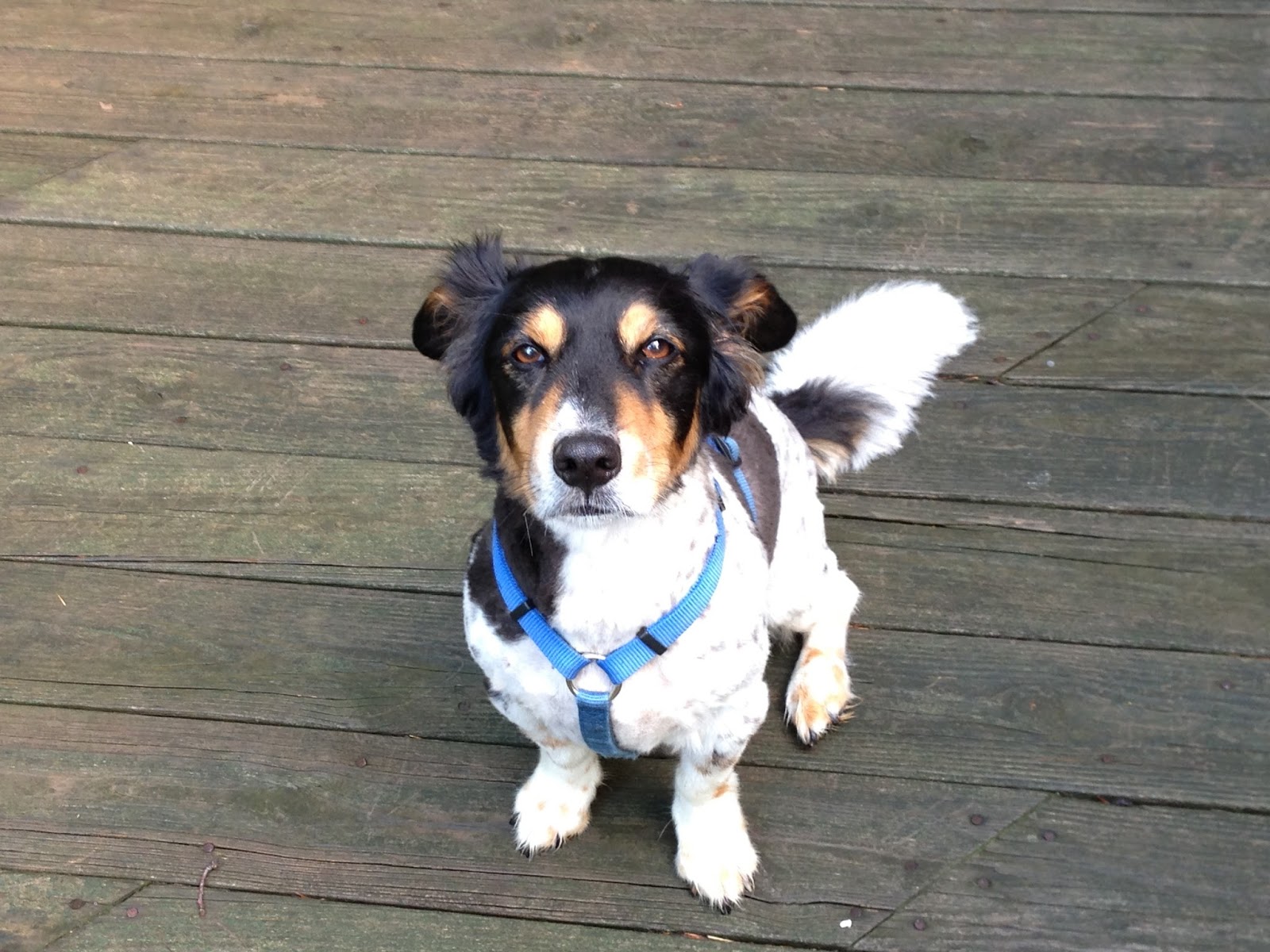
Usually we move purposefully, Copper and I. But our purposes are not the same. He has his goals and I have mine. For him, a splendid walk wouldn’t be a walk at all, but a series of stops and starts. Full-tilt runs followed by dead standstills. Meanderings and sniff-fests. Ambles.

Whereas I have a distance marker, a point I’d like to reach — say Fox Mill Road — he lives for the next sign post, guard rail or fire hydrant.

But yesterday our wishes were one and the same. It was late; it was warm. We wanted a brief jaunt, a slow burn. No way would we make it to Fox Mill Road.

So we turned down a pipestem and ogled some showy phlox. (Well, I ogled the phlox; he salivated at a squirrel.)

We paused often to look at the sky. (Well, I looked at the sky; he sniffed the grass.)

The heat and humidity slowed his normal rocket-fire pace to a more comfortable stride where the two of us were walking side by side — almost as if he was heeling.

“You’re doing a great imitation of a well-behaved dog,” I told the little guy. Luckily, his sarcasm meter is always set to low. He looked up at me with his big brown doggie eyes, wagged his tail — and we both kept on walking.

Emerson in the Morning

Emerson in the Morning

One of the most delicious parts of reading — and liking — a new book (Theroux’s The Journal Keeper, which I mentioned on Saturday) is discovering — or in this case remembering — other wonderful books to read.

Theroux mentions Emerson several times in The Journal Keeper so I spent some time last weekend scouring the house for a collection of his essays. One was nowhere to be found. Only a copy of “The American Scholar” in the Norton Anthology.

But this morning I realize that I don’t need a hard copy; I can go online. And there they are, familiar words a balm to my flagging spirit:

Trust thyself: every heart vibrates to that iron string.
Accept the place the divine providence has found for you, the society
of your contemporaries, the connection of events. 

Insist on yourself; never imitate. Your own gift you can
present every moment with the cumulative force of a whole life’s
cultivation; but of the adopted talent of another, you have only an
extemporaneous, half possession.
 

 Ah yes, I feel better now. Ready to take on the day.

Weeds: What Are They Good For?

Weeds: What Are They Good For?

Here in the rainy East, it’s a good summer to be a weed — or most any kind of plant, for that matter. But I’m thinking more about weeds this morning because I pulled so many of them over the weekend.

The soil is moist and they’re easily uprooted. Plus, there are so many of them to banish. I would no sooner finish one patch of yard then I’d spy another plot of stilt grass a few feet away. Let’s just say that no weeder will be idle this summer.

One can’t help but wonder when weeding: What is it that separates the weed from its more accepted cousin? Or, put another way: Why do we cultivate one set of plants and get rid of another?

Beauty has a lot to do with it, of course, and utility.  And then there’s basic economics: We value less what we have in abundance. But isn’t there some arbitrariness to it all? After all, a weed can also be a flower.

Book, Marked

Book, Marked

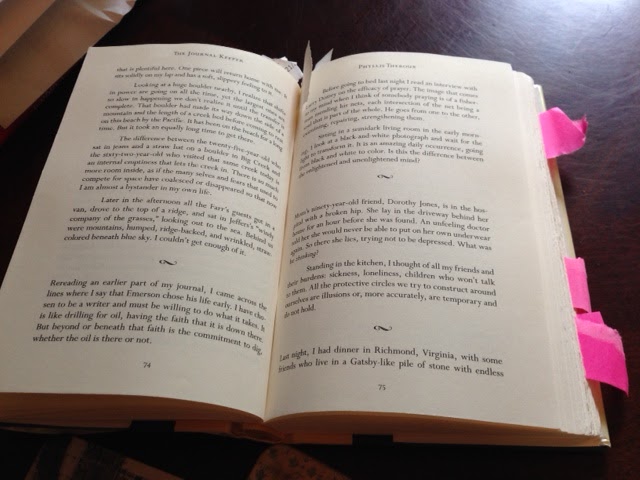
I’m reading Phyllis Theroux’s The Journal Keeper and — as usual when I read a book that stirs my imagination — am marking pages where there are thoughts I want to ponder. Once an English major always an English major, I guess.

Whatever the reason, I often can’t read a book without a pen and paper in hand. When it’s a library book, as this one is, I content myself to mark the pages with little sticky notes. Re-reading some of these marked pages this morning, I came upon this one:

“Rereading an earlier part of my journal, I came across the lines where I say that Emerson chose his life early. I have chosen to be a writer and must be willing to do what it takes. It is like drilling for oil, having the faith that it is down there. But beyond or beneath that faith is the commitment to dig, whether the oil is there or not.”