In Memoriam

In Memoriam

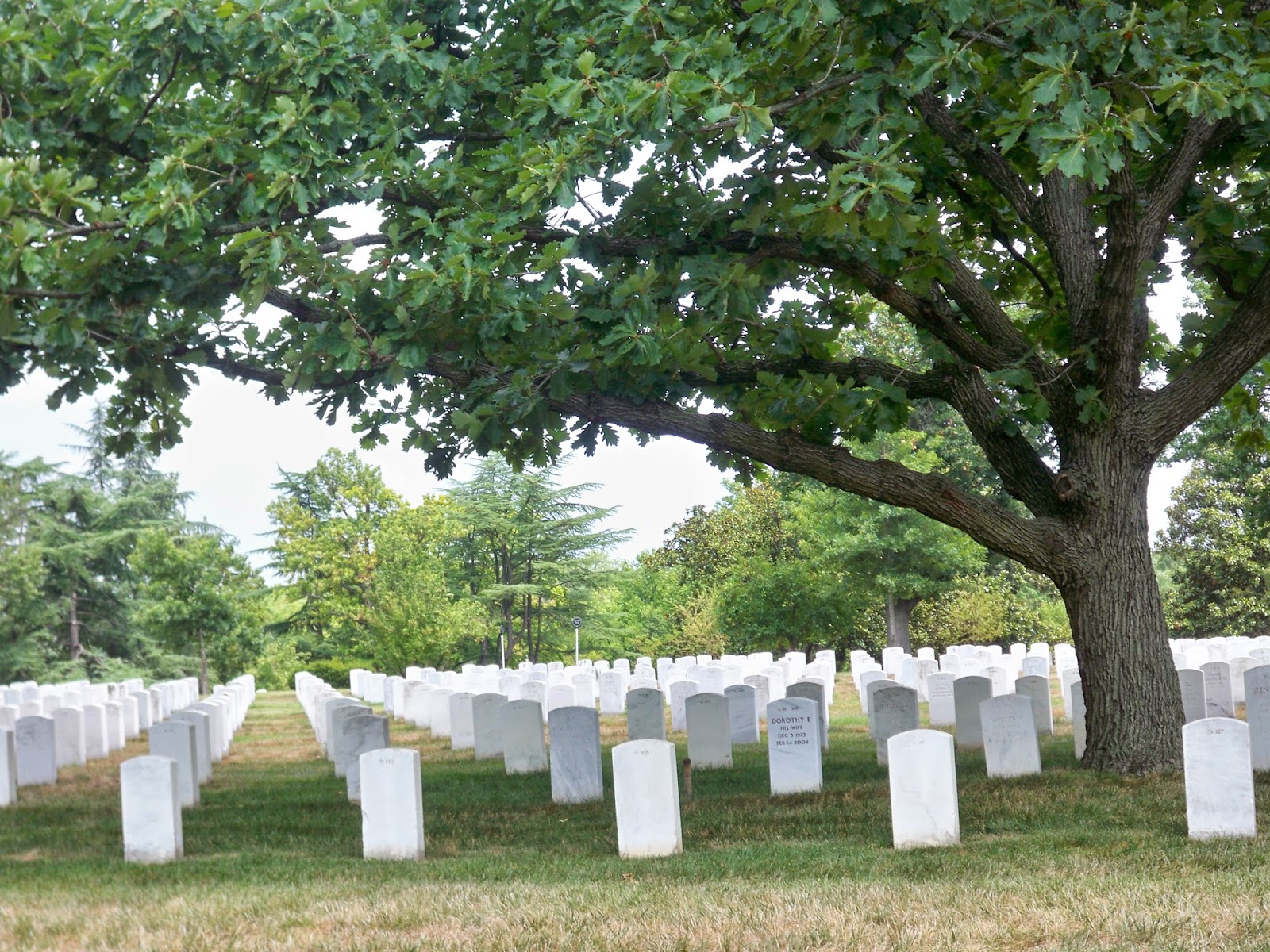
What you remember is the precision, even in death: straight lines, markers in rows. Such even rows that it’s hard to tell if there are hundreds of graves or thousands. Of course there are thousands, tens of thousands, hundreds of thousands when you add them all up.  The final resting place of those who served.

There are 131 national veteran’s cemeteries in this country and many more state and local ones. My dad lies in the Camp Nelson National Cemetery, only miles from the Kentucky River. It has a history of its own — a civil war camp where the wounded were treated and African American soldiers enlisted.

It’s a sunny, placid place with a roll to the land and a few big trees along the borders. I visited in April, got a better view of what I couldn’t quite take in before. It’s proper and dignified, the grounds meticulously maintained.

It’s amazing the pull the place has on me now. I wish I was there today.


(This photograph is of Arlington.)
Anniversary

Anniversary

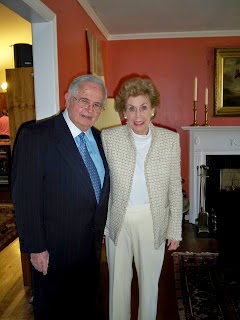
This day, the curve of its numbers, its 2 and its 4, the late Mayness of it, all of its features and character will always and only mean one thing to me: my parents’ wedding day.

This is the first day in 62 years they have not celebrated it together. Here’s what I wrote about them two years ago, on their 60th wedding anniversary:

What started 60 years ago was not just a marriage; it was a family, a way
of life. It was jumping in an old Chevy and driving across the country.
Finally running away to California to start all over again — then
realizing that Kentucky was where they wanted to be all along. … There has always been a certain jauntiness, a sense that you didn’t have
to be what circumstances dictated. Dreaming was encouraged. …

And in fact, they kept on dreaming, right to the end of Dad’s life.

Catching My Breath

Catching My Breath

So begins a long holiday weekend, last hurrah of the school year and opening salvo of summer. It is a delicious morning. Scrumptious. Meant to be eaten with a spoon. Or no, with a fork, slowly. Not slurped or inhaled but consumed mindfully.

On a go-to-office morning I would be encased in glass and masonry by now, shut off from the elements. All head, no heart. But today I’m at home, windows open, air flowing through the house. Birds outside, birds inside. Music everywhere.

Time for a long exhale. Very long. Then another, and another. The long winter is over. Time to catch my breath.

Bartholdi Fountain

Bartholdi Fountain

A noontime walk in the city yesterday took me to Bartholdi Fountain. It didn’t look like this, of course. It was daylight and water droplets sparkled in the sun. Peonies hung their heads in the park. Creamy roses and colorful columbines competed for attention.

The bounty of bloom was an artless companion to the fountain, which is elegant, classical. Created by Frederic Bartholdi before he made the Statue of Liberty, it was first displayed at the Philadelphia Exposition in 1876 and later sold to the U.S. Congress for $6,000, half the asking price.

I learned these facts today on Wikipedia. But yesterday, when I was walking, what struck me most was the energy of the scene. The water shooting, gushing, cascading. Nearby office workers strolling, checking their phones, rocking in the chairs that offer prime viewing spots (and maybe a little fountain spray). And taking in all of this at my own pace, which is a bit of a whirl, especially when I’m trying to walk halfway down the mall and back.

The Bartholdi Fountain made me want to sit down and rock for a while. Maybe I’ll do that next time.

(Photo: Wikipedia)

The Child in Spring

The Child in Spring

“We could never have loved the earth so well if we had had no childhood in it.”      —  George Eliot

I often think of these words, especially this time of year. In mid-May, childhood runs rampant. Kids frolic at the bus stop, forgo homework to dash outside the minute they get home from school. After dinner they ride bikes and scooters around the cul-de-sac. The end of the school year dangles tantalizingly in the future. It won’t be long now.

I caught this excitement the other day on a walk through the neighborhood. I inhaled it in the aroma of cut grass, felt it in the sun on my face. So many memories as I amble. Not even memories, but deeper than that. Sensory impressions. A whiff of juniper. The musty odor of a storm drain.

We forget how close to the ground we were in those days, how the earth rose up to meet us then with all its sounds and scents. But because it did, I can stroll through the world now with my middle-aged self — and the whole world comes alive again.

A Fluff Piece

A Fluff Piece

For the last few days cottonwood fluff has been floating through the air. I think I know the source, a tree that’s half a block or so away. But every year at this time when the wind is right and the air is clear, I see its progeny.

So light, so fragile, yet tenacious enough to go the distance, it lodges itself in driveway cracks, leaf piles and sometimes even on the ground. It’s hard not to see it as wishes spun from the spring air, spores of hope.

I read about the tree, learn that it’s a type of poplar that does well in stressed soil. It became the official state tree of Kansas in 1937, the state legislature dubbing it “the pioneer of the prairie.”

Funny then to see it cast its seeds out onto the tidy, mulched lawns of suburbia. Perhaps we are the final frontier.

(Photo: Wikipedia)

Grow Up

Grow Up

Trees do it. Flowers do it. Even exasperating toddlers do it. But at this time of year it’s hard not to be thrilled by the sheer verticality of the green and growing world.

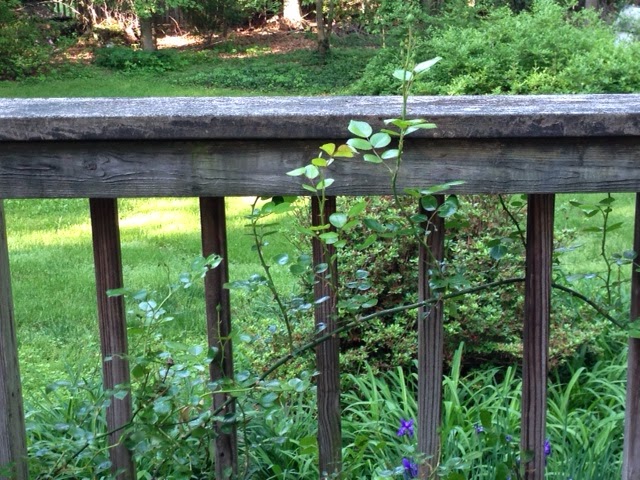
The climbing rose is a case in point. It grows up and out. Or over and out, depending upon how you look at it. And you’ll have to take my word for it, because this picture doesn’t capture it.

The point is, the branches grow out so the roses can grow up. Such is the power of the sun, of the life force.

Bending the Knee

Bending the Knee

Attending two college graduations within a week has made me think about endings and beginnings, about markers. There are the organic ones — births, deaths, birthdays. And there are the ones that celebrate a decision or an achievement — marriages, graduations, retirements.

Two nights ago, at Claire’s graduation, we also saw the hooding of  Ph.D. candidates. For some reason, the professors doing the hooding were always shorter than the newly minted doctors of philosophy being hooded. So the latter were often bending their knees, lowering themselves to make it easier to slip on the doctoral hoods.

It was an odd ritual, vaguely feudal in feel, akin to kissing the pope’s ring. Though it had a practical explanation, it felt like a sign of homage, almost a genuflection to the educational powers bestowing the degree.

Since there is little anymore that is held in high esteem, I found this ceremony both comforting and inspiring. It’s a good way to begin a new enterprise, with a sense of awe and respect. With a pause, a salute, a nod to all who have gone before.

Happy Graduation!

Happy Graduation!

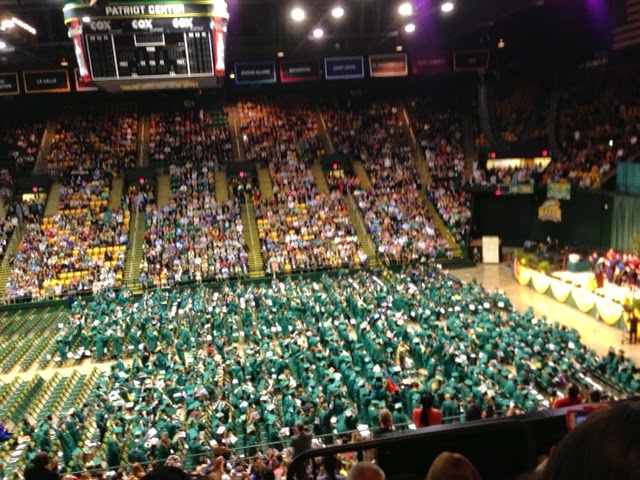
Tonight my daughter Claire graduates from George Mason University.

I’m pausing a moment to let that fact sink in.

Not that it doesn’t seem possible. I know by now how quickly it goes. But still, a momentous occasion. A marker. A passage. A time for parental pride.

Claire has studied hard, worked at least one job throughout college, helped conduct experiments in labs and written a thesis. She graduates with honors and will start a masters in social work program in the fall.

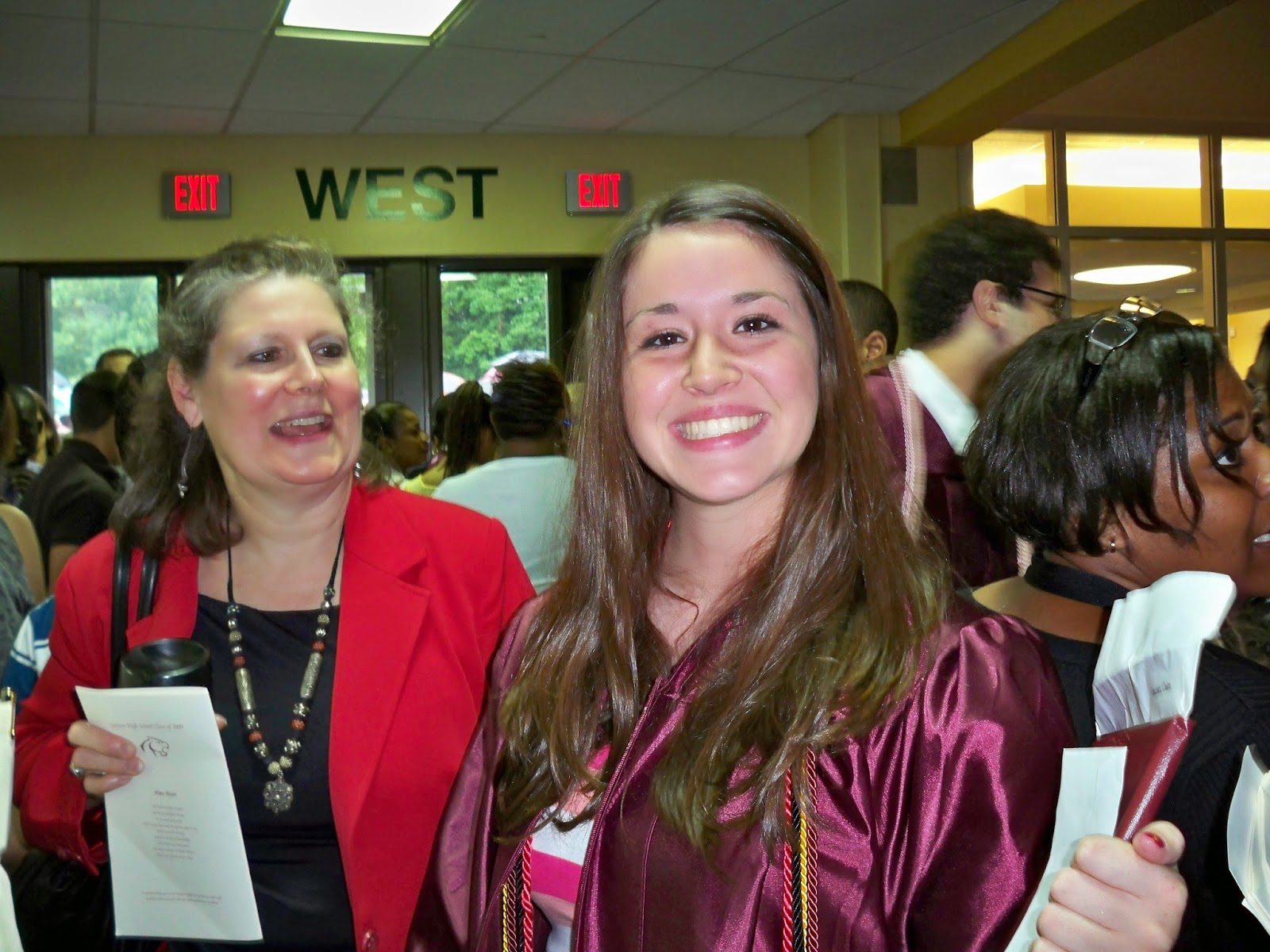
When she graduated from high school I could find Claire by spotting her hot pink sandals. Tonight when Pomp and Circumstance begins to play I’ll strain to see if I can pick her out again. She’ll be wearing green and gold this time, not maroon. And she’ll be older, wiser and more mature than when she went in (of course). But she’ll still have that killer smile. And she and I — and the whole family — will know all that went into this. 

Happy Graduation, Claire. You did it!

Quarter Century

Quarter Century

I had a reference point, so I looked it up. Mother’s Day, 1989, was May 14. That’s the day we moved to northern Virginia. Suzanne was six months old. We planned to stay “a couple of years.”

But two years passed, then four, eight, twelve; they passed in a whirl of babies and toddlers and deadlines and milestones. And when I realized what was happening, that I was settling in a place I never intended to stay, I chafed at that fact.

It wasn’t the house itself or the immediate neighborhood that rankled, but the suburban experience. The tidy lawns and mulched trees, the lawnmowers and snow blowers that seemed always to be whirring. The traffic, the homogeneity, the “placelessness.” The influx of affluence that led our children to ask us why they couldn’t live in a house with a two-story foyer.

But a few years ago (yikes, almost ten!) I began to work downtown. I explored the neighborhoods of D.C. — Brookland, Capitol Hill, Penn Quarter. There was an energy and a discombobulation that felt new and familiar at the same time. There were long city blocks where I could stretch my legs. Without intending to, I began to soften toward the place.

This is good, because what’s happened in the last quarter century — what’s happened when I haven’t been looking — is that northern Virginia has become our home. I still may thrash at its limitations, but it’s where two of my children were born and where all of them grew up. This is their place, where they’ve come alive to the world.

A lot can happen in a quarter century. A lot has.