A Walker Continues

A Walker Continues

The snow has clung to
every available surface. The most spindly branches of the forsythia
have “Vs” of snow, and I can imagine the accumulation, patient and slow,
crystal attracting crystal until little pockets formed.
I hope this blog will be the same, a slow, patient accumulation of words. 

Four years ago today I started this blog with a post entitled “A Walker Begins.” Since then, there has been a “slow, patient accumulation” of at least 20,000 words. Other than that, “Walker” hasn’t changed much, other than my learning how to make the photos larger. One of these days I’ll figure out how to switch templates, which will make it easier to follow and comment.


Otherwise, I imagine I’ll keep plugging away as I always do: walking, thinking, noticing.


Writing about the world in an attempt to make some sense of it — though not too much, of course.

The Touch

The Touch

Reading on my Kindle (see previous post!) these recent weeks means I spend more time touching screens. There’s my smart phone screen and my iPod screen, each requiring a different sort of touch.

The phone, especially its keyboard, is best when I get a rhythm going. If I misspell the words, auto-complete makes up for it … unless it substitutes something completely nonsensical instead.

The iPod is the size of a large postage stamp and is best approached with a smooth but pinpointed movement. If not I may end up with a Broadway musical when I want medieval chant.

As I’ve become acquainted with the Kindle, I see that it’s the most sensitive, the most eager to please of all the screened instruments. Even if my index finger only hovers above the gadget, it thinks I’m ready to turn the page.

Virtuoso pianists are often said to have a  “good touch.” Something in the way they stroke each key creates a warmth of tone. The piano keys are not pounded, they are caressed.

I think we modern-device users are developing a skill we could use elsewhere, if we chose. I think we should all learn to play the piano.

Out of the Woods

Out of the Woods

I just finished reading Lynn Darling’s Out of the Woods: A Memoir of Wayfinding, a book about discovering a sense of direction in midlife.

When her daughter left for college, Darling moved to an off-the-grid house near Woodstock, Vermont. The woods were cool and inviting, a place to sort herself out. But Darling always became lost in them. So she took a survival course, learned to use a compass, acquired a topographical map. She found landmarks, charted distances from her house to a neighbor’s. Gradually she learned the nuances of wayfinding, when to trust herself and when to trust the map:

“Maps, I know now, are not static. Walk in a place long enough and you see all the mistakes that have yet to be corrected, the disconnect between the three-dimensional reality on which you walk and its two-dimensional representation. Walk in a place long enough and even the most accurate maps fail to represent what is actually there.”

As I read her book — on my Kindle — I pondered my own wanderings, the paths I’m following and the ones I am not. I thought about how important it is to stay limber as we grow older, to keep pushing ourselves in directions we have not gone before.

It took three-quarters of the book, but I finally performed my own little bit of technological wayfinding: I learned how to highlight the passages I enjoyed so I could find them later. A small achievement, but an achievement just the same. So, courtesy of Kindle’s “highlight” feature, here’s Darling again:

“Getting older is largely a matter of getting over yourself, of stepping out of your own way, the better to see the world through a wider lens than the narrow preoccupations of self had ever provided.

I wasn’t any of the things I had strived to be, or tried to escape. I was just a walker in the woods, who had learned a thing or two perhaps about finding her way, one who would get lost again and again.”

The Trellis

The Trellis

The roses are gone but the trellis remains.

It’s the order within the chaos. The frame inside the thicket. The brown beneath the green.

It’s a glimpse into the essential order of things.

Summer obscures the trellis. Winter bares it, softens it, gives us a chance to admire it, too.

Snow in Kentucky

Snow in Kentucky

Weather forecasts told us the rain would freeze, that sleet and snow would fall, so in anticipation of being sidelined today, I went for a jog yesterday in what I thought was light rain.

Not for long. As I ran, the rain grew heavier and colder, it took on substance. It didn’t hollow out so much as beef up. It meant business.

This was not January’s fluffy stuff. This snow has clung and settled. It has hemmed me in — at least for the morning.

But afternoon is almost here.

Coverup Redux

Coverup Redux

A postscript to “The Coverup” below.

Last night I covered my Dad, who’s in the hospital. I thought of all the times he covered me.

I thought about how life comes full circle, and how, even in the sad times, there’s a fullness to it. Something deeper than joy or sorrow.

This Other Life

This Other Life

The flight left at 5:30, which seems insanely early even for an airplane, creature of the sky that it is. But powered by humans, of course, humans who must sleep.

Still, it did leave and it did arrive, and before 9 a.m. I was already where it normally takes me all day to reach by car. And so into my life the gift of time has fallen.

What have I done with it so far?

I’ve written, read and snapped some photos. I’ve looked at snow on mountaintops and marveled at the thin pink line where earth meets sky.

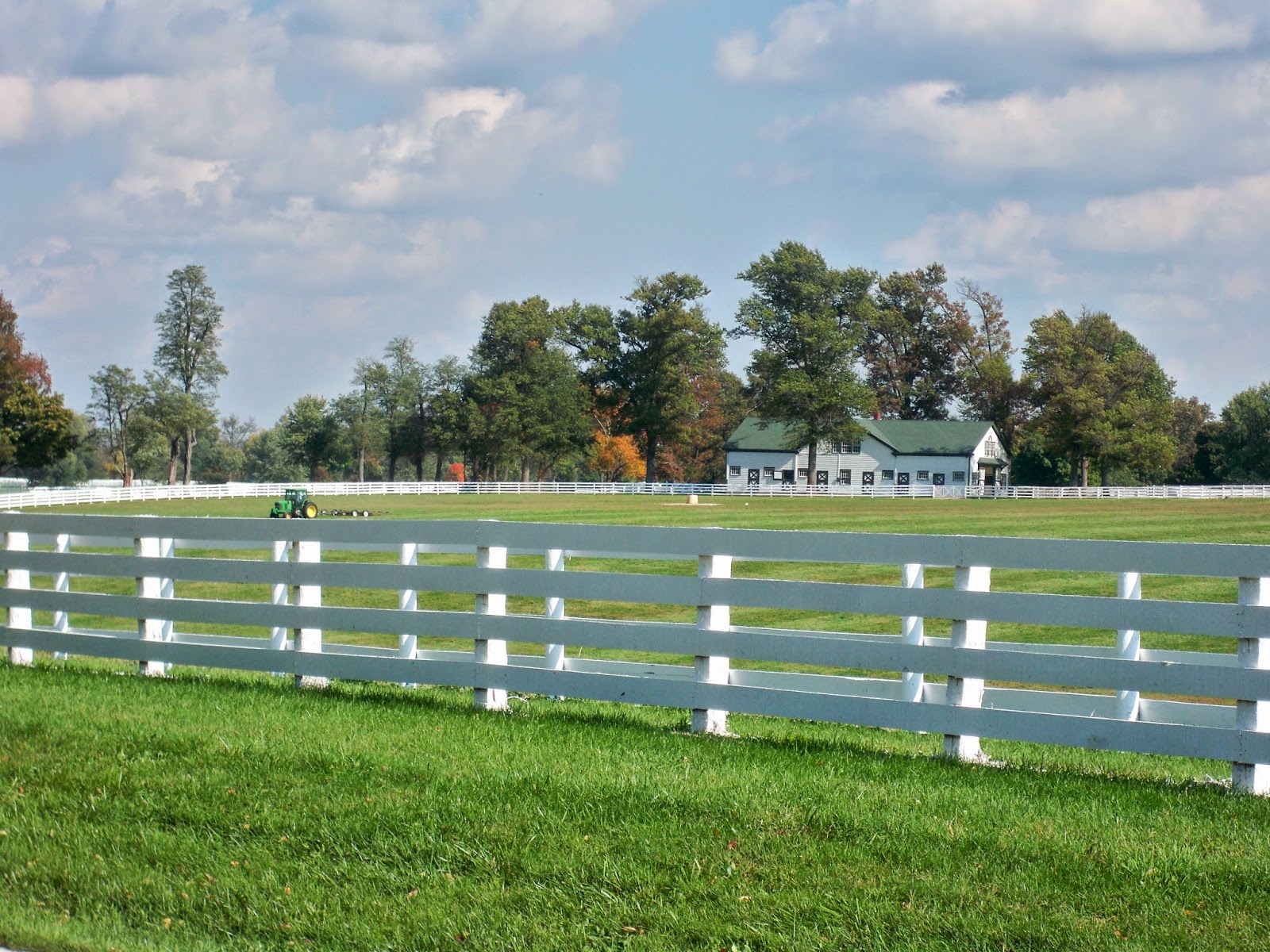
I’ve seen my hometown from the air — there’s Keeneland Race Track on the right.

I’ve slipped quietly into this other life.

The Coverup

The Coverup

Few activities in life bring as much simple pleasure as covering up the ones we love.

Swaddling a newborn.

Finding the beloved blankie for a toddler in footie pajamas.

Tucking in a child after the fifteenth reading (that night!) of Goodnight Moon.

Pulling a jacket over the sleepy, sullen high-schooler you’re driving to school after she missed the bus.

Covering the teenager who came home late from the party and crashed on the couch.

And, when there is no one else around, tucking in this character.
 

Molting Season

Molting Season

To have two parakeets in a cage that hangs from the ceiling is to have a complicated relationship with feathers.

Feathers are, of course, beautiful to look at, whether on or off the bird. They come in iridescent yellows, blues and greens — hues that might be garish elsewhere but seem perfectly natural on a bird. And feathers are fun to collect and hold: the sharp peak of the long flight feather and the soft fuzz of the white down.

But when birds molt and feathers fly, well, then you have a lot of cleaning to do. It was while cleaning after a recent molt that I began to wonder:  How would it feel to live with feathers, to fluff them and preen them, to see them piled on the cage floor?  How would it feel to lose them, one by one?

Would we be lightened? Would we be freed? And when new growth appeared, would we know then what it means to begin again?

Winter Musical

Winter Musical

First, the dripping, a melodic plunking, a tune of winter’s making. Not the insect hum of summer, but slower and lower-pitched.

Inside, on the radio, the music of Mozart in honor of his birthday. Trilling clarinets, swelling strings — melodies that transcend the seasons but which take on a wintry tone today.

And finally, as noon approaches and the west wind roars into action, the sound of branches tapping against the house, of breezes sighing around corners and through branches that bend in their wake.

The sounds of late January. A winter musical.