What Passes for Darkness

What Passes for Darkness

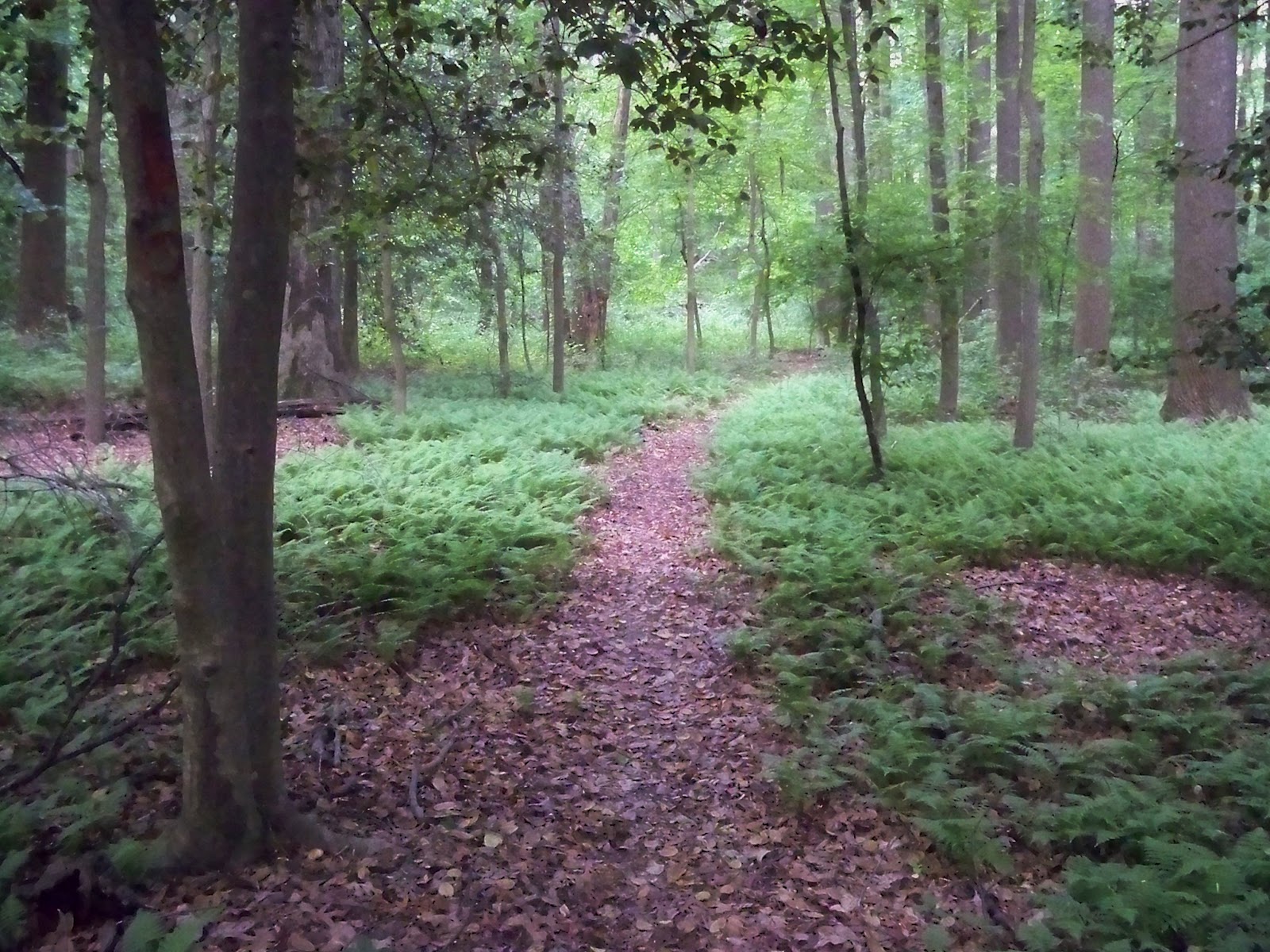
Sometimes a path presents itself, opens as if by magic. It was almost 7:30 when I started walking. A cloudy night, the light fading fast. As I entered the dark passage, my eyes picked up the brighter green of a nearby field. A fox ran toward it, auburn and plump. It posed in a green corner, then skulked into a bordering thicket.

I followed the curved walkway, my feet moving fast on the downward slope. I asked the woods to hold me up, the path to carry me. I asked only movement, and in that movement absorption. If that is all I ask, I reason, the walk will give it to me.

And that is what happened. The path, so close yet unfamiliar, the day almost over, the slight sense of danger as I walk in the woods in what passes for darkness in this well-lit suburban place.

After Dinner

After Dinner

An evening walk. A neighbor and her granddaughter. The girl’s mother was a girl herself when we moved in. We’ve lived here long enough for the child to become the parent. The little girl wore pink, and she whirled herself around in a circle as she swung a stick over her head. The days they are long for her, and the years, they stretch ahead endlessly.

Meanwhile, the grandmother plants annuals around a tree. She talks softly to the little girl. I couldn’t hear what they were saying, only see their heads bowed together in conversation. I inhale a faint whiff of cigar smoke, whether from the girl’s grandfather or from recalling my own, I couldn’t tell you.

It was that kind of evening, a brilliant sunset in the making, a bank of clouds that looked like a wave eddying around a breakwater, the air still and heavy. The past and present packed together in an after-dinner walk, the most portentous kind of stroll, spilling over with the motions of the day and the dying of the light. The fullness that passes for joy, that is deeper than joy.

Iris

Iris

The iris are blooming. We have just a few, only these small Siberian ones, slender, weighted with their own blossoms, bending slightly with the fullness of the season. We bought these from a local lady whose garden was once the envy of the neighborhood but who has since passed away and whose yard is but a shadow of its former self.

But bulbs from the “Iris Lady” are planted all over the mid-Atlantic and even farther afield. Her garden grows not just in Oak Hill, Virginia, but in countless climes and soils. It has done what flowers and people are supposed to do, has given itself to others, has held its head high.

Out of the Nest

Out of the Nest

This little guy and his (her?) brother (sister?) were clinging to the inside of our garage door yesterday. I knew there was a nest in the rafters, had seen the busy mother flying in and out the window, had heard occasional chirps and peeps, but had no idea it was time for the little ones to leave the nest. Why does this surprise me?  By now I know how quickly youngsters grow up.

I tiptoed into the garage with my camera, poised for the perfect shot, and … the camera was out of charge. The mama bird was extremely unhappy, too. She chirped an alarm and bounced toward me to do battle. So I came back inside, plugged in the camera and waited.

A couple hours later,  this baby was still out and his mama was away. I inched closer, talking softly. The birdie opened one eye and looked at me without fear. I’m not much of a birder, but I think he’s a wee robin. A delicate mess of feathers and beak, he’s like a human baby with a head much bigger than the rest of him. Soon he will leave the garage, as he’s already left the nest. His body and tail will lengthen, his plumage will smooth out. He will be able to fly 36 miles an hour and up to 200 miles a day. He will sing and he will mate. He will take his place in the world.

I was privileged to see him in the beginning.

Editor’s Note: The little wee bird was actually a wren. 
Morning in the Garden

Morning in the Garden

Morning in the garden. Holly blossoms in the air. I move some ferns and plant some impatiens. As I plunge my hands into the worked soil, I feel connected to the day. Birds sing from their green perches.

I measure the warmth, the freedom of being outside in shirt sleeves before 8 a.m. It’s a good way to live.

My neighbor, Nancy, reads my mind: “I love mornings in the garden, don’t you?” She’s on her daily  walk. I will soon be on mine, too.

The Library Place

The Library Place

The book group met at my house last night. Two people sat on our sagging blue couch, the other two in the faded wing chairs, the ones that belonged to Tom’s parents so many years ago. I pulled the rocking chair over to the far end of the coffee table, which gave me an unaccustomed vantage point — staring straight at the built-in bookshelves, our pride and joy.

I think about the part books have played in the life of our home, the schoolbooks and novels, the histories and poetry, our old college books and now our children’s, too.

And then there’s the “library place,” the shelf of a hutch so named because it’s where we put library books that need to be returned. In the enchanting shorthand of family conversation, the library place has become a repository for anything that needs to be protected or preserved: retainers, driver’s licenses, a pile of  downy parakeet feathers.

It still serves as family safe — a spot once meant for books that now holds other precious cargo.

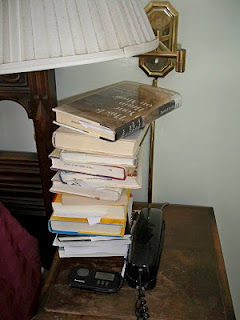
I can’t find a picture of the library place. This shot of my bedside table will have to do. There’s always danger of an avalanche.

For Ellen

For Ellen

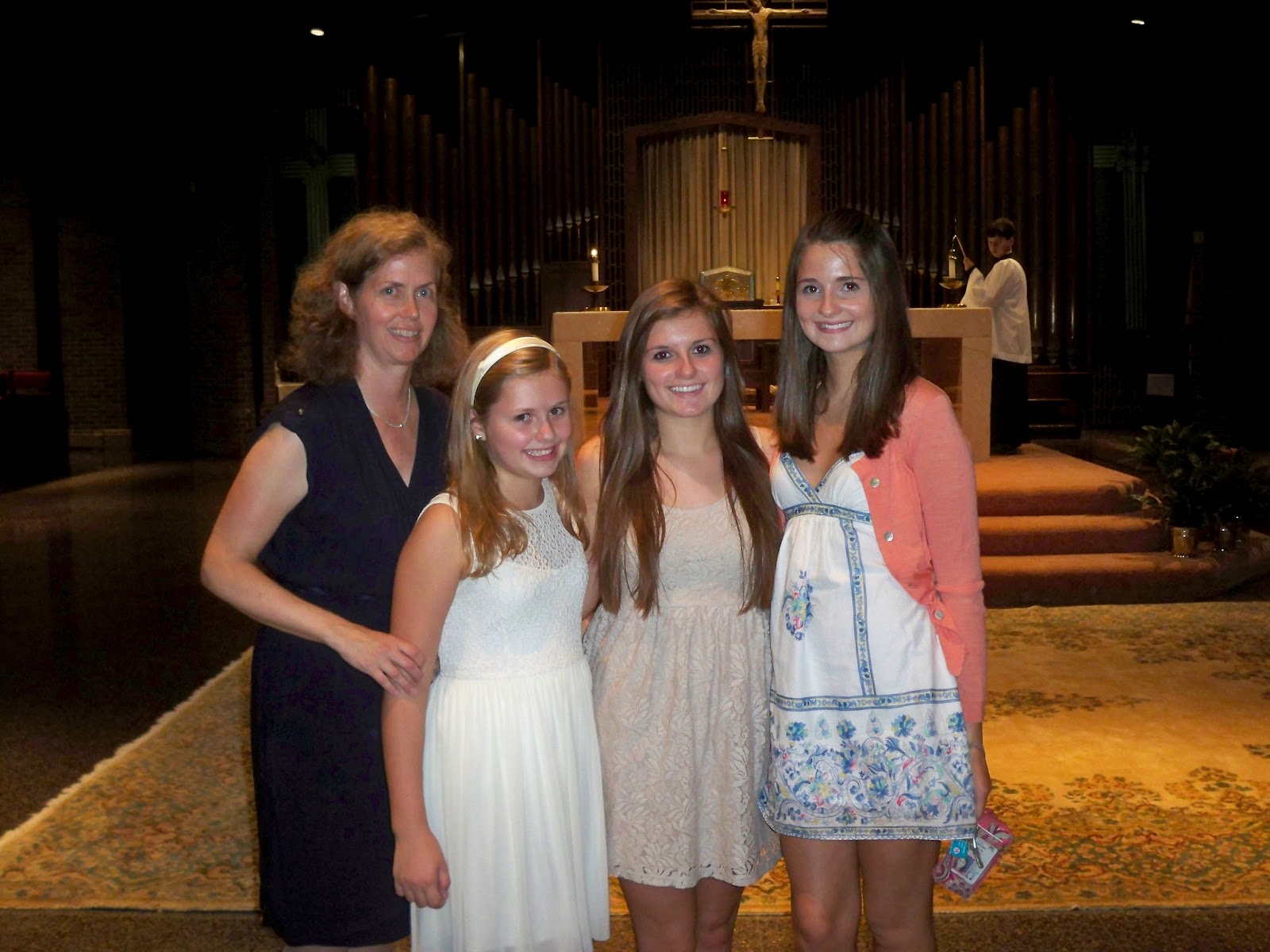
We grew up nine years apart with two brothers in between, and — we like to joke — in two separate families, our memories, mindsets and approaches to life are so different from one another’s.

But we are no more divergent than many siblings are. And in many ways, the important ways, we are alike.  When I need her, she’s there. She is like a best friend, only so much more.

Today is Ellen’s birthday, and as good a time as any to tell her how much she means to me.

Ellen and her three beautiful daughters.

Eight or Later

Eight or Later

I heard yesterday on the weather report that the sun will not set before eight p.m. from now until August 18. It’s a good way to celebrate May Day and the start of a new month, with the promise of light.

Hot autumn days with an unshakeable air of melancholy are proof that it’s not lack of warmth that makes me mourn the end of summer. It’s the early darkness.

Extra daylight means early mornings and late nights. It means tomatoes and zinnias and basil. It means after-dinner strolls,  evening swims and long suppers on the deck. And of course, it’s the perfect excuse for insomnia. Summer is often thought an indolent time, but when you consider the extra daylight it gives us, it’s better thought of as an active season, a heroic season.

Knowing we have three and a half months of late sunsets ahead of us gives me a sense of calm — even after solstice comes, we will still have light on our side.

The Poetry of Pittsburgh

The Poetry of Pittsburgh

When I began this blog more than two years ago, I didn’t think long about the quotation I would use across the top. I knew it would come from Annie Dillard’s book An American Childhood.

“When everything else has gone from my brain — the President’s name, the state capitals, the neighborhoods where I lived, and then my own name and what it was on earth I sought, and then at length the faces of my friends, and finally the faces of my family — when all this has dissolved, what will be left, I believe, is topology: the dreaming memory of land as it lay this way and that.”

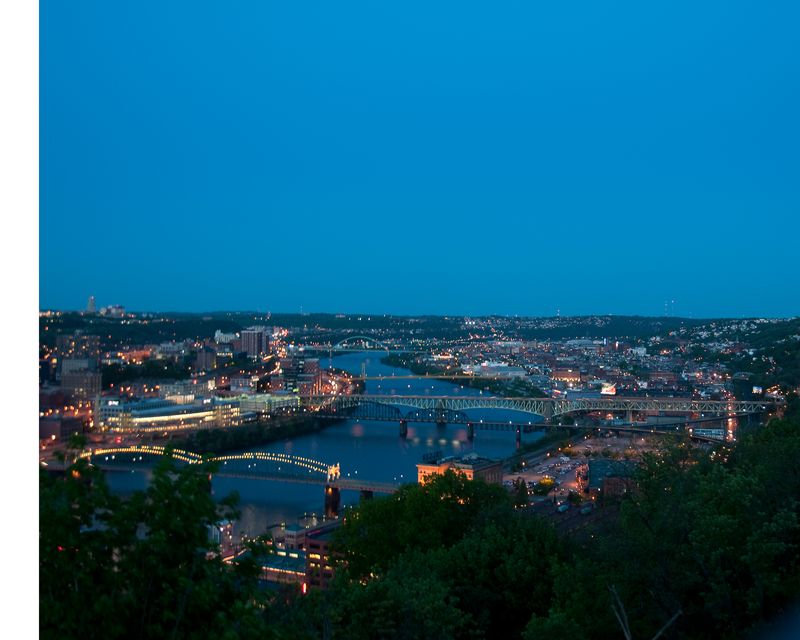
A few years ago, on our way back from visiting Tom’s family in Indiana, we stopped in Pittsburgh, where Annie Dillard was born on this day in 1945. It was a literary pilgrimage for me. Our first view of the city (where I had lived as a toddler, pre-memory), came at dusk, as we drove into a tunnel and out and suddenly there were the three rivers and the bridges crossing them all lit up with white lights and it seemed magical to me, this old city of groaning steel and trestles.

Was it the place itself that exerted this magic, or was it because I was primed to love it by Dillard’s words? “I will see the city poured rolling down the mountain valleys like slag, and see the city lights sprinkled and curved around the hills’ curves, rows of bonfires winding.”

It was both, I think. The place of poetry. The poetry of place.

 Photo by Peter Tooker 2010 All Rights Reserved. From the blog Open Windows.

Lee’s Place

Lee’s Place

Today is the birthday of Harper Lee, who was born in 1926 and still lives in her hometown of Monroeville, Alabama. She has written one book,  To Kill a Mockingbird; it won the Pulitzer and has sold more than 300 million copies. 

“I still plod along with books. Instant information is not for me. I prefer to search library stacks because when I work to learn something, I remember it,” Lee said in a 2006 issue of Oprah magazine.

The Monroe County Public Library, I wonder, is that the library she searches? Or the library of Alabama Southern Community College, located in Monroeville? I scan the college website and find a notice for the 15th annual Alabama Writer’s Symposium, with its topic “Write Out of Place,” being held (yes) this weekend.

Here’s how the symposium is advertised, first with this quotation from Katherine Mansfield: “How hard it is to escape from places. However carefully one goes they hold you — you leave little bits of yourself fluttering on the fences — like rags and shreds of your very life.”

And then with the following: “When Mansfield wrote those lines, she could have been describing the way that Alabama authors often find themselves in relation to their home. Whether they set stories lovingly in Alabama, loathingly in Alabama, or deliberately not in Alabama, place becomes a part of who they are. …  The 2012 Alabama Writers Symposium explores the ways in which Alabama writers are affected by their ‘placehood,’  the ways in which Alabama as a place informs their literary efforts.”

Lee lived in New York for a while, and she spent time away in college and when she was helping her childhood friend, Truman Capote (another native of Monroeville), research In Cold Blood in Kansas. But she has spent most of her life in Monroeville. She has not escaped from her place; she doesn’t seem to have wanted to.